Steelers Legend Mike Wagner, Architect of the Steel Curtain Secondary, Dies at 76
The Pittsburgh Steelers family and the NFL community mourn the loss of a foundational pillar of one of football’s greatest dynasties. Mike Wagner, the hard-hitting safety and integral member of all four Super Bowl-winning teams in the 1970s, has passed away at the age of 76. His death marks the passing of not just a champion, but a symbol of the intelligence, toughness, and overlooked brilliance that defined the legendary Steel Curtain defense.
From 11th-Round Afterthought to Defensive Backbone
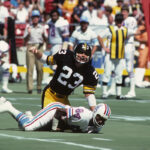
Mike Wagner’s story is one of quintessential Steelers lore, embodying the franchise’s historic ability to unearth and develop extraordinary talent from unlikely places. Drafted in the 11th round of the 1971 NFL Draft out of Western Illinois, he arrived as the 268th overall pick—a footnote in a class that included fellow stalwarts like Jack Ham. Yet, by his rookie season, he was a starter, appearing in 12 games and snagging two interceptions. He didn’t just make the team; he began etching his name into its fabric.
Wagner’s game was defined by a rare combination of cerebral play and physical force. While the front four of the Steel Curtain—Mean Joe Greene, L.C. Greenwood, Dwight White, and Ernie Holmes—garnered headlines for their destructive dominance, the secondary required a different kind of fortitude. Wagner, alongside cornerbacks Mel Blount and J.T. Thomas and safety Glen Edwards, formed the last line of a defense that gave quarterbacks no respite. His role was critical: diagnose plays, communicate adjustments, and deliver decisive, often game-altering hits.
- 1973 NFL Interception Leader: Wagner’s breakout season came in 1973 when he led the entire NFL with eight interceptions, showcasing his elite ball-hawking skills and field vision.
- Two-Time Pro Bowl Selection: His excellence was recognized with Pro Bowl nods following the 1973 and 1975 seasons, cementing his status among the league’s elite defensive backs.
- 119 Career Games, 36 Interceptions: Over his nine-year career, all in Pittsburgh, Wagner amassed 36 interceptions, a testament to his consistency and playmaking ability in a run-first era.
The Ultimate Competitor: Overcoming Adversity for Championship Glory
Perhaps no chapter of Wagner’s career better illustrates his toughness and value than his 1977-78 seasons. A severe neck injury in 1977 limited him to just three games, threatening his career. The defense felt his absence. His return in 1978 was not guaranteed, but Wagner’s dedication to rehabilitation and the game propelled him back onto the field.
He didn’t just return; he reclaimed his starting role, starting 14 games, intercepting two passes, and providing stabilizing leadership for a defense that was back on a mission. That season culminated in Super Bowl XIII, a victory over the Dallas Cowboys that was the third championship for the Steelers in five years. Wagner’s comeback was complete, a personal triumph woven directly into the team’s historic legacy. He contributed again in 1979, appearing in eight games as the Steelers secured their unprecedented fourth Super Bowl title of the decade.
“Mike was the quarterback of the secondary,” former teammate and Hall of Famer Mel Blount has said in retrospect. “He got us in the right calls, he was always in the right place, and he hit like a linebacker. You couldn’t ask for a smarter or more reliable player next to you.” This analysis underscores Wagner’s role as the defensive coordinator on the field, a player whose pre-snap intellect was as valuable as his post-snap physicality.
Legacy and the Modern Steelers Safety
In the pantheon of Steelers greats, safeties often stand in the long shadow of the flashier pass rushers and lock-down cornerbacks. Yet, the lineage is rich: from Wagner and Donnie Shell to Troy Polamalu and Minkah Fitzpatrick. Wagner’s legacy is the blueprint—the high-IQ, versatile defender who could patrol the deep middle, support against the run, and create turnovers. He proved that a safety could be the cohesive glue for a historically great defense.
Today’s Steelers, while navigating the modern pass-happy NFL, still seek that same brand of erudite toughness in the secondary. The presence of a star like Minkah Fitzpatrick echoes Wagner’s impact in terms of football IQ and game-changing plays. As the franchise looks to rebuild a championship-caliber defense, the standard set by Wagner and his contemporaries remains the ultimate benchmark. His career is a reminder that dynasties are not built by superstars alone, but by indispensable, gritty professionals who excel in their role.
A Final Whistle: Remembering a Pittsburgh Icon
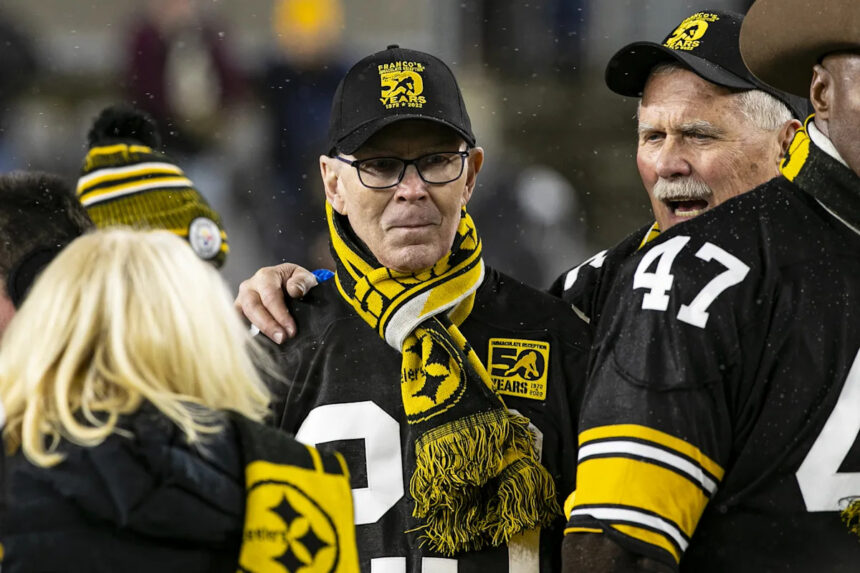
The passing of Mike Wagner is a profound loss for Steelers Nation. He was a bridge between the pre-Chuck Noll era and the ascent to immortality. In an era of colorful personalities, Wagner was the steady, reliable force—a player whose contributions were fully appreciated by teammates, coaches, and astute fans who understood the complexities of defensive football.
His 36 interceptions still rank among the franchise’s best, and his four Super Bowl rings place him in the most exclusive club in NFL history. More than the statistics, it was his journey—from an 11th-round pick to a league interception leader, from a career-threatening injury to a champion’s comeback—that encapsulates the Steeler Way.
As the tributes pour in from former teammates, rivals, and fans, the image of Mike Wagner that endures is not of a singular highlight, but of a consummate professional executing his assignment with precision and power, play after play, championship after championship. He was, in every sense, a legend of the Steel Curtain. Our deepest condolences go out to the Wagner family, his friends, and all who loved him. His legacy is permanently forged in the steel of Pittsburgh’s football history.
For continued coverage of Pittsburgh Steelers news, legacy features, and in-depth analysis, be sure to bookmark Behind the Steel Curtain. In other NFL news, league insiders suggest that despite offseason speculation, a high-profile quarterback move to Pittsburgh remains unlikely, with reports indicating Aaron Rodgers is unlikely to return to the Steelers as the organization continues to evaluate its options for the future.
Source: Based on news from Yahoo Sports.