‘We Can Never Do Too Much’: Arne Slot Demands Football Escalates Its Fight Against Racism
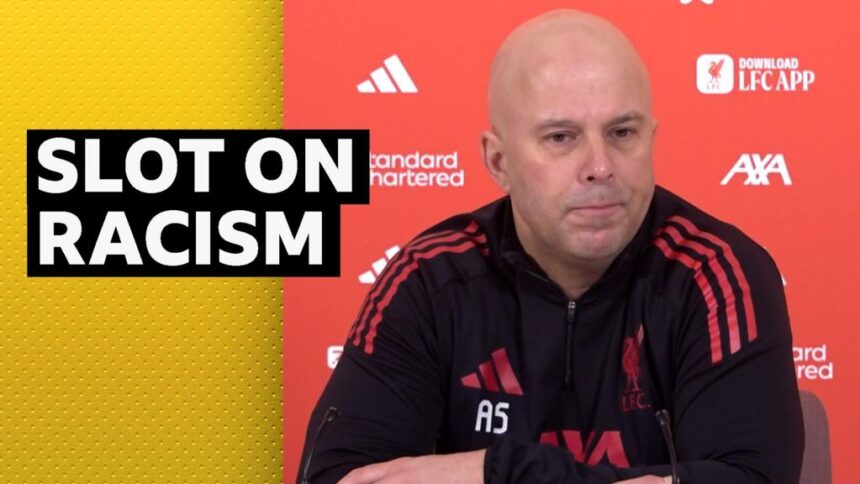
The beautiful game has a persistent, ugly stain. As Liverpool’s new head coach Arne Slot settles into one of football’s most scrutinized roles, he has already been confronted with its most profound failure. Following the latest alleged racist abuse aimed at Real Madrid’s Vinicius Jr.—this time from Benfica’s Gianluca Prestianni during a Champions League play-off—Slot’s response was unequivocal. “We should always try to do more,” he stated, distilling a complex crisis into a simple, urgent mandate. His words, “we can never do too much,” are not just a soundbite but a direct challenge to the sport’s governing bodies, clubs, and fans. In an era of unprecedented global reach and financial power, why does football’s battle against bigotry feel so stagnant?
The Vinicius Jr. Litmus Test: A Pattern of Inaction
The case of Vinicius Jr. has become the definitive litmus test for football’s anti-racism protocols. The Brazilian winger, a player of mesmerizing talent, has been forced into the role of a full-time activist, enduring what reports detail as 20 separate cases of alleged racist abuse during his eight years at Real Madrid. The incident in Lisbon is not an anomaly; it is a recurring entry in a grim ledger. Each episode follows a depressingly familiar script: outrage, condemnation, investigations promised, and then, too often, a resounding silence or a punishment that fails to match the severity of the crime.
This cycle reveals a fundamental flaw. Football’s disciplinary frameworks remain inconsistently applied and lack the deterrent power to spark real change. When abusers face minimal fines or partial stadium closures, the message is clear: the spectacle and revenue of the game are prioritized over the humanity of its participants. Vinicius’s resilience is remarkable, but no player should be required to armor themselves psychologically as a condition of their employment. The systemic failure to protect him underscores that current measures are not merely insufficient—they are complicit in perpetuating the environment.
Beyond Gestures: The Need for Structural Overhaul
Kick-off anti-racism campaigns, worn t-shirts, and social media hashtags have proven to be just that: gestures. While raising awareness, they have failed as solutions. Arne Slot’s call to “do more” must be interpreted as a demand for structural, enforceable, and universally adopted action. The sport requires a paradigm shift from reactive public relations to proactive, punitive, and preventative governance.
What would a truly escalated fight look like? It requires moving beyond symbolism to implement non-negotiable consequences:
- Standardized Global Sanctions: FIFA, UEFA, and all national federations must agree on a mandatory, escalating scale of punishments for racist incidents. This must include automatic match forfeits, significant point deductions, and full stadium closures for repeat offenses.
- Empowerment of Match Officials: Referees must have the unequivocal authority and obligation to abandon matches under a unified protocol, with the abusing club bearing all sporting and financial consequences.
- Lifetime Bans & Legal Collaboration: Identified offenders must face lifetime bans from all stadiums, with clubs legally obligated to assist law enforcement in prosecution under hate crime laws.
- Investment in Education: Fines levied for racist abuse should be directly funneled into sustained, mandatory education programs for fan groups, youth academies, and club staff, developed in partnership with expert organizations.
The Slot Perspective: Leadership from the Dugout
Arne Slot’s immediate willingness to address this issue head-on is significant. Leading a club of Liverpool’s stature, with its historic connection to social justice, places him in a powerful position to influence the managerial fraternity. Coaches are often the most influential voices at a club, shaping not only tactics but culture. Slot can champion a proactive approach:
This involves instilling a club-wide ethos where discrimination is anathema, supporting his players unconditionally if they are targeted, and using his media platform to consistently advocate for the stricter measures outlined above. His predecessor, Jürgen Klopp, was vocal in his support for anti-racism; Slot now has the opportunity to build on that legacy and push for the tangible policy changes that have been lacking. If high-profile managers unite behind a specific action plan, their collective voice could pressure federations into long-overdue reform.
The Future of the Fight: Predictions and the Path Forward
Looking ahead, the trajectory is fraught but points toward a critical juncture. We can predict two potential paths. The first is a continuation of the current failed model, leading to more high-profile incidents, player walk-offs, and the increasing likelihood of top stars avoiding leagues or countries with notorious reputations—a financial catalyst that might finally spur action.
The second, more hopeful path is the one Arne Slot implicitly advocates for. It involves:
- Player Power Reaching a Tipping Point: A unified, cross-league player strike in response to a major incident could force overnight change.
- Sponsor Intervention: Global brands, wary of association with toxicity, may tie sponsorship deals to demonstrable anti-racism enforcement by leagues and clubs.
- The Rise of Independent Regulatory Bodies: Frustration with FIFA and UEFA could lead to the creation of independent agencies with real power to govern and sanction, stripping federations of their conflicted role as both promoter and disciplinarian.
The commercial and moral imperatives are now aligned. Racism is a threat to the sport’s integrity, its marketability, and its basic duty of care.
Conclusion: From “Never Again” to “Right Now”
Arne Slot’s simple declaration—“we can never do too much”—should be the new mantra for a sport that has done too little for too long. The alleged abuse of Vinicius Jr. in Lisbon is not just another headline; it is a screaming alarm that the existing systems are broken. Football stands at a crossroads. It can continue with hollow campaigns and weak sanctions, or it can embrace the difficult, enforceable, and comprehensive overhaul required.
The power to eradicate racism from stadiums and pitches exists. It resides in stringent, fearlessly applied regulations, in the courage of officials to stop games, in the solidarity of players and managers, and in the willingness of governing bodies to prioritize justice over convenience. The time for incrementalism is over. The beautiful game must now prove that its conscience is as strong as its competitive spirit. The fight, as Slot insists, must be escalated—not tomorrow, but today.
Source: Based on news from BBC Sport.