Iran Footballers’ Silent Protest: A Pitchside Tribute to School Strike Victims
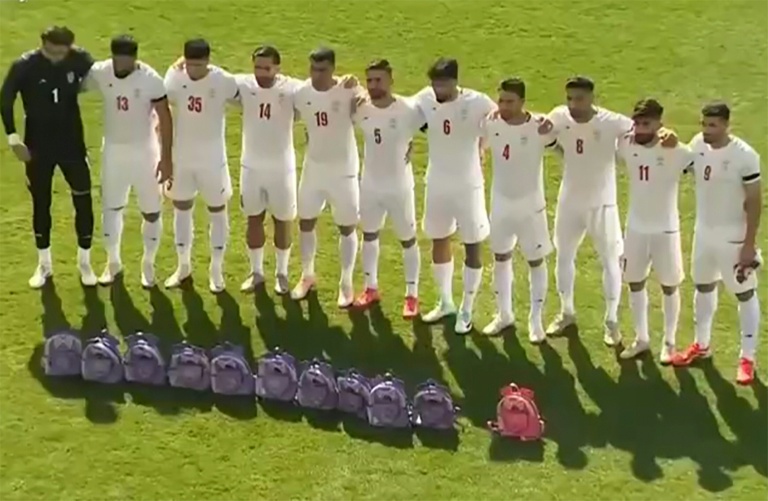
In the sun-drenched tranquility of a Turkish resort town, a moment of profound silence spoke volumes. Before a friendly match against Nigeria in Belek, the Iran men’s national football team staged a poignant and powerful political statement. As their national anthem played, the players stood not just in sporting solidarity, but in collective mourning. Adorned in black armbands and holding brightly colored school rucksacks, they transformed the pitch into a memorial for the 170 lives lost in a devastating airstrike on a primary school in Minab, southern Iran. This gesture, far from a routine pre-match ritual, was a stark, humanizing act of remembrance that thrust the brutal realities of a distant conflict onto the global sports stage.
A Gesture Beyond the Game: Unpacking the Symbolism
The imagery was meticulously chosen and devastatingly simple. Black armbands, a universal symbol of grief and loss in football, were coupled with an even more evocative prop: children’s school bags. The pink and purple rucksacks, held solemnly by some of Asia’s most recognizable footballers, were not mere accessories. They were ghostly representations of the young students who would never again sling them over their shoulders. The ribbons tied to them fluttered like forgotten promises.
This was not a spontaneous act. In the highly controlled environment of Iranian sport, such a coordinated display points to a significant decision, likely involving team leadership and perhaps even tacit acknowledgment from certain state-linked bodies. It served multiple purposes:
- A Human Toll Focus: It shifted the narrative from geopolitical rhetoric to the innocent victims of the school strike, centering the children and teachers.
- National Unity: On the international stage, it presented a unified Iranian front of grief, momentarily transcending internal divisions.
- Global Appeal: The universal language of loss—of children, of education, of safety—was designed to resonate with a global audience far beyond the typical football fan.
The presence of star striker Mehdi Taremi, a figure with massive international profile from his stints at Porto and Inter Milan, amplified the message, ensuring global media pickup and social media dissemination.
The Shadow of Conflict: The Minab Strike and Escalating Tensions
The players’ tribute was a direct response to a catastrophe that has become a central flashpoint in the burgeoning Middle East war. On February 28, the first day of open hostilities initiated by the United States and Israel against Iranian military infrastructure, an airstrike hit the Shahid Shokrollah School in Minab. The aftermath was horrific: at least 170 people, predominantly pupils and their educators, were killed.
Iran’s government has labeled the attack a deliberate, “calculated, phased assault” by the U.S., a charge Washington vehemently denies, typically attributing such civilian casualties to errant missile defense operations or collateral damage. Regardless of the disputed intent, the outcome is indisputable: one of the single deadliest incidents for civilians in the conflict’s opening salvo.
This context is crucial. The footballers’ act was not merely about mourning; it was a form of soft-power rebuttal. By holding the school bags, they were visually endorsing their government’s narrative of being victims of a disproportionate attack on a sacred civilian space, all while bypassing official statements and speaking directly to the heart.
Expert Analysis: Sport as a Geopolitical Canvas
“This is a classic, yet potent, example of sport being weaponized for geopolitical messaging,” says Dr. Anya Petrova, a senior fellow at the Institute for Sport and Global Politics. “The Iranian federation and players have historically navigated a tightrope between national pride and political pressure. This gesture, however, is uniquely layered. It uses the universal empathy for children to frame the conflict on their terms, making it incredibly difficult for the international sporting community to criticize. They aren’t waving flags or making incendiary chants; they are performing an act of mourning, which in the arena of global public opinion, is a powerful tool.”
Petrova notes the strategic choice of venue—a neutral country like Turkey—and match type—a friendly. “It was a controlled environment with guaranteed media coverage, but without the heightened scrutiny and stricter regulations of a competitive FIFA or AFC tournament where such displays might risk sanction. This was a calculated, low-risk, high-reward PR operation.”
The act also raises questions about the evolving role of the Iranian national team players as reluctant diplomats. Unlike the 2022 World Cup, where they remained silent during the anthem in solidarity with domestic protests, this was a unified show of national grief aligned with state narrative. It signals a complex reality where the team can become a vessel for state messaging on the international stage, even as individual players may hold private, differing views.
Predictions: Ripple Effects on and off the Pitch
The ramifications of this tribute will extend far beyond the 90 minutes in Belek. We can anticipate several key developments:
- Increased Scrutiny on Iranian Sport: FIFA, which has statutes against political statements, will face pressure to respond. However, given the humanitarian nature of the tribute, a sanction is unlikely, potentially setting a precedent for similar “mourning” displays.
- A New Playbook for Protests: Other national teams from conflict zones may adopt similar symbolic, grief-based protests, using sport’s global stage to highlight civilian casualties in a way that avoids direct political sloganeering.
- Domestic Resonance: Inside Iran, the gesture will likely be hailed by state media as a show of patriotic solidarity, potentially boosting the team’s profile ahead of crucial World Cup qualifiers. It may temporarily bridge divides between a government and a populace that has been deeply at odds.
- Player Agency Under the Microscope: The world will watch closely how Iranian players comport themselves in future matches. Will this become a sustained theme, or a one-off? Their actions will be parsed for signs of genuine conviction or perceived coercion.
A Conclusion Written in Silence and Symbols
The image of hardened professional footballers cradling children’s school bags will endure as one of the most striking moments of this sporting year. It was a testament to football’s uncomfortable, inescapable intersection with the world’s darkest conflicts. The Iran footballers’ tribute succeeded not through shouts, but through a solemn, shared silence; not with banners, but with the haunting emptiness of those tiny, colorful rucksacks.
While the geopolitics of the Middle East war remain fiercely contested, the players, in that moment, achieved something unambiguous: they forced the world to remember Minab. They reminded everyone that the first casualties of any war are not soldiers or strategies, but innocence and future. As the whistle blew and the match against Nigeria commenced, the bags were set aside, but the message was firmly planted. On that day in Belek, football was not a distraction from the world. It was its most painful, poignant reflection.
Source: Based on news from Yahoo Sports.