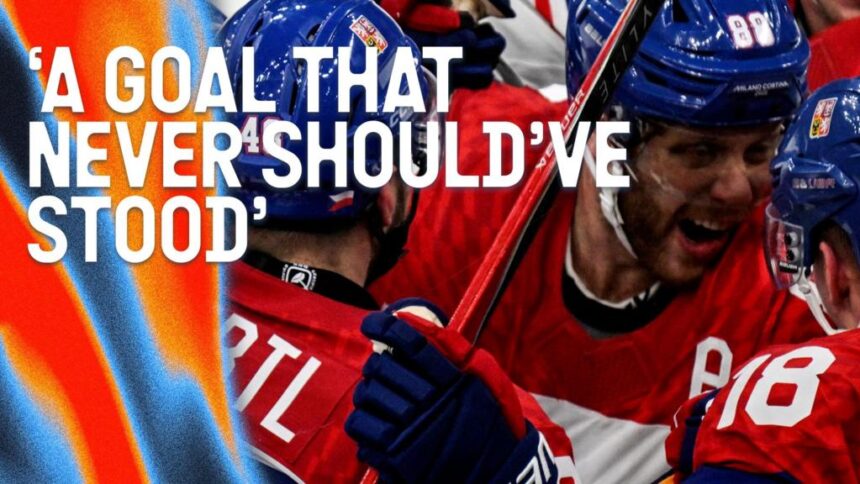
‘A National Inquiry’: How a Six-Man Czech Advantage Became Canada’s Olympic Ice Hockey Nightmare
The sting of Olympic defeat is always acute, a unique blend of national pride and personal anguish frozen in time. For Canada’s men’s ice hockey team at the Winter Olympics, their quarter-final exit to the Czech Republic will be remembered not just for a loss, but for a moment of such staggering oversight it sparked immediate calls for a post-mortem. In the chaotic crucible of a tied third period, with a semi-final berth on the line, the Czechs scored a crucial go-ahead goal. There was just one, monumental problem: they had six skaters on the ice. And Canada, from the players on the bench to the coaches managing the game, missed it entirely. As BBC Sport commentator Kent Simpson exclaimed in disbelief, “There’s going to be a national inquiry.” This is the story of that infamous play, a breakdown in hockey’s fundamental awareness that may forever define a campaign.
The Infamous Sequence: A Breakdown in the Bedlam
With the game knotted at 2-2 deep in the third period, the tension was palpable. The Czech Republic applied sustained pressure in the Canadian zone. In the frantic flow of an Olympic elimination game, a line change went horribly wrong. A Czech forward jumped onto the ice, but his counterpart coming off moved slowly towards the bench, creating a crucial, illegal overlap. For a full 20 seconds, the Czech Republic operated with six skaters. The oversight wasn’t a fleeting glimpse; it was a sustained advantage.
During this window, the Czechs maintained offensive zone possession, cycling the puck and forcing the Canadian defenders to scramble. The eventual goal, a sharp shot from the high slot that found its way through traffic, was a direct product of this extended pressure. The Canadian players, fatigued and focused on their defensive assignments, failed to count the white jerseys. The coaching staff, tasked with macro-management, missed the extra man. The officials, whose primary duty is to enforce such rules, were also caught unaware. It was a perfect storm of negligence, with the Czechs capitalizing decisively.
- Key Failure: A 20-second window with 6 Czech skaters.
- Critical Result: The game-winning goal scored during the illegal advantage.
- Systemic Breakdown: Failure from players, coaches, and officials simultaneously.
Expert Analysis: More Than Just a “Missed Call”
To label this incident simply a “missed call” by the referees is to misunderstand high-level hockey. This was a catastrophic failure of game management at every level for Team Canada. As BBC pundit Seth Bennett analyzed, the responsibility is shared, but weighs heaviest on the bench. “The first eyes for that have to be the players on the ice and the coaching staff,” Bennett noted. “You are taught from peewee hockey to identify when you have a too-many-men advantage. For it to happen at this level, in this moment, is inexplicable.”
The psychological pressure of the Olympic moment cannot be discounted. In a standard NHL game, players and coaches are conditioned to this check. In the single-elimination, win-or-go-home format of the Olympics, the hyper-focus on the puck and immediate tactical threats can create tunnel vision. However, this is the exact discipline elite programs are built upon. Canada’s hockey identity is rooted in detail, structure, and awareness. This incident represented a fundamental crack in that identity. The goal didn’t just give the Czechs the lead; it irrevocably shifted the game’s momentum and psychological footing, leaving Canada both chasing the score and grappling with a self-inflicted wound.
The Ripple Effect: Accountability and Future Protocols
The immediate aftermath saw justified outrage from Canadian fans and media. The phrase “national inquiry,” while hyperbolic, speaks to the deep feeling of a standard not being met. In the cold light of day, the real inquiry must be internal. Hockey Canada will undoubtedly review its high-pressure game management protocols. This goes beyond assigning blame to one assistant coach responsible for tracking changes.
Modern hockey employs extensive video coordination and bench management systems. This event will force a re-examination of how these systems are stressed in crisis moments. Should there be a dedicated “personnel spotter” on the staff with no other duty? How can technology be leveraged for real-time alerts? Furthermore, this incident highlights the critical need for player accountability on the ice. Captains and veterans are an extension of the coaching staff; their role in maintaining situational awareness is paramount. The fallout will likely lead to tangible changes in how top-tier international teams, not just Canada, manage bench logistics under duress.
Predictions: A Lasting Legacy in Hockey Lore
This moment will not be quickly forgotten. Its legacy will manifest in several ways:
- Coaching Curriculum: The video of this sequence will become a staple in coaching clinics worldwide, a stark “what not to do” lesson in game awareness at all levels.
- Canadian Program Scrutiny: While Canada will continue to produce elite talent, this event will be a recurring reference point in discussions about tactical preparation and mental fortitude in best-on-best tournaments, especially with the NHL’s irregular participation in the Olympics.
- Rule Emphasis: Officials may receive renewed emphasis on monitoring line changes, particularly in the final periods of close games, potentially leading to more proactive calls.
For the players involved, this is an indelible mark. For the Czech Republic, the goal stands, a controversial but legal-by-ruling step toward their eventual medal. For Canada, it serves as a harsh, modern reminder that in hockey, games are lost not only by the goals you allow but by the fundamental details you neglect.
Conclusion: A Costly Lesson Etched in Ice
The Czech Republic’s six-man advantage goal against Canada is more than a bizarre Olympic blip. It is a case study in how the highest levels of sport can still be undone by the most basic lapses. It was a failure of process, awareness, and collective responsibility at the worst possible moment. While there will be no formal “national inquiry,” the hockey community’s verdict is clear. This was an avoidable, self-inflicted catastrophe that cost a nation a chance at gold. The painful legacy of this oversight will linger far longer than the final score, serving as an eternal reminder that in hockey, you must always keep your head on a swivel—and your eyes on the opponent’s bench. The pursuit of excellence is not just about scoring goals, but about mastering the minutiae that prevent them. On that fateful shift, Canada forgot to count, and in doing so, lost count of their Olympic dream.
Source: Based on news from BBC Sport.