Cartel Leader’s Death Sparks Chaos: World Cup Host City in Turmoil as Soccer Matches Postponed
The beautiful game ground to a halt in Mexico this weekend, but the reason had nothing to do with a waterlogged pitch or a player strike. Instead, the violent death of one of the world’s most wanted men forced the postponement of professional soccer matches, casting a long and troubling shadow over the country’s preparations to co-host the 2026 FIFA World Cup. The killing of Nemesio Oseguera Cervantes, the notorious kingpin known as “El Mencho,” triggered a wave of retaliatory violence that reached the doorstep of Guadalajara, a designated host city, exposing the fragile security landscape that global sport must now navigate.
A Military Strike and Immediate Fallout: From Tapalpa to Turmoil
In the early hours of Sunday, Mexican military forces launched a targeted operation in the mountainous region of Tapalpa, Jalisco, approximately two hours southwest of Guadalajara. The target was Nemesio Oseguera, the elusive leader of the Cartel de Jalisco Nueva Generación (CJNG), a criminal empire responsible for trafficking tons of narcotics and countless acts of brutal violence. Authorities confirmed Oseguera, a former police officer who rose to the top of Mexico’s criminal underworld, was killed in the confrontation.
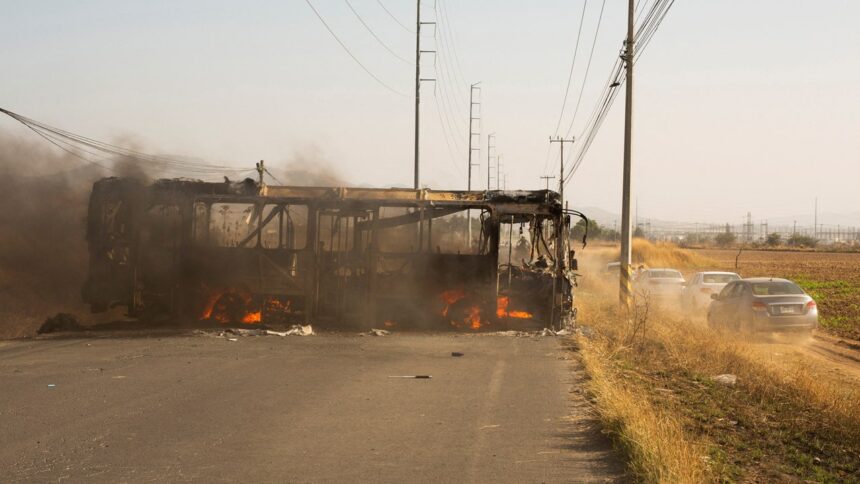
The government’s victory, however, was met with instant and coordinated chaos. The CJNG, known for its militaristic structure and ruthless retaliation, did not go quietly. In a show of force designed to intimidate the state and signal business-as-usual, cartel affiliates executed a widespread campaign of disruption. Reports from nearly a dozen Mexican states detailed a chilling response:
- Vehicles were set ablaze on major roadways, sending plumes of black smoke into the sky.
- Highways and key transit routes were blocked with burning debris, paralyzing transportation.
- The acts served as a stark reminder of the cartel’s reach and its capacity to project power far beyond its home turf.
This violent backlash did not occur in a remote corner of the country. It erupted in the heart of Jalisco, with the epicenter of the disruption alarmingly close to Guadalajara—a metropolitan area of over 5 million people and the proud home of iconic soccer club Chivas. The message was unmistakable: no place, not even a crown jewel of Mexican culture and sport, was insulated from the conflict.
The Beautiful Game Paused: Liga MX’s Security Dilemma
As the scale of the unrest became clear, Liga MX officials faced an unprecedented decision. With matches scheduled for Sunday, including high-profile fixtures, the league’s primary concern shifted from tactics and table standings to pure security. The result was an extraordinary step: the postponement of four professional matches.
The affected games were not minor contests. The league took the decisive action of calling off two top-flight Liga MX matches, including a men’s clash and the highly anticipated women’s “Super Clásico” between Chivas and América—one of the fiercest rivalries in all of sports. Two second-division games were also shelved. This was not a choice made lightly; it was a direct response to credible threats and the operational strain on security forces. The league stated the postponements were due to “the current situation in the state of Jalisco” and the need to “guarantee the integrity” of all involved.
This incident is not isolated. Mexican soccer has been forced to confront the nation’s security crisis before, from matches interrupted by narco-banners to the horrific 2022 Querétaro riot. However, postponing matches due to cartel retaliation following a high-profile killing directly links the sport’s schedule to the outcomes of the nation’s drug war. It frames the soccer stadium not just as a cultural arena, but as a potential soft target in a much larger, more dangerous game.
Expert Analysis: World Cup 2026 in the Crosshairs?
The immediate question for sports administrators and global fans is what this means for the 2026 World Cup, to be hosted by the United States, Canada, and Mexico. Guadalajara’s Estadio Akron is slated to host multiple matches. Security experts and journalists analyzing the situation, such as those on discussions like ‘The Big Weekend Show,’ point to a multifaceted challenge.
“This weekend’s events are a stark stress test,” says a veteran security analyst specializing in major event planning. “It reveals two critical vulnerabilities: first, the capacity of non-state actors to generate instant, widespread chaos in an urban center; and second, the indirect impact on essential infrastructure and public morale. A World Cup isn’t just about securing the stadium perimeter. It’s about ensuring safe transit for teams and fans, guaranteeing that hotels and public spaces are secure, and maintaining a backdrop of stability. This episode checks none of those boxes.”
The 2026 World Cup security plans will undoubtedly be robust, likely involving international cooperation and a massive deployment of federal resources. The Mexican government will be incentivized like never before to present a calm front. However, the killing of “El Mencho” demonstrates how quickly that calm can shatter. Cartels are adaptive, and the global spotlight of a World Cup could be seen as either a deterrent or a prime opportunity to project power.
The concern extends beyond outright attacks. The subtler threats of transportation disruptions, cyberattacks on infrastructure, or targeted intimidation campaigns against visiting teams or officials could severely damage the tournament’s integrity and the host nation’s reputation.
Predictions and the Path Forward
Looking ahead, the interplay between Mexico’s security apparatus and its role as a World Cup host will be under a microscope. Several predictions and challenges come to the fore:
- Increased Federalization of Security: In the lead-up to 2026, expect to see a much larger, more visible federal security presence in Guadalajara and other host cities like Mexico City and Monterrey. This may temporarily displace criminal activity but could also lead to heightened tensions.
- Intelligence is Key: The success of the World Cup will hinge on intelligence operations aimed at preventing cartels from disrupting the event. This will require unprecedented cooperation between Mexican, U.S., and Canadian agencies.
- The “Bubble” Strategy: FIFA and local organizers may be forced to implement a “bubble” model for teams and officials, with highly controlled travel routes and secured accommodations, potentially isolating them from the host cities they are meant to experience.
- Ongoing Vulnerability for Liga MX: For domestic soccer, the future is precarious. The league may need to develop more agile contingency plans, including flexible scheduling and neutral venues, to adapt to sudden security flares. The safety of players and fans must become the singular, non-negotiable priority, even if it means frequent disruption.
Conclusion: A Goal Beyond Sport
The postponement of four soccer matches is a minor footnote in the violent saga of Mexico’s drug war, but it is a major warning siren for the world of international sport. The death of “El Mencho” and its violent aftermath have proven that the turf war between the state and powerful cartels can spill onto the soccer pitch with little warning. As Guadalajara prepares to welcome the world in 2026, the events of this weekend are a sobering preview of the challenges ahead.
Hosting a World Cup is often seen as a nation’s coming-out party, a chance to showcase culture, unity, and progress. For Mexico, the tournament now represents something even more profound: a high-stakes test of sovereignty and stability. The world will be watching, not just the games, but the streets, highways, and the fragile peace that must hold for the beautiful game to proceed. The final whistle on this challenge is still a long way off.
Source: Based on news from Fox Sports.