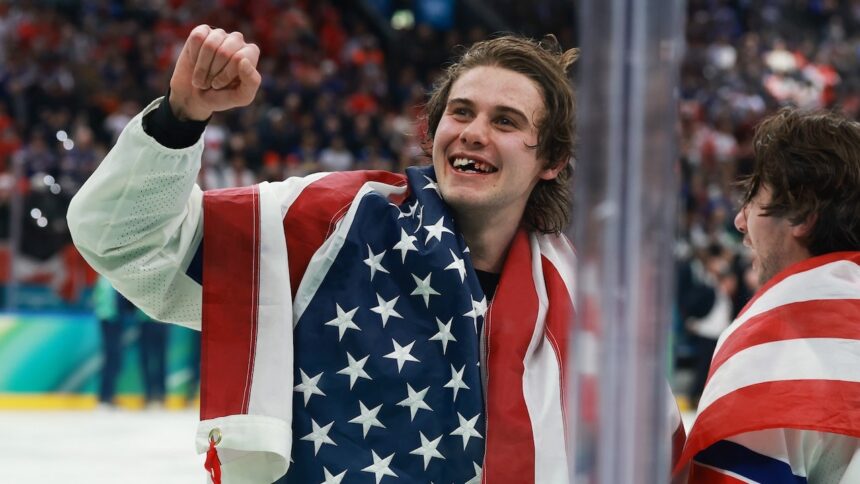
Jack Hughes Champions Team USA Unity, Addresses Backlash Over Trump Joke Fallout
The roar of the crowd at the Prudential Center was deafening. Jack Hughes, the New Jersey Devils’ superstar and freshly minted Olympic gold medalist, was being celebrated on home ice, a testament to a triumphant return from the Winter Games. Yet, amidst the adulation, a different narrative had begun to swirl online—one of division within the ranks of USA Hockey. In a candid interview, Hughes has now directly addressed the controversy, forcefully reaffirming his support for the U.S. women’s hockey team and painting a picture of Olympic camaraderie that stands in stark contrast to the perceived rift.
The Spark of Controversy: A Joke, A Laugh, and a Social Media Firestorm
Following the U.S. men’s team’s gold medal victory, a moment from their celebratory White House visit gained unexpected traction. In a video, President Donald Trump can be heard making a joking remark about the U.S. women’s team, which was met with laughter from some players in the room. The women’s team, iconic figures and multi-time medalists in their own right, were not present. The clip quickly migrated to social media, where it was framed as the men’s team disrespecting their female counterparts, igniting a backlash from fans and commentators alike. The narrative threatened to cast a shadow over the men’s historic win, suggesting a lack of solidarity at the very pinnacle of the sport.
This controversy formed the unspoken backdrop when Hughes appeared on ESPN’s “The Pat McAfee Show.” McAfee, known for his provocative style, teed up the issue by joking that Hughes and his teammates “hate” the women’s players. Hughes’ immediate and earnest response served as a crucial course correction.
Hughes Sets the Record Straight: “We Were Supporting Them”
Without hesitation, Hughes dismantled the premise of the joke. “We are hanging out with them so much, the women’s team. We were supporting them. Like, we were at their games, they were at our games,” Hughes stated, his tone shifting from playful to emphatically sincere. This wasn’t a prepared PR statement; it was a genuine reflection of the Olympic experience he shared.
His comments provide vital context often lost in viral clip culture. The Olympic Village and the broader Games environment foster unique bonds between athletes from different sports and disciplines. Hughes described a reality of mutual support:
- Cross-Attendance at Games: The men’s team members were visible supporters in the stands for the women’s crucial matches, and vice-versa.
- Shared Olympic Journey: Beyond the ice, athletes from both teams interacted as peers navigating the same intense, high-stakes environment.
- Unified Goal of Gold: Hughes emphasized a shared mission: representing the United States at the highest level, a goal that inherently creates kinship, not rivalry.
By highlighting these interactions, Hughes reframed the conversation from one of perceived disrespect to one of documented camaraderie. His message was clear: the laughter captured in a brief political moment was not indicative of the team’s true feelings or their actions throughout the Games.
Expert Analysis: Navigating the Modern Media Minefield
The incident is a textbook case of the challenges facing today’s athletes in the digital age. “We’re in an era where a three-second clip can define weeks of effort and relationship-building,” notes Dr. Elena Martinez, a sports sociologist specializing in media and gender. “What Hughes did was effectively provide the missing footage—the context of shared meals, cheers from the stands, and mutual respect that doesn’t fit into a viral tweet.”
This dynamic is particularly potent within hockey, a sport with a deeply passionate fan base for both its men’s and women’s iterations. The U.S. women’s team, with their legendary rivalry with Canada and their fight for equitable support, commands immense respect. Any perceived slight from their male counterparts was bound to resonate powerfully. Hughes’ decision to address it head-on, rather than let the narrative fester, was a strategically and morally sound move for a player increasingly seen as a face of American hockey.
His response also underscores a generational shift in athlete awareness. Modern stars like Hughes are not just players; they are brand ambassadors and de facto spokespeople who understand the weight of their platforms. They recognize that their influence extends beyond scoring titles to shaping culture within their sport.
The Path Forward: Predictions for USA Hockey’s Unified Future
So, where does this leave USA Hockey? The controversy, while uncomfortable, may ultimately serve as a catalyst for a more visibly unified front. Based on Hughes’ comments and the underlying structure of the national program, we can predict several developments:
- Amplified Joint Initiatives: Expect to see more coordinated promotional appearances, youth clinic partnerships, and social media crossovers featuring stars from both the men’s and women’s national teams.
- Proactive Narrative Control: USA Hockey’s communications strategy will likely place greater emphasis on showcasing the behind-the-scenes collaboration between teams during international events to preemptively build a library of positive, unifying content.
- Player-Driven Advocacy: Leaders like Hughes, along with women’s team captains, may use their voices more deliberately to champion each other’s successes, especially during non-Olympic years to maintain momentum.
The ultimate prediction is that this episode will fade, but its lesson will remain. The future of American hockey’s brand is one of collective strength. The women’s team’s pursuit of excellence and the men’s team’s return to the gold medal podium are not competing storylines—they are complementary pillars of a resurgent hockey nation.
Conclusion: Beyond the Clip, a Champion of Camaraderie
Jack Hughes returned from the Olympics with a gold medal, but perhaps his most significant play came in a television studio weeks later. Faced with a burgeoning narrative of division, he chose unity. By detailing the shared experiences and mutual support between the U.S. men’s and women’s hockey teams, he provided the crucial context that social media often strips away. His words were a powerful reminder that the true spirit of Team USA is forged not in isolated moments of political pageantry, but in the daily grind of the Olympic Village, in the stands cheering for your countrymates, and in the shared pride of wearing the red, white, and blue. In shutting down a joke with earnest testimony, Hughes didn’t just defend his team’s character; he championed the collective heart of American hockey. That may be a legacy as valuable as any medal.
Source: Based on news from Fox Sports.