Reshuffled Flights and Grounded Stars: How Global Sport Navigates a Widening Middle East Crisis
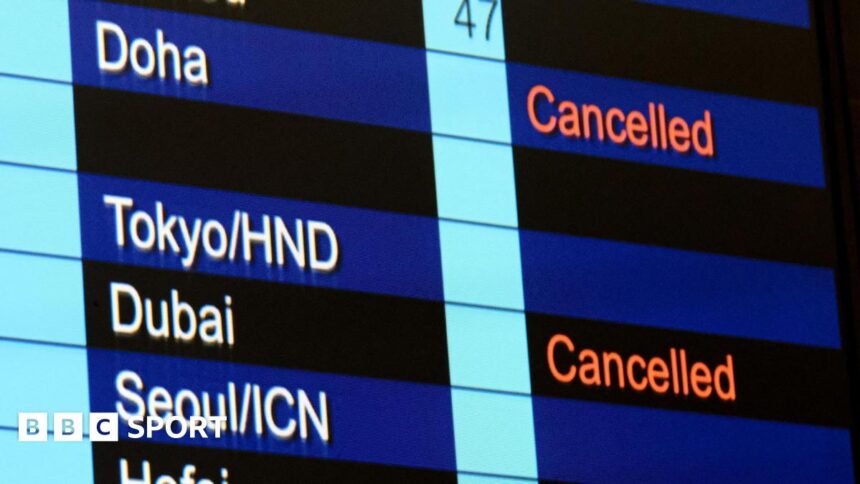
The world of elite sport operates on a clockwork precision of logistics, a globe-trotting circus where private jets, commercial hubs, and meticulously planned itineraries are the unseen backbone of competition. This week, that intricate system has been thrown into disarray not by a pandemic, but by geopolitics. As a severe crisis escalates across the Middle East, the closure of vast swathes of airspace above the Gulf has triggered a domino effect, cancelling thousands of flights and leaving an unlikely cohort stranded: international sports stars. Beyond the headlines of diplomacy and conflict, a new front has opened in airport lounges and hotel lobbies, where athletes, organizers, and governing bodies are scrambling to navigate the most serious disruption to global travel since COVID-19.
A Sky Shut Down: The Unprecedented Logistical Gridlock
The immediate trigger was Iran’s retaliatory response over the weekend, which saw projectiles fired toward several nations. The strategic decision by multiple Gulf states to close their airspace was a critical safety measure, but its ripple effect was instantaneous and global. Major international hubs like Dubai (UAE), Doha (Qatar), and Bahrain were suddenly cut off from their usual flow of overflight traffic, while direct flights were grounded.
This created a perfect storm for sports logistics:
- Cancelled and Diverted Flights: Over 2,000 flights were cancelled in a 48-hour period, with long-haul journeys between Europe and Asia particularly impacted as they rely heavily on Gulf air corridors.
- Shelter-in-Place Orders: With the UK Foreign Office advising over 100,000 registered British nationals in the region to follow local guidance—often to shelter in place—planned departures for athletes and support staff were abruptly postponed.
- Knock-on Event Disruption: Tours and competitions with events scheduled in the region or relying on the area as a transit point faced immediate uncertainty. The carefully synchronized movement of personnel, from players and coaches to referees and broadcast crews, ground to a halt.
Unlike a localized event or an airline strike, this was a systemic regional shutdown, paralyzing a crucial nexus of the world’s air travel and, by extension, the sports calendar.
Stranded in Luxury: The Athlete’s Unwanted Layover
For the sports stars caught in the chaos, the experience is a surreal blend of privilege and profound disruption. Imagine being at the peak of physical readiness for a major tournament, only to be told your exit route has vanished. Reports emerged of players from various sports—including tennis professionals transitioning from Middle Eastern events to European clay-court seasons, and footballers from Asian leagues—being grounded in five-star hotels that suddenly felt more like gilded cages.
“You train your whole life to manage pressure on the court, but there’s no playbook for this,” shared a veteran sports logistician who requested anonymity due to ongoing operations. “Athletes are creatures of routine. This isn’t just travel delay; it’s a complete rupture of their preparation—nutrition, sleep cycles, training facilities, and mental focus. The psychological impact of being grounded, while waiting for news in a potential conflict zone, cannot be understated.”
The situation also starkly highlighted the disparity within sports. While top-tier stars with dedicated management teams had resources to explore complex rerouting or private charters (where possible), lower-ranked players and smaller sports federations found themselves truly stranded, reliant on governing bodies and commercial airlines for solutions.
Sport’s Crisis Response: Ad-Hoc Committees and Contingency Planning
In boardrooms from Lausanne to London, emergency protocols were activated. Global sports bodies have, since the pandemic, developed more robust contingency plans, but this crisis tested them in a new way.
Immediate actions taken included:
- Real-Time Travel Cells: Dedicated teams from federations and player associations working around the clock to identify alternative routes, often looking at lengthy overland transfers to airports in Jordan or Oman, or southern reroutes around Africa.
- Event Postponements and Venue Shifts: For lower-profile events in the immediate region, postponement became the only viable option. Some organizers began exploring last-minute venue switches to neutral territories outside the airspace bubble.
- Player Welfare as Priority: Ensuring the safety and basic well-being of stranded individuals became the non-negotiable first step, ahead of any competitive considerations.
This incident has proven that while geopolitical risk assessment is now a standard part of planning for major events like World Cups, the constant churn of the annual global tour remains vulnerable to sudden, regional black swan events.
The New Normal: Predictions for Sport in a Volatile World
The current airspace crisis is a stark warning siren for the future of international sport. It forces a fundamental reassessment of how the industry operates. Several key predictions and trends are likely to emerge:
1. The Rise of the “Bubble” Redux: The pandemic-era concept of secure event bubbles may see a strategic return for competitions in or near geopolitically sensitive regions. While unpopular, a controlled environment guarantees athlete movement and event continuity.
2. Hyper-Diversified Travel Routing: Teams and agents will mandate more complex, multi-leg travel plans to avoid single points of failure. Flying via Istanbul or directly across alternative corridors, even if longer, may become standard for critical travel.
3. Geopolitical Clauses and Insurance Overhaul: Player contracts and event hosting agreements will see more stringent force majeure clauses specifically covering regional conflict and airspace closure. Insurance premiums for events in certain zones will skyrocket, potentially pricing out some hosts.
4. A Strain on the “World Tour” Model: The constant, globe-spanning schedule of sports like tennis, golf, and athletics may face pressure. A concentration of events within more stable continental blocks could become a safer, if less globally inclusive, model.
Conclusion: When the Final Whistle is Grounded
The image of the fittest humans on the planet, rendered stationary by forces far beyond the field of play, is a powerful metaphor for our interconnected age. This crisis has demonstrated that sport does not exist in a vacuum. It is a microcosm of global trade and transit, instantly vulnerable to the fissures of international relations. While the immediate airspace closures may ease, the precedent is set. The resilience of global sport is no longer just about recovering from athlete injuries or weather delays; it is about building infrastructure—both logistical and diplomatic—to withstand the tremors of a volatile world. The race is now on for sports administrators to prove they have learned the lessons from this unexpected timeout, ensuring that the next time crisis flares, the response is more than just a desperate scramble for the last seat on a rerouted flight. The game, it turns out, is about much more than the game itself.
Source: Based on news from BBC Sport.