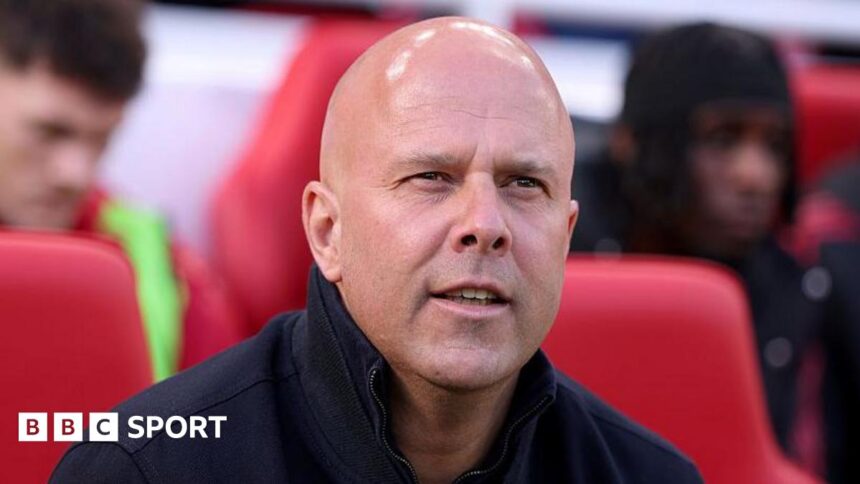
Arne Slot’s Premier League Lament: Are Set-Pieces Killing the Joy of Football?
Liverpool are in a rich vein of form, winning six of their last seven games across all competitions. Yet, the man steering the ship at Anfield is not celebrating the state of the English game. Instead, new manager Arne Slot has launched a passionate critique that cuts to the heart of a seismic tactical shift in the Premier League. Following a 5-2 victory over West Ham—where his own side’s first-half hat-trick came exclusively from corners—Slot declared the modern top-flight match is often no longer a “joy to watch,” and that his “football heart” is troubled by the growing, data-driven obsession with set-pieces. In one breath, he highlighted a paradox defining the 2024/25 season: even the beneficiaries are beginning to question the cost of success.
The Dead-Ball Revolution: From Afterthought to Centerpiece
Slot’s comments are not the grumblings of a purist out of touch with modern trends. They are backed by a startling statistical reality. This season, a whopping 27.5% of all Premier League goals have come from non-penalty set-pieces. This isn’t just a slight uptick; it’s the second-highest rate recorded since the 2009/10 season, signaling a definitive, league-wide strategic pivot. The set-piece has evolved from a sporadic opportunity into a meticulously planned, high-percentage offensive system, often overseen by dedicated coaches with backgrounds in analytics and biomechanics.
The archetype of this revolution is Arsenal. Mikel Arteta’s title-chasing side have turned the corner kick into a weapon of mass construction, scoring 16 goals from corners alone—three more than any other team and equalling the all-time Premier League season record. Their success is no accident; it is the product of relentless rehearsal, innovative blocking schemes, and targeting specific defensive vulnerabilities. When a team of Arsenal’s aesthetic pedigree builds a title challenge on such a foundation, it validates the approach for every other club, from champions to relegation battlers.
The Slot Philosophy vs. The Premier League Grind
To understand Slot’s frustration, one must understand his footballing identity. Arriving from Feyenoord, he was heralded as a disciple of the high-intensity, possession-based “gegenpressing” school, a spiritual successor to the era-defining football played under Jurgen Klopp. His ideal match is a dynamic, high-tempo contest won through coordinated pressing, rapid transitions, and inventive open-play combinations. The spectacle is as important as the result.
The modern Premier League, however, is increasingly a war of attrition decided in the penalty boxes. The margins are so fine, and the financial stakes so astronomical, that the artistic risk of a 20-pass team move is often deemed less valuable than the calculated chaos of a well-flung delivery into a crowded six-yard box. This creates a tactical stalemate in open play, where teams are so well-drilled and fearful of making mistakes that games can become congested, cautious, and—as Slot argues—devoid of joy.
- Data Dominance: Clubs invest millions in analytics to find marginal gains, with set-pieces offering the clearest return on investment.
- Time Efficiency: A set-piece goal can secure a result without the exhausting physical output required to break down a low block.
- The Contradiction: Even managers like Slot, who prefer open play, are forced to excel at set-pieces to compete, as Liverpool’s win over West Ham perfectly illustrated.
Beyond the Aesthetic: What’s Really at Stake?
This debate transcends a simple “long-ball vs. tiki-taka” argument. The concern is about the overall product and development of players. If the league’s economic model incentivizes goals from static situations, what happens to the development of creative midfielders, tricky wingers, and all-round strikers? The game risks becoming a series of rehearsed set-piece routines punctuated by cautious midfield battles, potentially stunting the very skills that made the Premier League a global entertainment juggernaut.
Furthermore, it alters the very nature of a “good” team. A side can now achieve a top-four finish or survive relegation based primarily on exceptional dead-ball proficiency, potentially at the expense of technical and tactical sophistication in general play. This isn’t to diminish the skill involved—delivery, timing, and movement are all arts in themselves—but it does represent a fundamental re-prioritization of footballing values.
The Future: A Cyclical Shift or a Permanent Change?
So, is the Premier League doomed to become a set-piece symphony? History suggests football is cyclical. The current trend will inevitably spawn its own counter-movement. We can already see the seeds being planted:
First, defensive adaptations will emerge. Just as zonal marking became a response to specific threats, new defensive systems and taller, more aerially dominant players will be sought to nullify the set-piece advantage. Second, the very prevalence of these tactics may force a return to tactical bravery in open play. Teams that can consistently break presses and play through a set-piece-obsessed opponent’s mid-block will find huge spaces to exploit.
Most importantly, voices like Arne Slot’s will keep the conversation alive. As more coaches with an attacking ethos enter the league, the demand for a rebalancing will grow. The Premier League’s global appeal is built on its perceived intensity, unpredictability, and yes, its joy. If that spectacle dims, the league’s brand suffers. The challenge for the next decade will be finding a harmony between the cold, hard efficiency of set-piece science and the warm, beating “football heart” that attracts billions of fans worldwide.
Conclusion: A Necessary Tension for Evolution
Arne Slot’s lament is a vital intervention at a critical juncture for the Premier League. His success at Liverpool, using the very set-pieces he critiques, underscores the inescapable reality of modern elite football: to change the game, you must first win within its current rules. The set-piece revolution is real, and it is delivering results. But football is, at its core, a form of entertainment and cultural expression. Slot’s comments serve as a crucial reminder that while percentages and points matter, the soul of the sport matters more.
The most likely future is not the death of open-play football, but a new synthesis. The teams that will dominate will be those who, like Arsenal, can master the dark arts of the set-piece while also possessing the courage and quality to create moments of spontaneous, breathtaking beauty. The tension Slot identifies is not a death knell, but the catalyst for the league’s next great evolution. The joy may be under pressure, but the fight to reclaim it has just begun.
Source: Based on news from BBC Sport.