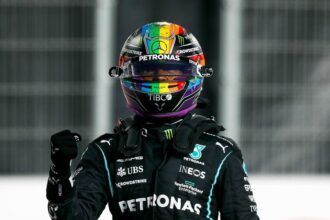
Hamilton’s Final Mission: A Champion’s Crusade for an African Grand Prix
The roar of a Formula 1 engine has echoed across five continents, from the neon-lit streets of Singapore to the desert dusk of Bahrain. Yet, for all its global conquest, the pinnacle of motorsport has left a conspicuous, continent-sized silence on the map. For seven-time world champion Lewis Hamilton, this isn’t just a scheduling gap—it’s a personal void. In a powerful declaration that intertwines his legacy with his heritage, Hamilton has stated he will not retire from F1 until he races a Grand Prix in Africa, turning a sporting ambition into a poignant crusade.
A Champion’s Personal Quest: Heritage and History Collide
Lewis Hamilton’s connection to Africa is woven into his identity. His paternal grandfather immigrated to the UK from Grenada, part of the African diaspora, and Hamilton has consistently embraced his “half-African” roots. This isn’t merely a box-ticking exercise for calendar diversity; it’s a heartfelt mission to connect the sport he has dominated to a part of the world he feels intrinsically linked to. His recent comments reveal a sustained, behind-the-scenes campaign. “I’ve been fighting in the background for the past six or seven years, asking the sport’s bosses ‘why are we not in Africa?'” Hamilton revealed. This persistent advocacy highlights a shift in the 39-year-old driver’s role—from superstar competitor to statesman and catalyst for change.
The historical context makes this absence even more striking. Africa was once a vibrant part of the F1 calendar. The legendary Kyalami circuit in South Africa hosted the South African Grand Prix intermittently from 1967 to 1993, a race won by icons like Jim Clark, Juan Manuel Fangio, and Nigel Mansell. Its removal left a 30-year gap, a period during which F1 exploded into a worldwide commercial juggernaut, yet bypassed an entire continent of 1.4 billion people. Hamilton’s mission is to correct what he sees as a historical and cultural omission before he hangs up his helmet.
The Roadblocks to an African Return: More Than Just a Track
While the desire is clear, the path to an African Grand Prix is fraught with the complex realities of modern Formula 1. The sport’s owners, Liberty Media, have expressed a desire to race on the continent, with CEO Stefano Domenicali frequently citing Africa as a priority. However, turning ambition into reality requires navigating a maze of logistical, financial, and political challenges.
- Infrastructure Investment: Hosting a contemporary F1 race requires a Grade 1 FIA-certified circuit, along with massive surrounding infrastructure for teams, media, and hundreds of thousands of fans. The capital expenditure runs into hundreds of millions of dollars.
- Commercial Viability: Race promotion fees are astronomical. Potential hosts must demonstrate a sustainable financial model, through government backing, corporate sponsorship, and ticket sales, in a competitive global market.
- Political Stability: F1 seeks long-term partnerships. Potential host nations must present a stable environment to secure the decade-long commitments the sport now prefers.
Two primary contenders have emerged: a revived Kyalami circuit in South Africa and a potential street circuit in Marrakech, Morocco. Kyalami, owned by billionaire Toby Venter, has undergone significant upgrades and is seen as the sentimental favorite, but questions remain about securing the government funding needed for the hosting fee. Morocco, with its existing Formula E race and strong tourism infrastructure, presents a compelling alternative. The decision ultimately hinges on which location can assemble the most convincing commercial and operational package.
Hamilton’s Legacy: Beyond the Podium
Hamilton’s ultimatum—“I don’t want to leave the sport without having a grand prix there”—transcends typical driver feedback. It places his own retirement timeline as leverage, applying unique pressure on F1’s decision-makers. His star power and status as the sport’s most recognizable face give this campaign a weight few others could muster. This is a hallmark of Hamilton’s later career: using his platform to advocate for diversity, inclusion, and now, geographical representation.
An African Grand Prix would represent a capstone on a career defined by breaking barriers. From being the first Black driver in F1 to a record-equaling seven world titles, Hamilton has consistently pushed the sport’s boundaries. Bringing F1 back to Africa would be a tangible, lasting achievement that outlives any single race victory or championship. It would fulfill a promise to a continent and inspire a new generation of fans and potential drivers, creating a legacy far beyond statistics.
Predictions and the Race Against Time
So, can it happen before Hamilton retires? The clock is ticking, but momentum is building. Industry whispers suggest 2026 or 2027 as realistic target dates for a return, aligning with the next wave of technical regulations and potential calendar reshuffles. Hamilton, now in his early 40s by that time, has shown no significant drop in performance and his physical fitness is unparalleled. His statement, “I’m going to be here for a while until that happens,” suggests a willingness to extend his career specifically for this goal.
We predict the following likely scenario:
- A deal will be announced within the next 18 months, with South Africa’s Kyalami holding a slight edge due to history and existing circuit upgrades.
- The race will be positioned as a night event to optimize global television audiences.
- It will become one of the most emotionally charged events on the calendar, akin to the atmosphere at Monza or Silverstone, with Hamilton as the central figure.
- His participation in that inaugural race will be one of the most celebrated moments in modern F1, regardless of finishing position.
The Final Checkered Flag: A Continent’s Wait and a Champion’s Promise
Lewis Hamilton’s quest for an African Grand Prix is more than a bucket-list item; it is a strategic and symbolic closing chapter to a historic career. It addresses a glaring omission in Formula 1’s “world championship” claim and seeks to heal a historical rift. For Africa, it represents long-overdue recognition and an economic and inspirational catalyst. For Hamilton, it is the final barrier to break, the last frontier to conquer.
As he chases an elusive eighth world title, this parallel pursuit off the track may define his legacy just as profoundly. The image of Hamilton, the most successful driver of all time, racing under the African sun for the first time, would be a full-circle moment for the sport and the man. It would be a victory not measured in points, but in perseverance, heritage, and the ultimate fulfillment of a champion’s promise to a continent waiting to roar its approval. The race to make it happen is now on, and for once, Lewis Hamilton is urging the entire sport to keep up.
Source: Based on news from BBC Sport.