‘I Believe More Than Before’: Igor Tudor’s Defiant Message After Spurs’ Palace Defeat
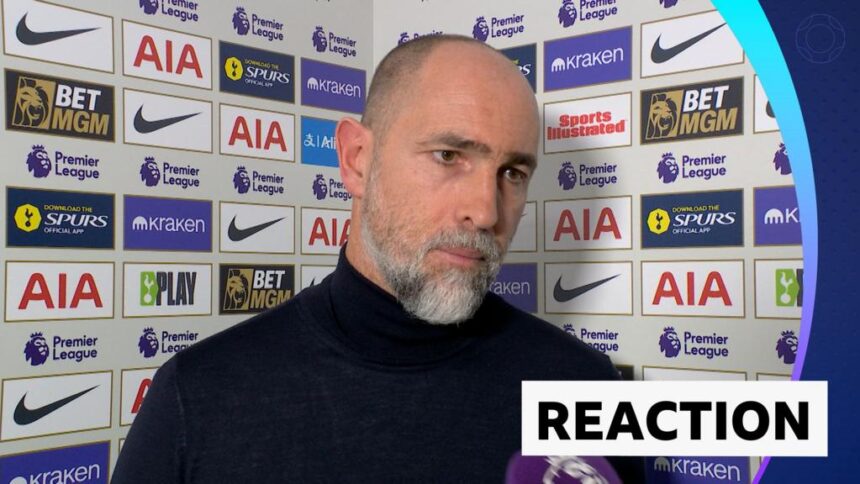
In the hushed, tense atmosphere of the Tottenham Hotspur Stadium, a familiar script played out. Another defensive lapse, another conceded goal, another home defeat. The 3-1 loss to Crystal Palace was a result that felt heavy with consequence, nudging Spurs perilously close to the Premier League’s dreaded dotted line. Yet, from the eye of this gathering storm, emerged a voice not of panic, but of unwavering, almost defiant, conviction. Head coach Igor Tudor, surveying the wreckage of a performance that left his team just one point above the relegation zone, delivered a message that cut through the gloom: “I believe more than before.”
A Performance of Two Halves and a Glaring Reality
The match itself was a microcosm of Tottenham’s turbulent season. A bright start, fueled by the energy of a crowd desperate for a rallying cry, yielded an early lead. For a moment, the clouds parted. But the foundation was brittle. Crystal Palace, organized and ruthlessly efficient on the counter, exposed the chronic defensive vulnerabilities that have plagued Spurs for months. The equalizer before halftime was a warning; the two second-half goals were a damning indictment.
Tudor’s side, for all their possession, lacked a cutting edge and, more worryingly, defensive resilience. The midfield was bypassed too easily, the backline appeared disconnected, and the once-feared press was reduced to a sporadic nuisance. The 3-1 scoreline was no fluke. It was a clinical dissection by a team that understood its opponent’s weaknesses and executed a perfect game plan. For the Spurs faithful, the highlights—Palace’s swift, incisive breaks—made for grim viewing, each goal deepening the sense of a club in a full-blown identity crisis.
Tudor’s Unshakeable Belief: Faith or Folly?
In the post-match press conference, the narrative was set for a manager under siege. Instead, Igor Tudor presented a fascinating study in contrarian leadership. “The moment will pass,” he insisted, his tone calm and resolute. This was not the rant of a man in denial, but the calculated stance of a coach trying to build a psychological bulwark against the tide of negativity.
So, what fuels this belief? Tudor’s perspective is likely rooted in the internal metrics of management: training ground application, player response in sessions, and the granular data beyond the 90-minute result. His statement suggests he sees a squad that hasn’t quit, a group that is still listening and trying to implement his ideas, even as they falter under the blinding lights of matchday.
Key elements of Tudor’s positive outlook may include:
- Process Over Outcome: A focus on building sustainable systems, believing that correct repetition in training will eventually translate to points, even if the current results are painful.
- Player Psychology: Understanding that public doubt from the manager could be the final nail in the coffin. His unwavering belief is a strategic tool to maintain squad morale.
- The “Moment” Theory: Framing this as a temporary, albeit severe, dip—a “moment” in the long arc of a season and a project—that can be weathered with steadiness.
However, the chasm between this internal belief and the external reality is vast. The Premier League table is unforgiving, and relegation fears are now a tangible, weekly pressure for a club of Tottenham’s stature and ambition.
The Stark Road Ahead: Analysis and Predictions
The cold, hard truth is that belief alone doesn’t earn points. Tudor’s philosophy is about to be stress-tested like never before. The defensive unit, in particular, requires immediate and radical surgery. Individual errors are compounding systemic issues, leaving the goalkeeper consistently exposed. In attack, the reliance on moments of individual brilliance has proven insufficient; they need to develop a coherent, reliable strategy for breaking down disciplined sides.
The fixture list offers no respite. The coming weeks will be a brutal examination of nerve and quality. Tudor must find a way to translate his training ground conviction into a simple, effective, and resilient matchday formula. This likely means sacrificing some aesthetic principles for pragmatic solidity—a compact shape, reduced defensive risk, and maximizing set-pieces.
Expert prediction: The next five games will define Tottenham’s season—and Igor Tudor’s tenure. If his belief translates into a crucial win or two, it could galvanize the squad and provide the platform for survival. However, if results don’t change swiftly, the pressure will become unsustainable. The club is at a crossroads where managerial faith and on-pitch performance must converge immediately. The margin for error has effectively vanished.
A Defining Chapter for Club and Coach
Igor Tudor has thrown down a gauntlet, not just to his players, but to the entire narrative surrounding Tottenham Hotspur. In stating “I believe more than before,” he has made his stance the central story. This is now Tudor’s project, for better or worse. His unwavering confidence will either be remembered as the foundational stone of a great escape or the tragic hubris that preceded a historic fall.
For Spurs, this is about more than avoiding relegation; it’s about rediscovering an identity. The days of being a Champions League staple feel like a distant memory. The present challenge is raw and fundamental: survive. Tudor is betting his reputation that he can guide them through it. His message is clear: panic is not an option, the process is sound, and the moment of crisis will pass.
Only the relentless grind of the Premier League will prove if this belief is prophetic or misplaced. But one thing is certain: at Tottenham Hotspur, conviction is now the only currency left. The world is watching to see if it will be enough.
Source: Based on news from BBC Sport.