Carrick Seeks ‘Lessons’ in the Wake of First Setback as Manchester United Manager
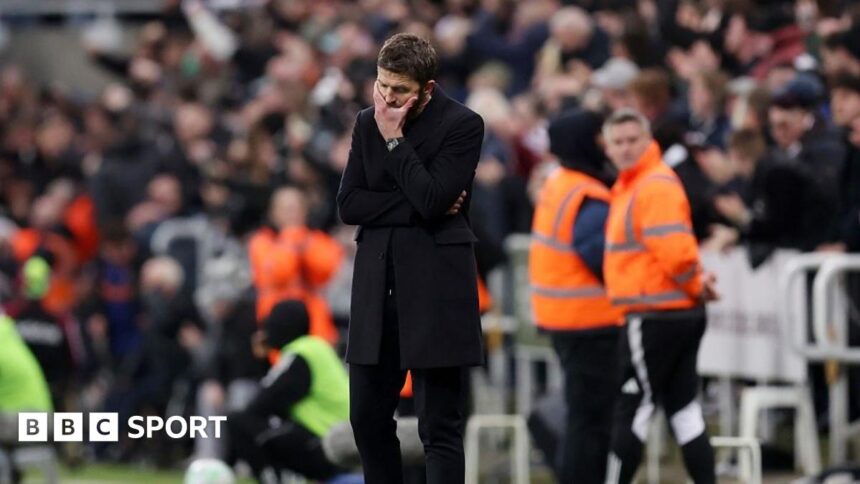
The first defeat is always a moment of truth. For Michael Carrick, whose interim tenure at Manchester United began with a defiant, tactical victory at Villarreal, the reality of the monumental task ahead arrived not with a crash, but with a sobering, instructive thud. The specifics of the loss—the opponent, the scoreline—will fade. What remains, and what defines the next chapter, is the response. In the immediate aftermath, Carrick’s demeanor was a study in composed leadership. There were no histrionics, no public floggings, only a quiet, determined focus on the path forward. “At moments like this,” Carrick noted, “all you can do is say the right things.” And for this caretaker manager, the right things are built on foundation, not fury.
A Disappointment Handled with Dignity
Publicly addressing a poor result is a rite of passage for any manager, but the approach reveals the philosophy. Carrick’s post-match comments were a masterclass in balanced accountability. He acknowledged the disappointment, conceded the performance fell short of the standards required, and immediately pivoted to the future. “The defeat was disappointing, the performance was not what we hoped for, and lessons will be learned,” he stated, encapsulating the situation without drama. Crucially, he added, “The team will respond in a positive way.” This triad—acknowledgment, learning, positive response—forms the bedrock of his crisis management. It is a stark, deliberate contrast to the volatility that has often surrounded the club.
It is not in Michael Carrick’s nature to throw players under the bus. This intrinsic characteristic may be his greatest asset in stabilizing a fractured squad. His language is one of collective responsibility and shared solution-seeking. Unlike the incendiary remarks that have echoed from the dugout in recent years, Carrick’s analysis is internal, constructive, and devoid of public blame. This approach fosters a safer environment for players to regain form and confidence, knowing mistakes will be analyzed in the video room, not sensationalized in the media.
The Carrick Doctrine: A Stark Contrast to Past Volatility
To understand the significance of Carrick’s method, one need only glance back. The shadow of his predecessor, Ole Gunnar Solskjaer, and the intense scrutiny of figures like Ruben Amorim, looms large. Amorim, after a home defeat to Brighton just over a year ago, offered a brutal assessment that Carrick would never utter: labeling the display as perhaps belonging to “the worst team in the history of Manchester United.” That is the kind of existential, morale-shattering critique that Carrick instinctively avoids.
His doctrine is different. It is built on the principles he honed as a player: composure under pressure, reading the game, and making the correct, calm decision. Translating that to management means:
- Focus on Process Over Public Emotion: The work is done on the training ground. Rants are for the dressing room, not the press conference.
- Protecting the Shield: Public criticism of individual players erodes trust. Carrick’s default is to defend the group, ensuring the outside world sees a united front.
- Contextualizing Setbacks: A loss is a data point, not an identity. His job is to frame it as a solvable problem, not a terminal diagnosis.
This is not about being soft; it is about being strategic. In a squad laden with talent but seemingly low on belief, creating a psychologically secure environment is the first step to unlocking performance.
What Lessons Must Be Learned? An Expert Analysis
So, what are the “lessons” Carrick alluded to? The defeat, regardless of the opponent, likely exposed several key tactical and personnel issues he must now address before a permanent manager is appointed.
Midfield Balance and Control: United’s perennial issue resurfaced. The lack of a disciplined, positionally-aware holding midfielder leaves the defense exposed and the attack disconnected. Carrick’s challenge is to find a combination—perhaps involving Fred’s energy or Matic’s experience—that can provide a stable platform without the suspended Bruno Fernandes.
Defensive Coordination: Individual errors are one thing, but a lack of organized defensive shape is systemic. The high line looked vulnerable, and communication between Harry Maguire and his partners seemed strained. Carrick, a former midfielder renowned for his defensive awareness, must drill a more compact and communicative unit.
Attack Without a Focal Point: In the absence of a consistent, fit number nine, the attacking movements can appear purposeless. Cristiano Ronaldo’s threat is undeniable, but the system must be tailored to provide him service while also creating alternative avenues. The wide players must offer more consistent end product.
Game Management: How does the team react to going a goal down? The response in this loss appeared fragmented. Carrick’s in-game management and substitutions will be under the microscope as he seeks to instill a clearer, more resilient mentality in shifting momentum.
Predictions: How United and Carrick Respond
The immediate future is a critical test of Carrick’s mantra. The prediction here is that we will see a reaction, but it may be more about foundation than fireworks.
A Return to Pragmatic Basics: Expect Carrick to simplify the tactical approach. He will prioritize defensive structure and midfield control, potentially sacrificing some flair for stability. The aim will be to build a performance from a base of solidity.
Key Players Will Be Backed: Don’t expect rash droppings of under-fire stars like Maguire. Carrick’s nature suggests he will show faith, aiming to coach them back into form through repetition and reassurance. His leadership will be tested if that faith is not repaid.
The Bridge to the Future: Carrick’s ultimate role is that of a steward. His success won’t be measured in trophies, but in the state of the squad he hands over. If he can stop the emotional bleeding, instill some tactical discipline, and guide the team to a respectable league position while navigating a tough Champions League group, his interim spell will be deemed a success. He is laying down a marker for the kind of culture a future manager should inherit: one of professionalism and quiet resolve, not public recrimination.
Conclusion: The Quiet Architect of United’s Reset
Michael Carrick’s first loss as Manchester United manager was inevitable. Its value lies entirely in what comes next. In his refusal to indulge in public criticism and his immediate focus on “lessons,” he is attempting a profound cultural reset. He is modeling the behavior he expects from his players: calm, analytical, and forward-looking. In an era where football management is often a theater of loud personalities and explosive soundbites, Carrick’s quiet authority is a fascinating experiment. It is a gamble on the power of dignity and detailed coaching over fear and public accountability. The defeat was disappointing, the performance subpar. But in Michael Carrick’s measured response, Manchester United may have finally found the steady hand to guide them through the storm, not by shouting over the thunder, but by calmly charting a new course.
Source: Based on news from BBC Sport.