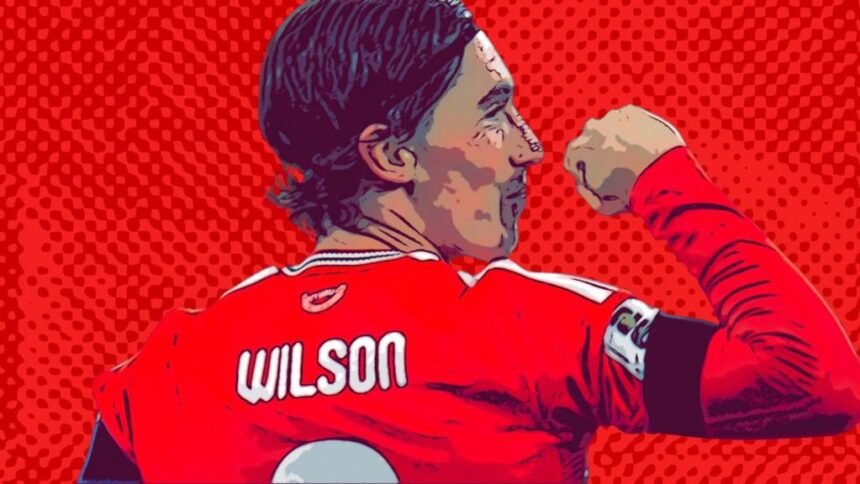
Harry Wilson: The Heir Apparent Who Refuses the Crown
The shadow is long, stretching across a generation of Welsh football. The legacy is immense, a tapestry woven with moments of pure, unadulterated genius that propelled a nation to unprecedented heights. Gareth Bale’s retirement left a void not just in the Wales starting XI, but in the very soul of the Red Wall’s hope. In the search for a new talisman, the spotlight has inevitably fallen on the man whose recent form sparkles brighter than most: Harry Wilson. Yet, as Wales stand on the precipice of a World Cup play-off against Bosnia-Herzegovina, the man in form delivers a sobering, unifying message. He is not the replacement. He never could be.
Carrying the Torch, Not Filling the Boots
Since Bale’s international farewell, Harry Wilson has embarked on a remarkable run of form that demands attention. The statistics are compelling: nine goals and three assists in his last 12 internationals. This purple patch was crowned by a sublime hat-trick while wearing the captain’s armband in the 7-1 demolition of North Macedonia last November. On paper, the narrative writes itself: the prince is ready to claim the throne.
But Wilson, with a maturity that belies the excitement around him, is deftly dismantling that narrative. “I’ve never seen myself as replacing Gareth Bale,” he has stated, a sentiment that resonates with both humility and stark realism. For Wilson, and for Wales, this is not about anointing a singular successor. It is about evolution. Bale’s legacy for Wales is monolithic—a combination of clutch goals, athletic marvels, and global stardom that lifted the entire project. You don’t “replace” that. You honour it by forging a new path.
“No-one will ever be able to fill the boots of Bale,” Wilson concedes. This isn’t a lack of ambition; it’s a profound understanding of football history and team dynamics. The focus, instead, is on collective responsibility. The goals, the creative burden, the moments of inspiration that Bale so often singularly provided must now be distributed across a new, emerging core.
Wilson’s Evolution: From Prospect to Pillar
So, if not a direct replacement, what is Harry Wilson’s role in this new Wales? The answer lies in his own transformation. Once considered a talented but inconsistent flair player, Wilson has matured into a decisive, central figure for both club and country. His technical quality was never in doubt—the wand of a left foot capable of sublime free-kicks and precise passes has been his trademark since he burst onto the scene.
However, his recent impact is defined by smarter movement, increased tactical discipline, and a potent goal threat from advanced midfield positions. His hat-trick against North Macedonia showcased his full arsenal:
- Clinical Finishing: A confident dink over the goalkeeper for his first.
- Positional Intelligence: A well-timed run and composed finish for his second.
- Set-Piece Prowess: A trademark, curling free-kick to complete his treble.
This evolution speaks to a player ready to shoulder responsibility, but within a system. Under manager Rob Page, Wales is transitioning from a counter-attacking side built around Bale’s and Aaron Ramsey’s runs, to a more possession-based, proactive unit. Wilson’s skill set—his ability to receive between the lines, link play, and arrive late in the box—is becoming central to Wales’ new identity.
The Collective Charge: Wales’ New Attacking Blueprint
The post-Bale era is not the “Harry Wilson Show.” It is an ensemble piece. Wilson’s emergence is one crucial part of a broader, exciting attacking mosaic that gives Wales genuine hope for the future. The burden is shared, creating a multi-faceted threat that can be harder for opponents to nullify than a single superstar.
Alongside Wilson, players like Brennan Johnson offer blistering pace and directness. Daniel James brings relentless energy and width. Kieffer Moore remains a formidable aerial target and focal point. Then there’s the returning Aaron Ramsey, whose experience and late-running guile add another dimension. Wilson often acts as the connective tissue in this setup, the player who can find the pass to release the speedsters or play off the physicality of Moore.
This collective approach is Wales’ greatest strength heading into the play-offs. Bosnia-Herzegovina cannot simply man-mark one danger man out of the game. They must contend with a dynamic and varied Welsh attack capable of scoring from multiple sources. Wilson’s leadership, now often manifested with the captain’s armband, is as much about orchestrating this collective as it is about individual brilliance.
Play-Off Pressure and the Road Ahead
All narratives converge on the high-stakes stage of the World Cup play-off semi-final in Cardiff. The atmosphere will be electric, charged with the memory of past play-off triumphs led by Bale and the anxiety of a future without him. This is the ultimate test for Wilson and Wales’ new generation.
Can they thrive under the unique pressure of a one-off match where the dream of a World Cup hangs in the balance? Wilson’s recent form suggests he is ready for the moment. His performances in big Championship fixtures for Fulham, where he has been instrumental in their promotion charge, demonstrate a player comfortable with expectation.
The prediction here is not for a Bale-esque, 30-yard thunderbolt to win the game—though Wilson is certainly capable of it. The prediction is for a performance of control, creativity, and shared responsibility. Wales’ play-off success will likely hinge on Wilson unlocking the defense with a key pass, or making a clever run to create space for others, as much as it will on him scoring. His understanding that he is a pivotal piece of a larger puzzle, not a lone savior, is what makes him and this Wales team so dangerous.
Conclusion: Honouring the Past by Building the Future
Harry Wilson’s refusal to be labelled “the next Gareth Bale” is the smartest and healthiest stance possible for Welsh football. It liberates him from an impossible comparison and allows the nation to appreciate a exceptional talent on his own merits. He is not replacing an icon; he is helping to build a new era.
The legacy of Bale, Ramsey, and Joe Allen is not a pair of boots to be filled, but a standard to be upheld—a standard of passion, commitment, and moments of magic that define a nation’s sporting story. Harry Wilson, with his wand of a left foot, his newfound consistency, and his captain’s mentality, is not carrying the weight of the past on his shoulders. He is carrying the torch for the future, illuminating a path where Wales’ success is built not on one star, but on a constellation of them. The journey continues in Cardiff, and Wilson, emphatically his own man, is ready to lead the way.
Source: Based on news from BBC Sport.