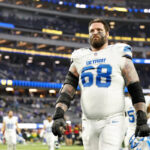
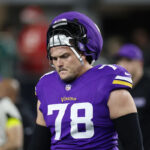
Veteran Anchor Ryan Kelly Announces Retirement, Leaving Vikings with Pivotal 2026 Void
The anchor has weighed anchor. In a move that reverberates beyond a simple roster transaction, Minnesota Vikings center Ryan Kelly announced his retirement from professional football on Friday, closing the book on a distinguished ten-year career. The decision, prompted by health considerations after a challenging 2025 season, instantly creates a critical, clear-eyed question for the franchise’s future: who will command the heart of their offensive line in 2026?
A Career Forged in Excellence and Abruptly Concluded by Concern
Ryan Kelly’s retirement statement, delivered via social media, was a model of the class and introspection that defined his tenure. “Ten seasons,” Kelly wrote. “What an incredible ride it was. I was blessed to be around some of the greatest people this sport has to offer. I always wanted to leave each place better than how I found it and with that I can hang my hat. Forever grateful for my family and brothers! Cheers.”
This was not a retirement of a player simply out of gas, but one making a prudent, personal decision for his long-term well-being. The 2025 season proved a difficult chapter for the 32-year-old. After signing with Minnesota last offseason following nine foundational years with the Indianapolis Colts, Kelly started eight games. However, his season—and ultimately his career—was cut short in December when he was placed on injured reserve after suffering his third concussion of the year. That sobering milestone clearly played a central role in his choice to walk away, a reminder of the very real human cost embedded in the sport’s brutal physicality.
Kelly’s on-field resume speaks to a legacy of elite performance:
- First-Round Pedigree: Selected 18th overall in the 2016 NFL Draft by the Colts.
- Pro Bowl Consistency: Earned four Pro Bowl selections, a testament to his peer respect.
- All-Pro Recognition: Named a second-team All-Pro in 2020, his peak individual season.
- Iron Man Durability: Started all 129 career games he played, embodying reliability.
The Vikings’ Immediate Offseason Conundrum
Kelly’s departure is more than a sentimental loss; it’s a tactical blow to a Vikings offensive line that sought his veteran stability. His brief tenure in Minnesota was intended to solidify the center position, providing a savvy, communicative presence for the quarterback and a steadying force in the run game. His absence now leaves a gaping hole at one of football’s most cerebral positions.
The Vikings’ front office, led by General Manager Kwesi Adofo-Mensah, now faces one of its most definitive offseason puzzles. The center role is the offensive line’s quarterback, responsible for protection calls, line shifts, and identifying defensive pressures. Replacing a player of Kelly’s experience and acumen cannot be an afterthought. The team’s options are clear, each carrying significant weight for the 2026 campaign:
- Internal Development: Does Minnesota have a successor on the current roster? A young guard may be asked to convert, or a backup from 2025 may get first crack. This is the cost-effective option, but it comes with undeniable risk.
- Free Agency Gamble: The veteran free agent market could offer a short-term plug, mirroring the Kelly signing itself. This would be a bridge solution, but stability at center is rarely found cheaply or easily in March.
- Draft Investment: The most likely and impactful path. Using a premium draft pick on a center signals a long-term commitment to rebuilding the line’s core. This move would align with a younger roster timeline but asks a rookie to shoulder immense responsibility from Day One.
Expert Analysis: The Ripple Effect of Kelly’s Decision
From a strategic lens, Kelly’s retirement accelerates a looming decision for the Vikings’ offensive identity. “Center isn’t just another position,” notes former NFL offensive line coach and current analyst, Ben Lattimore. “It’s the nexus of the entire operation. When you lose a player like Kelly—even for one season—you’re not just losing a blocker. You’re losing the offensive line’s primary communicator, its setter of tones. The Vikings’ entire protection scheme now needs to be taught through a new voice, and that has a ripple effect on the quarterback, the running backs in pass pro, everyone.”
The decision also underscores the league’s ongoing and delicate relationship with head injuries. Kelly, a physically tough and resilient player, chose to listen to his body after a third concussion. His retirement at 32, with likely still-strong physical ability, will be seen by many as a wise, precedent-setting choice that prioritizes life after football. It’s a powerful, quiet statement that may resonate with other players facing similar crossroads.
For the Colts, Kelly’s retirement closes the final page on a key era. He was the reliable pivot for years, protecting Andrew Luck and later anchoring the line for Jonathan Taylor’s rushing titles. For the Vikings, his retirement is the abrupt start of a new challenge. The timing is particularly acute if the team is committed to developing a young quarterback; nothing is more valuable for a young signal-caller than confidence in the pocket’s interior.
Predictions for the Vikings’ 2026 Offensive Line
Forecasting the Vikings’ next move requires reading the tea leaves of the draft and their recent team-building philosophy. Given Adofo-Mensah’s analytical, value-driven approach, using a high draft pick on a center of the future seems the most probable outcome. Look for Minnesota to potentially target the position in the late first or second round of the 2026 draft, seeking a player who can be a decade-long solution.
The prediction here is twofold:
- The Bridge Veteran: The Vikings will likely sign a competent, mid-tier free agent center to a one or two-year deal. This player’s job will be to compete and potentially start, providing a safety net.
- The Draft Heir: Minnesota will then select a center within the first three rounds of the draft. The ideal scenario sees the rookie learn for a portion of the season before taking over the reins, but the competition will be open. The identity of the 2026 Vikings line will be fundamentally shaped by this succession plan.
Failure to adequately address this vacancy could have cascading negative effects, destabilizing pass protection and undermining the offensive system’s consistency. Success, however, finding a new long-term anchor, could solidify the unit for the next half-decade.
A Final Snap: Cheers to a Career Well-Played
Ryan Kelly’s career arc—from first-round pick to Pro Bowl fixture to a respected veteran making a sound final call—is one of profound professionalism. He achieved individual honors, embodied durability, and by his own measure, left his teams better than he found them. His concise retirement message, ending with a simple “Cheers,” is a fitting toast to a job well done.
For the Minnesota Vikings, the practical work begins now. The echo of Kelly’s final snap fades, replaced by the urgent hum of the scouting combine, draft boards, and contract negotiations. The 2026 season’s prospects will be influenced heavily by how they solve the equation he leaves behind. Finding a new center is a technical necessity, but replacing the wisdom and stability of a player like Ryan Kelly is a far taller task. His retirement marks the end of an era for him, and the beginning of a defining search for the Vikings.
Source: Based on news from Yahoo Sports.