The Panenka Gamble: Brentford’s Costly FA Cup Lesson in Penalty Psychology
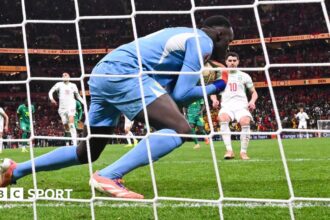
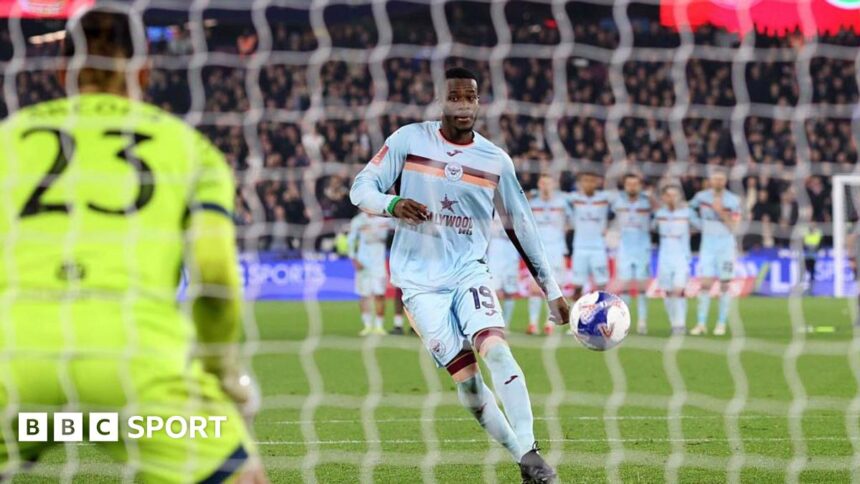
The penalty shootout is football’s purest distillation of pressure. A test of nerve, technique, and psychological warfare played out from twelve yards. For Brentford’s Dango Ouattara on a chilly Monday night at the London Stadium, that pressure crystallised into a single, fateful decision: the Panenka. His weak, dinked effort floated gently into the waiting gloves of West Ham’s Alphonse Areola, the only miss of the shootout. In that moment, Brentford’s FA Cup journey, and a dream of a first major final, evaporated. The aftermath leaves a burning question for players, coaches, and fans alike: Is there ever a right time for a Panenka?
The Anatomy of a High-Stakes Gamble
To understand the weight of Ouattara’s choice, one must first appreciate the context. Brentford, having fought back twice through Igor Thiago to cancel out Jarrod Bowen’s brace, had matched a heavily-rotated West Ham over 120 minutes. Thomas Frank had named a strong side, signalling serious ambition. The shootout was sudden death in its truest sense; a place in the FA Cup quarter-finals hung on every kick.
Ouattara stepped up for Brentford’s third penalty. The score was 2-2. The pressure was immense, but not yet at its absolute peak—that would come with the fifth or sudden-death kicks. This is a critical detail. A Panenka is not merely a technical skill; it is a statement of supreme confidence, even arrogance. It is a psychological knockout punch aimed at the goalkeeper. When executed perfectly, as by Andrea Pirlo against England in Euro 2012, it is immortalised as an act of genius. When it fails, as it did for Ouattara, it is remembered as an act of hubris.
The execution was flawed. A successful Panenka requires conviction, disguise, and just enough lift to clear a goalkeeper who might stay on their line. Ouattara’s effort lacked all three. It was a tentative chip, easily read and comfortably caught by Areola, who barely needed to move. The gamble didn’t just fail; it backfired spectacularly, handing all momentum back to West Ham.
Decoding the Panenka: When Audacity Becomes Folly
The Panenka, named after Czechoslovakian midfielder Antonín Panenka whose audacious chip won the 1976 European Championship, exists in a unique category of risk versus reward. We can break down its prerequisites:
- Match Context: Is the game already won or lost? A Panenka in a group-stage shootout carries different weight than one in a cup knockout.
- Shootout Context: Is it the first penalty, setting a tone, or a later, decisive kick? The later it is, the greater the risk.
- Psychological Read: Has the goalkeeper been diving aggressively? A Panenka preys on a keeper’s anticipation.
- Player Mentality: Is the taker known for icy composure, or is he a player prone to rushed decisions? The personality is key.
- Team Morale Impact: What does a miss do to your teammates? A spectacular save is one thing; a caught chip can feel demoralising.
In Ouattara’s case, the context was high-stakes but not yet final. The read on Areola was unclear. Most damningly, the lack of conviction in the strike suggested a decision made in doubt, not certainty. This transforms the Panenka from a weapon of psychological warfare into a gift to the opposition.
The Expert’s View: Weighing Nerve Against Necessity
From a coaching and sports psychology perspective, the Panenka is rarely, if ever, a coached tactic. It is an individual’s instinctual choice in the moment. “The problem with the Panenka isn’t the technique itself,” suggests a former Premier League sports psychologist. “It’s that it often represents a player trying to appear calm, rather than actually being calm. True composure under that pressure usually leads to a powerful, placed finish. The Panenka can be a mask for anxiety.”
Data analysts also point to its low percentage success rate in high-pressure situations outside of its iconic moments. The margin for error is infinitesimal. A powerful shot driven down the middle can still score if the keeper dives; a poorly executed Panenka is a certain miss.
For Brentford’s Thomas Frank, the aftermath is a delicate management issue. Publicly, he will protect his player. Privately, the lesson will be clear: in such a crucial moment, execution must trump exhibitionism. The primary goal is to score, not to style a goal.
Looking Ahead: Brentford’s Response and West Ham’s Boost
The immediate fallout from this incident will be fascinating to track. For Brentford, the challenge is to ensure this singular moment does not define their season. They must channel the disappointment into their Premier League survival battle. For Dango Ouattara, it is a brutal rite of passage. How he responds in his next appearance, and whether he retains the confidence to take set-pieces or drive at defenders, will reveal his mental fortitude.
Conversely, for West Ham, Areola’s catch was a monumental boost. It was a moment that validated David Moyes’ decision to rotate, as his squad players held firm and his trusted keeper delivered. The momentum from such a dramatic, morale-sapping win for the opposition can fuel a cup run. They march into the quarter-finals with a tangible sense of destiny.
Prediction: We will see fewer attempted Panenkas in high-profile shootouts for the remainder of this season. The visual of Areola calmly catching the ball will be fresh in the mind of every player stepping up. The trend may swing back towards power and placement, a retreat to safer, more reliable methods under extreme duress.
Conclusion: The Eternal Temptation of the Chip
So, is there a right time for a Panenka? The answer is complex. Technically, the “right time” is when a player possesses the absolute technical mastery and unshakeable mental certainty to execute it, often in a moment where they have perfectly read the goalkeeper’s tendencies. Realistically, that confluence of factors is vanishingly rare.
Dango Ouattara’s costly miss at the London Stadium serves as a stark, modern parable. The Panenka is football’s siren song—a temptation to achieve immortality in one audacious move. But as Brentford paid the price, the shootout remains a test of fundamentals. It rewards clarity, power, and conviction, not improvisational flair. The Panenka’s place in football lore is secure, but its place in the practical toolkit of the modern player, at least in the white-hot crucible of a knockout shootout, looks more questionable than ever. The legacy of Antonín Panenka endures, but for those who dare to imitate him, the line between legend and fool is perilously thin.
Source: Based on news from BBC Sport.