The Benidorm Bellow: Inside the Brits’ Exodus to the ‘Costa del Cheltenham’
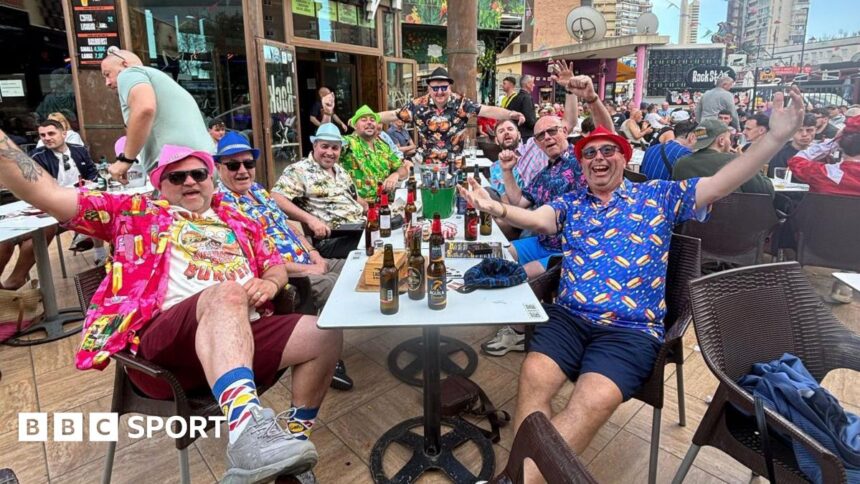
The Cheltenham Festival is an assault on the senses. The thunderous ‘Cheltenham Roar’ as the tape drops, the chill of the March air, the scent of damp turf and steaming hot whiskey. It is a ritual steeped in tradition, played out in the shadow of the Cotswold Hills. But for a growing legion of racing fans, the soundtrack to Gold Cup day in 2024 isn’t the roar of the crowd, but the clink of ice in a glass on a sun-drenched Spanish terrace. Welcome to the ‘Costa del Cheltenham’, where thousands are swapping overcoats for sunscreen, creating a seismic shift in how Britain’s biggest racing party is celebrated.
From Prestbury Park to the Pool Bar: The Sun-Seeking Exodus
For decades, the pilgrimage to Cheltenham was non-negotiable. Now, a perfect storm of economic pressure and changing consumer habits is fuelling an unexpected migration. The math, for many, is irresistibly simple. A four-day trip to the Festival, with its premium-priced accommodation, costly race entry, food, drink, and transport, can easily spiral into a four-figure sum per person. Contrast that with a package holiday to Benidorm, where a week in the sun, with flights, a hotel, and all-inclusive sustenance, can cost less than a single day’s budget at the track.
This isn’t a quiet holiday coincidence. It’s a coordinated takeover. Irish pubs and sports bars along the Costa Blanca have become the new enclaves of jump racing fandom. Venues open at dawn to serve full English breakfasts alongside the first races, with giant screens, betting facilities, and a sea of green and gold. The atmosphere is less tweed and trilby, more shorts and replica shirts, but the passion is undimmed. “We started in 2020, almost as a laugh,” says Dahl, a fan who now organises an annual trip. “Now it’s a proper tradition. We get the racing, the sunshine, the camaraderie, and we even build a golf trip into the itinerary. The value is unbeatable.”
Value vs. Atmosphere: The Heart of the Racing Debate
This mass migration raises a fundamental question for the sport: what is the core product of the Cheltenham Festival? Is it the racing itself, or the irreplaceable, visceral experience of being there? The fans in Spain are voting with their euros.
The cost-of-living crisis has accelerated the trend, making the Spanish option a financially savvy, if unconventional, choice. But it’s not just about money. The Benidorm experience offers a consistent, comfortable, and social way to consume every race, without the logistical headaches. As one fan succinctly put it: “Benidorm offers value but Cheltenham offers the true atmosphere.” This dichotomy defines the new era.
Yet, something is inevitably lost in translation. The tribal electricity of the parade ring, the shared groan of a near-miss at the last, the collective eruption for a home winner—these are diluted over 1,300 miles. The ‘Benidorm Bellow’ is a different beast: more sustained, less spiky, fuelled by holiday spirit rather than track-side tension.
- Financial Accessibility: A week in the sun can cost less than a day at the Festival, opening the event to a broader audience.
- Logistical Ease: No traffic jams, no expensive taxis, no scrambling for accommodation.
- Social Experience: A holiday with friends centered around the racing, often extending the trip with other activities.
- The Trade-Off: A sacrifice of the iconic, ground-shaking atmosphere that defines Cheltenham’s greatest moments.
The Future of Fandom: A Hybrid Model for a Global Sport
This is more than a travel fad; it’s a case study in modern sports consumption. The Cheltenham Festival is a premium live event competing in a global entertainment market. For the attendee, it’s a bucket-list experience. For the viewer, it’s content to be consumed in the optimal setting—and for thousands, that setting now has palm trees.
Racing’s authorities and hospitality businesses should see this not as a threat, but as validation of the Festival’s powerful draw and an opportunity. Could there be official, high-quality ‘Festival Villages’ in European resorts, with guest jockey appearances and virtual reality experiences? Might travel operators create curated, racing-themed packages that enhance the abroad experience while strengthening ties to the sport?
The digital streaming age has untethered fandom from geography. Just as football fans gather in bars worldwide to watch their team, racing fans are creating their own satellite communities. The challenge for Cheltenham is to ensure those communities feel connected to the mothership, perhaps through exclusive digital content or interactive events that bridge the gap between Gloucestershire and the Costa Blanca.
Conclusion: Two Festivals, One Unifying Passion
The rise of the ‘Costa del Cheltenham’ is a testament to the enduring, adaptable passion of jump racing fans. It reflects a pragmatic, experience-driven approach to leisure spending in tough economic times. While the purist may shudder, this parallel celebration is, in its own way, a roaring success. It keeps the sport at the center of a social holiday, engages fans who might otherwise be priced out, and broadcasts the Festival’s appeal across continents.
The Cheltenham Festival itself is in no danger. The hallowed turf, the roar, the raw emotion—these remain unique and priceless. But now, they have a vibrant, sun-bleached cousin. One Festival, two expressions of fandom. Whether in the shadow of Cleeve Hill or by the Mediterranean Sea, the heart of the action still beats to the rhythm of hooves and the dream of the winner’s enclosure. The sport isn’t losing fans to Spain; it’s discovering that its community is bigger, more resourceful, and thirstier than anyone imagined.
Source: Based on news from BBC Sport.