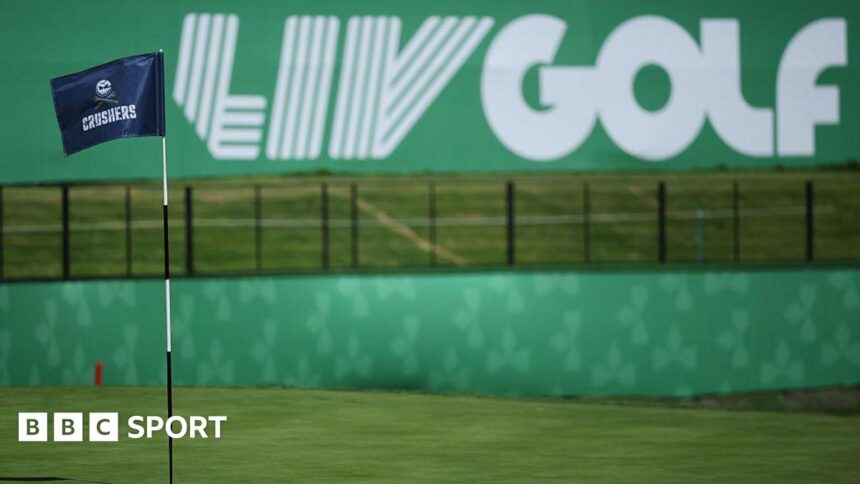
LIV Golf’s New Orleans Pivot: Summer Heat, World Cup Clashes, and the Future of the Breakaway League
The LIV Golf Invitational Series, the Saudi Arabia-backed circuit that shook the foundations of professional golf two years ago, is facing a familiar adversary: the calendar. According to exclusive information obtained by BBC Sport, the breakaway league is actively exploring a significant schedule shift for its planned event in New Orleans, potentially moving it from its June slot to the more temperate months of September or October. This is not merely a weather advisory; it is a strategic recalibration that speaks volumes about LIV’s current standing, its logistical headaches, and its long-term survival instincts.
Since its explosive debut in June 2022—a debut that famously featured Greg Norman’s bold proclamations and a 48-man field playing for $25 million—LIV Golf has been a hurricane of controversy and innovation. But the league that promised to “golf, but louder” is now whispering about rescheduling. The whispers are coming from the bayous of Louisiana, where the Bayou Oaks course at City Park was slated to host the tour’s annual pilgrimage to the Crescent City. Now, sources confirm that LIV officials have entered talks with local authorities in Louisiana to postpone the tournament by three to four months.
Why June is No Longer a Slam Dunk for LIV
The most immediate and obvious reason for the proposed rescheduling is the brutal Louisiana summer. June in New Orleans is not a golfer’s paradise; it is a humid, stifling crucible where heat indexes routinely exceed 100 degrees Fahrenheit. While LIV has played in hot climates before—think of the desert heat in Jeddah—the humidity of the Gulf Coast presents a unique challenge for both players and spectators. “Officials are keen to avoid peak summer heat,” a source close to the negotiations told BBC Sport. “They want to ensure the Bayou Oaks course at City Park is in top championship condition. A June event risks damaging the turf and making the player experience miserable.”
This is a critical admission. For a league that prides itself on a premium, fan-friendly experience, a sweltering, sweat-drenched afternoon in a city known for its humidity is a branding nightmare. Moving the event to September or October—the so-called “second spring” in Louisiana—offers cooler temperatures, lower humidity, and a more vibrant playing surface. It is a logistical victory that LIV desperately needs after a year of operational turbulence.
The World Cup Elephant in the Room
But the heat is only half the story. The 2026 FIFA World Cup is looming, and its shadow extends far beyond soccer. LIV bosses are acutely aware that a June event in New Orleans would directly clash with the global football frenzy. While LIV does not compete directly with the World Cup for television ratings in the same way the PGA Tour might, the broader sports calendar is a zero-sum game. “LIV bosses are also said to want to avoid a clash with the World Cup,” the source confirmed. This is a strategic retreat from a battle they cannot win.
The World Cup commands the attention of the global sporting public, sponsors, and media. Trying to sell tickets, secure hospitality suites, and generate media coverage for a golf tournament while the world is watching Lionel Messi or Kylian Mbappé is a fool’s errand. By moving to September or October, LIV sidesteps the World Cup entirely, allowing its event to stand as a standalone attraction in the fall sports calendar. This is the kind of competitive intelligence that the league has often lacked in its brash, early days.
Expert Analysis: A Sign of Maturity or Desperation?
Let’s be clear: this is not a panic move. This is the behavior of a league that is learning to navigate the real world of professional sports management. When LIV launched in June 2022, it was a disruptor. It didn’t care about tradition, weather, or scheduling conflicts. It was a cannonball into a swimming pool. Now, two years later, it is acting like a tenant, not a conqueror.
Consider the precedent set by the 2022 event. That first LIV Golf Invitational at Centurion Club in London was a masterclass in chaos. It was loud, it was controversial, and it was a massive media spectacle. But the novelty has worn off. The league now faces a more existential question: can it sustain itself as a viable, year-round tour? Rescheduling New Orleans suggests that LIV is thinking about the long-term health of its product rather than just making a splash.
However, there is a darker interpretation. The constant schedule shuffling—remember the 2023 cancellation of the event in Trump National Doral, only to be replaced by a team championship in Miami?—creates a perception of instability. Sponsors and local governments want certainty. By moving the New Orleans event, LIV is admitting that its original June slot was ill-conceived. That is a public relations risk. It tells the world that the league is still figuring out its own identity.
What This Means for the Bayou Oaks Course and City Park
The Bayou Oaks at City Park is a gem. It is a public course that has hosted major amateur events and is beloved by locals. LIV’s decision to bring its show there was a nod to accessibility and community. But hosting a professional event in June on a public course is a different beast. The turf management required to keep a Bermuda grass course pristine in the Louisiana summer is immense. By moving to the fall, LIV gives the grounds crew a fighting chance. The course will be firmer, faster, and more playable. This is a win for the course’s reputation and for the players who will be hitting shots off fairways that aren’t baked to a crisp.
Furthermore, the local economy in New Orleans stands to benefit from a fall event. The summer months are already crowded with festivals and tourism. September and October offer a slightly less congested calendar, potentially allowing the tournament to capture more local attention and spending. The city’s hospitality sector, still recovering from the pandemic and inflation, would welcome a high-spending golf crowd during the shoulder season.
Predictions: The Fallout and the Future
So, what happens next? I predict three outcomes:
- Official Confirmation by May 2025: LIV will announce the rescheduling within the next 60 days. They cannot afford to keep the market in limbo. Ticket sales for a June event would be sluggish, and the uncertainty is damaging.
- A Stronger, More Intimate Event: A September or October LIV event in New Orleans will be smaller in scale but higher in quality. Expect a focus on the team competition (the Crushers GC, led by Bryson DeChambeau, will likely be the local favorites) and a heavy dose of local culture. Think crawfish boils on the 18th green and second-line parades between holes.
- A Template for Future Scheduling: This move could become a blueprint for LIV. The league will likely avoid June dates in other humid climates (think Houston or Miami) in favor of fall or spring windows. The World Cup avoidance will become a standard clause in future venue contracts.
Conclusion: The Pivot is the Play
LIV Golf has always been a story of audacity. From signing the world’s best players with nine-figure contracts to challenging the PGA Tour’s monopoly, it has never shied away from a fight. But audacity alone does not build a sustainable league. Rescheduling the New Orleans event is a quiet, unglamorous decision that speaks to a deeper understanding of the business. It is a recognition that player comfort, course conditions, and calendar positioning matter more than making a statement.
For the fans in Louisiana, this is good news. They will get to see world-class golf in a climate that is actually enjoyable. For LIV, it is a necessary evolution. The league that started with fireworks in June 2022 is now learning that sometimes, the smartest move is to wait for the storm to pass. The question remains: will the rest of the golf world be waiting with them? Only time, and the autumn air in New Orleans, will tell.
Source: Based on news from BBC Sport.