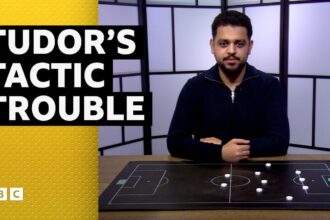
Spurs in Crisis: The Tudor Era Teetering After Atletico Annihilation
The air in the Metropolitano Stadium was thick with the acrid scent of burning ambition. For Tottenham Hotspur, a 4-1 capitulation to Atletico Madrid wasn’t just a defeat; it was a public undressing, a tactical evisceration that has left the club’s project in tatters and manager Igor Tudor clinging to his job by the most frayed of threads. This was more than a bad night in Europe. This was a systemic failure, a crisis point that prompts a series of urgent, uncomfortable questions about the direction of one of England’s most storied clubs. Is this the end of the Tudor period before it ever truly began? And if so, what comes next for a disillusioned squad and a furious fanbase?
The Anatomy of a Collapse: More Than Just a Scoreline
To dismiss this as one-off Champions League misfortune would be a grave error. The defeat to Atletico was a grotesque magnification of the flaws that have plagued Tudor’s Spurs since his ambitious appointment. The manager, heralded for his intense, high-press philosophy, watched his team get comprehensively out-fought and out-thought. The defensive disorganization was shocking, with a previously reliable backline pulled apart with surgical ease. The midfield, often overrun in the Premier League, vanished in Madrid, offering neither protection nor progression.
Most damning, however, was the apparent lack of fight—a cardinal sin for any Tottenham team. Tudor’s system demands relentless physical and mental commitment. In Spain, his players delivered a performance utterly devoid of it. This points to a potentially fatal disconnect: are the players unable to execute the Tudor mandate, or have they stopped believing in it altogether? When a manager’s core identity is intensity and the team shows none, the writing is often on the wall.
Q&A: The Burning Questions Facing Daniel Levy
The fallout from Madrid has created a whirlwind of speculation. Here are the critical questions now facing Chairman Daniel Levy and the Tottenham board.
Q: Is Igor Tudor definitely going to be sacked?
While no official word has come from the club, the atmosphere is profoundly toxic. Managers survive poor results; they rarely survive the complete evaporation of their footballing identity. The nature of this loss, following a patchy domestic start, has created a point of no return in the court of public opinion. Levy is a pragmatic businessman, and the cost of inaction—missing Champions League revenue again, plummeting squad value—may now outweigh the financial and reputational cost of another managerial change.
Q: Why has it gone so wrong, so quickly?
Tudor’s philosophy represented a violent stylistic shift from the more possession-based approaches of recent years. The transition has been jarring. Key players look ill-suited to the physical demands, and Tudor’s rigid adherence to his system, even when it’s clearly failing, has drawn criticism. There’s also a sense that the squad, a blend of remaining stars and new signings, was not adequately rebuilt in his image over the summer, leaving a tactical mismatch between the manager’s desires and the tools at his disposal.
Q: Who could possibly take over next?
This is Levy’s nightmare. The managerial carousel has spun relentlessly, and the list of elite, available coaches willing to step into this pressure cooker is short. The next appointment must be a unifying figure, a communicator who can stabilize the dressing room and deliver a coherent style of play. The focus may shift from project visionaries to proven stabilizers.
The Successor Shortlist: Navigating a Shallow Pool
If, as expected, Levy is forced into a change, the search will be fraught. Here are the potential candidates who could be in the frame:
- Roberto De Zerbi: The romantic choice. Plays exhilarating football and has Premier League experience. However, his style is demanding and his release clause from his last club is likely prohibitive. Would he want this repair job?
- Graham Potter: The steady hand option. Knows the Premier League, works well within structures, and is respected for his man-management. His Chelsea experience was bruising, but a return to a project with lower immediate expectations could appeal.
- Ange Postecoglou: A left-field suggestion. The Celtic connection with former Spurs hero Glenn Hoddle adds narrative. He builds attacking teams with clear identity and commands fierce loyalty. The jump from Scotland to this crisis is, however, monumental.
- An Internal Caretaker: A likely short-term scenario. Ryan Mason, a club legend, knows the fabric of the place and could provide a calming, emotional lift to see out a turbulent period while a longer-term target is secured.
The key for Levy will be to avoid another ideological rollercoaster. The appointment must fit the squad’s existing strengths to some degree, providing a platform for recovery rather than another painful reconstruction.
Predictions: A Fork in the Road for Tottenham
The coming days are critical. The club has a crucial North London derby on the horizon, a fixture that could either be Tudor’s last stand or an improbable lifeline. The prediction here is that the damage is irreversible. The dressing room dynamics appear broken, and the tactical message is no longer getting through. Expect a change before the month is out.
The bigger prediction concerns the club’s cycle. Tottenham are at a profound fork in the road. One path leads to yet another reactive, short-term managerial gamble, hoping to scrape back into the top four. The other, more painful path, requires a sober, strategic reset: a clear footballing vision from the top, aligned with a sporting director and a coach chosen for the long haul, even if it means accepting a period of transition. The easy option has been chosen too many times before. The definition of insanity is repeating the same actions and expecting different results.
Conclusion: More Than a Managerial Problem
The crisis at Tottenham Hotspur, crystallized in the Madrid mauling, transcends Igor Tudor. He is the latest symptom of a deeper ailment—a club that has lost its strategic compass. The thrilling new stadium stands as a monument to a future that feels increasingly distant with each chaotic season. Sacking Tudor may provide a temporary numbing agent, a cathartic release for the anger. But unless Daniel Levy and the board undertake a ruthless, honest audit of the club’s direction, the next manager will simply be waiting for his own Tudor-esque inquisition. The period of turmoil is not ending; without fundamental change, it is simply entering a new, equally uncertain chapter. The soul of Spurs is on the line, and no single manager can save it alone.
Source: Based on news from Sky Sports.
Image: CC licensed via www.usarpac.army.mil