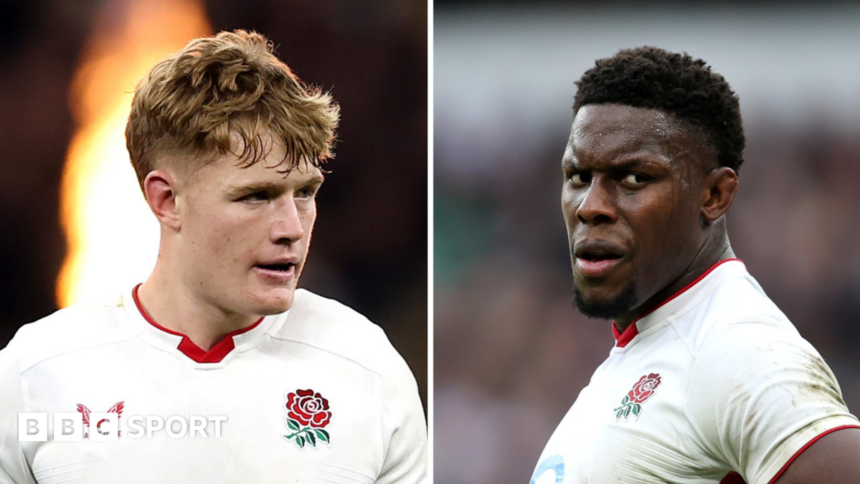
‘It’s how you speak to a mate’: Inside the Smith-Itoje row that reveals England’s new edge
The referee’s microphone, an unforgiving witness to the heat of battle, picked up the exchange. With England trailing Italy in Rome and a penalty awarded early in the second half, a debate erupted. To kick for the corner and chase a try, or take the three points? The discussion escalated. The voice of captain Maro Itoje cut through the Stadio Olimpico din: “Don’t argue with me, take the three.” The recipient was 22-year-old fly-half Fin Smith. In real-time, it flashed across social media as a sign of discord, a rookie being put in his place by a senior leader in a struggling side. The reality, as is so often the case in the furnace of Test rugby, is far more nuanced and significantly more promising for England’s future.
Beyond the Soundbite: Context of a Crucial Moment
To understand the incident, you must first understand the moment. England were 14-11 down, just over a minute into the second half. A penalty in a kickable position offered a chance to level the scores. For a young fly-half like Fin Smith, playing only his second Six Nations start, the instinct to play positive, attacking rugby is powerful. Kicking to the corner signals ambition, a desire to seize the game by the scruff of the neck. For a captain like Maro Itoje, steeped in the brutal economy of Test match rugby, the calculation is different. Level the scoreboard, build pressure, remove the deficit. It is not a conflict of personalities, but a clash of instincts between youth and experience.
Smith ultimately took the three points, which he slotted over. The decision, in isolation, was vindicated. Yet, the very public nature of the debate sparked immediate post-match dissection. Was this a sign of fractured leadership? Smith’s subsequent comments have not only doused those flames but suggested they are a sign of a healthier team culture.
“A Great Mate”: The Relationship That Fuels the Fire
In the days following England’s narrow defeat, Fin Smith addressed the incident head-on with a refreshing clarity that belied his years. “I was unaware that a lot has been made of it,” he told the BBC’s Rugby Union Weekly, before delivering the crucial context. “Maro’s a great mate of mine. We’ve got a good relationship and I think it’s the same way you speak to a good mate or a brother.“
This simple statement is a revelation. It reframes the entire episode from one of disciplinary reprimand to one of intense, trusting collaboration. The best sporting partnerships are not built on silent compliance; they are forged in the honesty of high-stakes environments. Smith’s interpretation suggests a new level of authentic communication within the England squad under Steve Borthwick.
- No Hierarchical Fear: A young player felt empowered to voice his opinion to his captain in a critical moment.
- Immediate Resolution: The debate was had on the field, a decision was made, and executed.
- No Residual Tension: The ability to joke about it afterwards confirms it was a football moment, not a personal grievance.
This dynamic is precisely what modern elite teams strive for. It moves beyond the old-school “my way or the highway” captaincy towards a more distributed, collaborative leadership model where the fly-half, the on-field general, is expected to have and voice a strong opinion.
Expert Analysis: Why This Public Debate is a Positive
From a technical and tactical standpoint, the incident highlights a positive evolution in England’s playmaking structure. For years, critics have lamented England’s often one-dimensional, kick-focused attack. In Smith, they have a fly-half with the innate attacking instincts of a Northampton Saints’ system that values relentless ambition. His desire to kick to the corner wasn’t rebellion; it was the expression of a core rugby philosophy.
Itoje’s insistence on taking the points, meanwhile, was the voice of Test match pragmatism. The fact this debate happened openly, rather than being stifled, shows Smith is not overawed by the occasion or the jersey. He is thinking about winning the game, not just surviving his cap. This is the kind of creative tension that can elevate a team. The key, as seen here, is the mutual respect that allows it to happen without corroding team unity.
Furthermore, it underscores Itoje’s growing comfort in the captaincy role. He listened, processed, and made a definitive call. He didn’t defer. In a leadership group transitioning from the Owen Farrell era, establishing this clear, if occasionally loud, line of communication is vital.
Predictions: Forging a Partnership for the Future
This single microphone clip may well be remembered as a foundational moment for the Smith-Itoje axis and for England’s developing identity. Looking ahead, we can predict several outcomes:
- Strengthened Understanding: Next time a big decision looms, Smith and Itoje will have a reference point. Their on-field communication will be sharper and more efficient because of this honest exchange.
- A Template for Others: This public display of “robust dialogue” sets a standard for the entire squad. It encourages others to speak up, creating a richer decision-making environment.
- Smith’s Ownership Grows: The fact he stood his ground, however briefly, will earn him respect in the squad. It signals he is ready to be the commanding fly-half England needs, not just a placeholder.
- Media Narrative Shift: The episode trains observers to look beyond the surface. Passionate debate is not disunity; it can be the highest form of engagement.
Conclusion: The Sound of a Team Finding Its Voice
The image of a furious Maro Itoje barking orders at a young fly-half was an easy narrative to sell. The truth, as articulated by Fin Smith himself, is far more compelling. What we heard in Rome was not the sound of a team fracturing, but the sound of a team finding its voice. It was the sound of a young playback asserting his vision, and a captain having the confidence to make a final call, secure in the knowledge that their relationship was strong enough to withstand the heat.
In the high-pressure ecosystem of international rugby, where margins are infinitesimal, the ability to have—and quickly resolve—such frank discussions is a competitive advantage. The Smith-Itoje “row” was, in fact, a masterclass in real-time leadership and collaboration. It proved that this England squad, still in its formative stages, possesses the kind of honest relationships that can withstand the glare of the Six Nations and the pick-up of a referee’s mic. As Smith so perfectly put it, sometimes that’s just how you speak to a mate. And sometimes, that’s exactly how you build a team that can win.
Source: Based on news from BBC Sport.