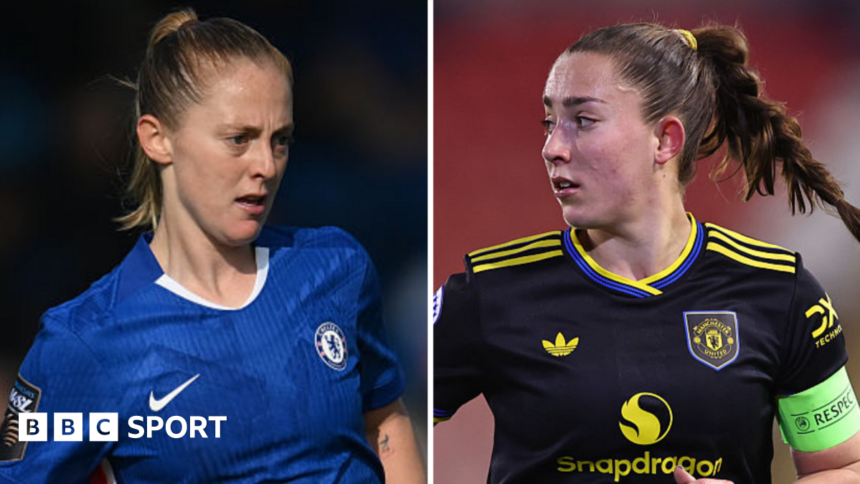
Sunday’s Showdown: The Psychological Stakes of the Women’s League Cup Final
The Women’s League Cup final, this Sunday, presents a classic clash of the established dynasty versus the hungry challenger. Chelsea, the holders, face a Manchester United side desperate to etch their name onto a major domestic trophy for the first time. While the silverware itself gleams with equal promise for both, the weight it carries in the respective dressing rooms could not be more different. This isn’t just a final; it’s a pivotal moment that could define the trajectory of two clubs. The question isn’t merely who will win, but who needs the victory more.
A Tale of Two Eras: Chelsea’s Standard vs. United’s Ascent
Chelsea under Emma Hayes has been the defining force of the English women’s game for nearly a decade. Their cabinet boasts six WSL titles, five FA Cups, and two previous League Cups. They are the benchmark, the machine built for sustained success. This season, however, has been punctuated by uncharacteristic turbulence. The announcement of Hayes’s impending departure, a spate of injuries to key players, and some jarring defensive performances have suggested a vulnerability rarely seen. Yet, they find themselves in a familiar position: at Wembley, competing for a trophy.
For Chelsea, this final is about reaffirmation and resilience. It is about proving that the core strength of the squad remains, that the “Hayes era” will end on their terms, with maximum intensity. Losing a domestic trophy to a direct rival like United would fuel narratives of a dynasty in decline just as the season enters its critical phase.
Manchester United, in stark contrast, represents the new wave. Under Marc Skinner, they have solidified themselves as a consistent top-three side, genuine contenders who have watched Chelsea and Arsenal celebrate for years. They have come agonizingly close, finishing as WSL runners-up last season and losing the FA Cup final to Chelsea. They carry the burden of a club with immense history, yet a women’s team still seeking its first major piece of silverware to cement its elite status.
For United, this is about breaking the ceiling and validating progress. It’s about transforming “nearly there” into “arrived.” A win isn’t just a trophy; it’s a psychological breakthrough, a tangible reward for years of building, and a powerful statement to their own players and future recruits that Old Trafford is a place where winners are made.
The Nemesis Factor: Chelsea’s Hold and United’s Mental Hurdle
The history between these two sides adds a profound layer to the occasion. Chelsea has been United’s ultimate roadblock. In major moments, the Blues have almost always had their number.
- Chelsea defeated United 1-0 in the 2023 FA Cup final, a game where United arguably had the better chances.
- They have consistently pipped them to the WSL title in recent seasons, often by the finest of margins.
- This dynamic creates a powerful psychological narrative. Chelsea possesses the big-game muscle memory; United is still trying to develop it.
Every pass, every chance, every big decision in the final will be filtered through this history. Can United, when the pressure is at its zenith, finally execute and overcome the one team that has repeatedly denied them? Or will Chelsea’s experience in these white-hot moments, their knowing how to win even when not at their fluent best, prove decisive once again? This mental battle is as crucial as the tactical one.
What’s at Stake: Legacy, Momentum, and Future Trajectories
The implications of Sunday’s result will ripple far beyond the Wembley pitch.
For Chelsea, a win means:
- Instantly steadying the ship after a chaotic period.
- Keeping a historic quadruple (Conti Cup, FA Cup, WSL, Champions League) alive in Hayes’s farewell season.
- Reasserting dominance over a direct rival and denting their confidence.
- Adding another layer to an already legendary era.
For Manchester United, a win means:
- Eradicating the “nearly team” label forever.
- Providing an immeasurable confidence boost for the remainder of the WSL title race.
- Announcing themselves as true, trophy-winning equals to Chelsea and Arsenal.
- Creating a landmark moment that could attract top talent and galvanize the entire club.
The pressure, while present for both, is of a different nature. Chelsea fights to protect a legacy; United fights to create one. Often, the hunger of the latter can be a more potent, unifying force.
Prediction: A Defining Battle of Will
This final is poised on a knife-edge. Chelsea, despite their injuries, still possesses a squad brimming with world-class talent like Lauren James and the experience of players like Millie Bright. They know how to navigate these occasions. However, United’s hunger is palpable. With a fit-again Leah Galton and the creative genius of Ella Toone, they have the weapons to hurt Chelsea.
The key battles will be in midfield, where United must disrupt Chelsea’s rhythm, and in the psychological war of managing Wembley’s vast occasion. If United can score first, they can test Chelsea’s much-discussed resilience this season. If Chelsea scores first, their game management and experience may prove too suffocating.
Prediction: This feels like a moment destined for drama, likely extending beyond 90 minutes. While Chelsea’s pedigree makes them perennial favorites, the intangibles point towards a historic shift. Manchester United’s need is simply greater—a profound, all-consuming desire to cross the final threshold. We predict a tense, grueling affair, with United finally exorcising their demons and securing a landmark 2-1 victory, potentially in extra time, to claim their first major trophy.
Conclusion: The Weight of Need
So, who needs the Women’s League Cup win more? The answer is unequivocally Manchester United. For Chelsea, it is a vital trophy in a collection, a defense of their standard. For United, it is the key that unlocks a new realm of possibility. It is the difference between being a contender and being a champion. It would validate their project, immortalize their current squad, and change the entire perception of the club.
Chelsea’s need is rooted in maintaining supremacy; United’s is rooted in achieving a transformative breakthrough. In sport, that burning, unfulfilled ambition can sometimes generate the extra yard, the sharper focus, the greater will. On Sunday at Wembley, we will discover if need itself can be the decisive player on the pitch, finally crowning a new name on the Women’s League Cup trophy.
Source: Based on news from BBC Sport.