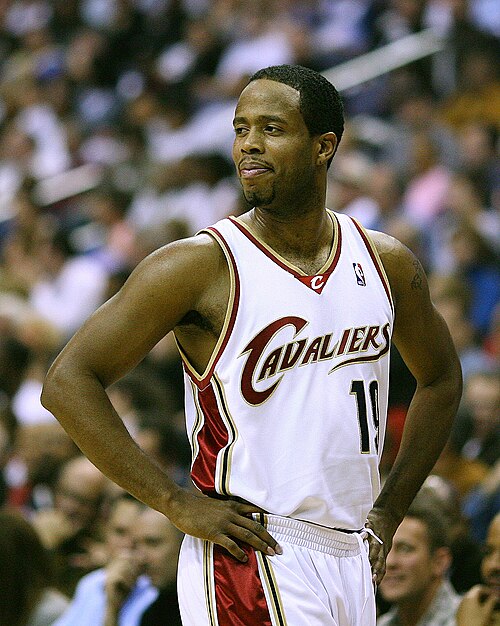
Damon Jones Plea Deal: Ex-NBA Player Becomes First to Fold in “Operation Royal Flush” Gambling Scandal
In a stunning development that has sent shockwaves through the basketball world, former NBA sharpshooter and assistant coach Damon Jones has accepted a plea deal in the sprawling federal gambling investigation known as “Operation Royal Flush.” By doing so, the 49-year-old becomes the first figure connected to the probe to formally admit guilt, marking a critical turning point in a case that has already resulted in more than two dozen arrests.
- How Damon Jones Became a “Face Card” in a Rigged Poker Operation
- Why This Plea Deal Matters: The Ripple Effect on the NBA and Terry Rozier
- What Happens Next? Legal Consequences and Career Implications for Damon Jones
- Expert Analysis: What This Means for the Future of Sports Gambling
- Conclusion: The Final Hand
Jones, who played for 10 NBA teams over a 14-year career and later served as an assistant coach for the Cleveland Cavaliers, pleaded guilty to conspiracy to commit wire fraud in a federal courtroom in Brooklyn, New York, on Tuesday. His appearance came just one day after prosecutors revealed they were adding charges against former Charlotte Hornets and Miami Heat guard Terry Rozier—a clear signal that this investigation is far from over.
Standing before the judge, Jones offered a brief but emotional apology. “I would like to sincerely apologize to the court, my family, my peers and also the National Basketball Association,” he said. The statement, while short, carried the weight of a man who knows his legacy is now permanently stained.
This is not a victimless crime. This is a story about trust, greed, and the dark underbelly of high-stakes poker. And for the NBA, it is a reputational crisis that threatens to expose just how deep the gambling rot may go.
How Damon Jones Became a “Face Card” in a Rigged Poker Operation
According to court documents unsealed in the Eastern District of New York, Jones confessed to playing a central role in at least three rigged poker games between October 2020 and September 2023. Federal prosecutors described him as a “face card” in the operation—a high-value participant whose presence lent credibility to the scheme and attracted other wealthy players.
Jones admitted that he knew the games were fixed. He said two of the three identified games took place in Miami, Florida, a city known for its luxury lifestyle and discreet gambling circles. The third game’s location has not been publicly disclosed, but sources familiar with the investigation suggest it may have involved other current or former NBA players.
The technology used to cheat was sophisticated, sophisticated enough to evade detection even by experienced players. According to the prosecution, the operation relied on:
- Hidden cameras that transmitted hole cards to accomplices in real time
- Electronic signaling devices, including vibrating pagers and smartwatches, used to communicate hand strength
- Marked cards and pre-arranged shuffles that ensured certain players won key hands
- Encrypted messaging apps to coordinate cheating without leaving a digital trail
The evidence against Jones was overwhelming. Prosecutors presented witness testimony from multiple co-conspirators who placed him at all three games. Text messages recovered from seized cell phones and iCloud accounts showed Jones discussing the cheating in coded language. And wire activity detected in interstate transfers of funds confirmed that large sums of money were moving between players and the operation’s organizers.
“This was not a friendly game among buddies,” said a federal prosecutor familiar with the case, speaking on condition of anonymity. “This was a sophisticated criminal enterprise designed to defraud wealthy individuals—many of them professional athletes—out of hundreds of thousands of dollars.”
Why This Plea Deal Matters: The Ripple Effect on the NBA and Terry Rozier
Damon Jones’s decision to plead guilty is significant for several reasons. First, it provides federal investigators with a cooperating witness who can testify against other targets. Second, it puts immense pressure on other defendants—including Terry Rozier—to consider similar deals before the case goes to trial.
Rozier, 30, is currently a free agent after being traded from the Miami Heat to the Charlotte Hornets in 2021. He has not been charged with a crime, but prosecutors announced on Monday that they are adding charges against him in connection with the same gambling ring. The nature of those charges has not been disclosed, but sources indicate they may involve wire fraud or conspiracy to commit fraud.
For the NBA, the timing could not be worse. The league has aggressively embraced legal sports betting in recent years, signing multi-million-dollar partnerships with DraftKings, FanDuel, and other operators. But the “Operation Royal Flush” scandal threatens to undermine public confidence in the integrity of the game.
“The NBA has a zero-tolerance policy for any form of game manipulation,” said a league spokesperson in a prepared statement. “We are cooperating fully with federal authorities and will take appropriate action based on the outcome of this investigation.”
But experts say the damage may already be done. Sports gambling analyst Mike O’Malley, who has covered the intersection of sports and betting for a decade, believes this case could lead to stricter regulations.
“This is a wake-up call for every professional sports league,” O’Malley said. “When you have former players and coaches involved in rigging poker games, it raises the question: If they’ll cheat at cards, what else might they be willing to fix? The NBA needs to be transparent about how deep this goes.”
What Happens Next? Legal Consequences and Career Implications for Damon Jones
Damon Jones now faces a maximum sentence of 20 years in federal prison for conspiracy to commit wire fraud, though legal experts expect a significantly lighter sentence due to his cooperation. Under federal sentencing guidelines, a first-time offender who pleads guilty and provides substantial assistance can often receive a sentence of 24 to 36 months, or even probation in some cases.
Jones’s sentencing hearing has not yet been scheduled, but it is expected to take place within the next 90 days. In the meantime, he has been released on his own recognizance, meaning he does not have to post bail but must surrender his passport and remain within the continental United States.
The former NBA player’s career is almost certainly over. He has not worked as an assistant coach since 2023, when the Cleveland Cavaliers declined to renew his contract amid the initial reports of the federal investigation. His reputation as a respected shooting coach and locker room presence is now in tatters.
For the other defendants in “Operation Royal Flush,” Jones’s plea deal is a double-edged sword. On one hand, it shows that prosecutors are willing to offer leniency to those who cooperate. On the other hand, it means Jones will likely testify against them in court, making their defenses much harder to mount.
Legal analyst Sarah Chen, a former federal prosecutor, explained the dynamics at play:
“When you have a cooperating witness who was actually in the room and participated in the crime, that is devastating for the remaining defendants. Jones can describe exactly how the cheating worked, who was involved, and what was said. That kind of testimony is very difficult to impeach, especially when it’s backed up by text messages and financial records.”
The investigation is still ongoing, and more arrests are expected. Federal agents have seized multiple bank accounts, luxury vehicles, and real estate properties tied to the operation. The total amount of money stolen through the rigged games is estimated to be in the millions of dollars, though exact figures have not been released.
Expert Analysis: What This Means for the Future of Sports Gambling
The Damon Jones case is a stark reminder that the line between legal gambling and criminal fraud is thinner than many people realize. While sports betting has been legalized in 38 states and the District of Columbia, illegal gambling operations continue to thrive, often targeting high-net-worth individuals like professional athletes.
“The allure of easy money is powerful,” said Dr. Robert Fields, a psychologist who specializes in gambling addiction among athletes. “These players are used to competing and winning. When they sit down at a poker table, they think they can outsmart anyone. But when the game is rigged, they don’t stand a chance.”
Fields warns that the NBA and other leagues need to do more to educate players about the risks of illegal gambling. “This isn’t just about legal liability. It’s about protecting players from being exploited. The same skills that make them great on the court don’t necessarily translate to a poker table where the deck is stacked against them.”
From a legal perspective, the case also highlights the growing use of technology in gambling fraud. The hidden cameras and signaling devices used in “Operation Royal Flush” are not new, but they are becoming more sophisticated and harder to detect. Law enforcement agencies are now investing in counter-surveillance tools to combat these tactics.
For the average fan, the takeaway is simple: Trust is the currency of professional sports. When that trust is broken—whether through doping, match-fixing, or gambling fraud—the entire ecosystem suffers.
Conclusion: The Final Hand
Damon Jones’s guilty plea is a sobering moment for the NBA and for everyone who loves the game. A man who once stood on the sidelines as an NBA champion (he won a ring with the Miami Heat in 2006) and helped develop young talent as a coach now stands convicted of a federal crime. His apology, while sincere, cannot undo the damage he has caused—to his family, to his peers, and to the league that gave him a platform.
But this story is far from over. With Terry Rozier now facing charges and more arrests likely on the horizon, “Operation Royal Flush” is poised to become one of the biggest gambling scandals in sports history. The question now is not whether more players will fall, but how far the rot goes.
For the NBA, the challenge is clear: Rebuild trust with fans, educate players about the dangers of illegal gambling, and ensure that the integrity of the game remains paramount. For Damon Jones, the next chapter will be written not on a basketball court, but in a federal courtroom—where the stakes are higher than any poker game he ever played.
As the old saying goes: You can’t win if you don’t play the game honestly. In this case, Jones played the game, he cheated, and now he’s paying the price. The rest of the basketball world can only hope that his fall serves as a cautionary tale for those still tempted by the allure of a rigged deck.
Source: Based on news from Deadspin.
Image: CC licensed via ko.wikipedia.org