Melting Medals: The Burning Question of Whether the Winter Paralympics Should Move
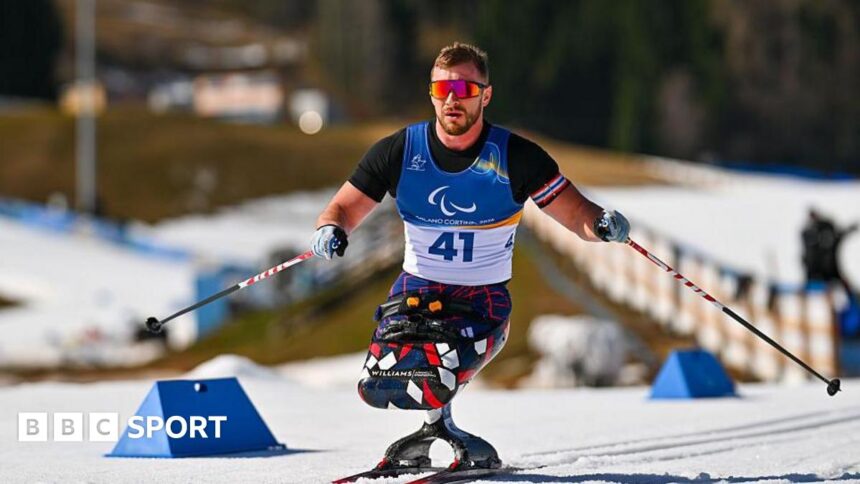
The image was as jarring as it was inspiring. Britain’s Scott Meenagh, a Paralympic Nordic skier, powering through his biathlon and cross-country events not in a thermal suit designed for sub-zero temperatures, but in a simple athlete’s T-shirt. Around him, spectators applied sunscreen, and competitors spoke not of battling blizzards, but of heat. American skier Patrick Halgren’s description of the conditions at the recent Milan-Cortina Paralympics as “tropical” and “like surfing” would sound like a bizarre mix-up if the context weren’t so serious. This stark visual disconnect underscores a growing crisis in winter sports: climate change is fundamentally altering the landscape of the Winter Paralympics. With the Games traditionally held in March, immediately following the Olympics, athletes, organizers, and scientists are now asking a critical question: has the calendar itself become the enemy?
The March Mismatch: A Tradition Built on Thinning Ice
Since the 1992 Albertville Winter Paralympics, the scheduling protocol has been consistent: the Paralympics begin roughly two weeks after the Olympic Closing Ceremony. This model was built on logistical and financial efficiency, utilizing the same venues, infrastructure, and operational momentum. For decades, it worked. But this schedule inherently places the Paralympics at the tail end of the winter season, a period increasingly vulnerable to warming global temperatures.
March is no longer a reliable guarantor of winter conditions. Data shows a pronounced trend of rising temperatures and decreasing snow reliability in traditional host regions during this month. The effects are not hypothetical; they are viscerally real for athletes:
- Dangerous Course Conditions: Warmer weather creates slushy, unstable, and unpredictable snow surfaces, increasing the risk of injury for all athletes, particularly those using sit-skis or specialized equipment.
- Performance Inequity: Races can become a lottery of who drew the best start time before the sun softens the track, undermining the core principle of fair competition.
- Logistical Nightmares & Cost: Host cities are forced into expensive, environmentally damaging snowmaking and preservation efforts, often at a scale far beyond what was needed for the Olympics just weeks prior.
- Identity Crisis: The very essence of a “Winter” Games is eroded when athletes compete in summer attire, creating a confusing spectacle for fans and sponsors alike.
The Milan-Cortina 2026 experience, with its T-shirt-clad competitors, is not an anomaly; it is a preview. It highlights the unsustainable collision between a fixed calendar and a rapidly changing climate.
Weighing the Thaw: The Case For and Against a Calendar Shift
Moving the Winter Paralympics is a complex proposition with significant ramifications. The debate hinges on balancing athletic integrity with practical reality.
The Case FOR Moving (Earlier):
Proponents of a shift, most vocally athletes and coaches, argue for a move earlier in the winter season, potentially even running concurrently with the Olympics in February. This period historically offers more reliable cold temperatures and better snow conditions globally. The primary advantage is athlete-centric: guaranteeing safer, fairer competition on true winter surfaces. It would also reduce the massive ecological and financial footprint of artificial snow production. Furthermore, sharing the Olympic spotlight could potentially boost Paralympic visibility and audience engagement from the outset.
The Case AGAINST Moving (The Status Quo):
The logistical and commercial arguments for the current model are powerful. Running the Games back-to-back is a proven, cost-effective system for host cities. A separate, earlier event would likely require a second, massive mobilization of volunteers, security, and operations, potentially doubling costs and complexity. There is also a legitimate fear that moving the Paralympics could dilute their unique identity and media coverage, especially if held simultaneously with the Olympics, where they might be overshadowed.
This creates a formidable dilemma. As one climate scientist specializing in sports put it, “We are optimizing for logistics in a world that is optimizing for warmer springs. One of these systems will have to give.”
The Future of Frozen Sport: Predictions and Potential Solutions
The trajectory is clear. The International Paralympic Committee (IPC) and the broader winter sports community cannot ignore the meteorological data. Doing nothing is a recipe for recurring crises. Several potential pathways are emerging:
1. A Radical Calendar Overhaul: The most direct solution is to permanently move the Winter Paralympics to early or mid-February, either preceding or running partially alongside the Olympics. This would require a monumental shift in broadcasting rights, sponsorship deals, and host city contracts, but it directly addresses the core environmental threat.
2. The “Climate-Contingent” Bid: Future host city selection could mandate proven cold-weather reliability in March, effectively limiting bids to a shrinking pool of colder, higher-altitude, or northernmost locales. This, however, contradicts the goal of global representation and places a greater burden on specific regions.
3. Technological and Adaptive Innovation: Sports may need to adapt equipment and course designs for a wider range of conditions. While technology can help, it cannot fully replicate the integrity of natural, consistent winter conditions, and it favors wealthier nations with greater R&D resources.
4. The Unthinkable: Rotation to Reliable Hosts: A more extreme prediction is the establishment of a permanent or rotational host model in climatically reliable locations, similar to early discussions about the Summer Olympics. This would ensure stability but sacrifice the global spirit of the Games.
The most likely outcome is a combination: a gradual shift toward earlier dates in the coming decades, coupled with stricter climate criteria for bids. The IPC’s hand will be forced by the athletes themselves, for whom competitive fairness and safety are non-negotiable.
Conclusion: More Than a Scheduling Conflict
The question of moving the Winter Paralympics transcends a simple date change on a calendar. It is a profound symbol of how climate change is intruding into the most celebrated arenas of human endeavor. Scott Meenagh’s T-shirt is not just an anecdote; it is a flag planted on melting ground, a silent protest against a system at odds with the planet.
Continuing with the March tradition is a gamble with increasingly poor odds—a bet against the incontrovertible trend of global warming. While the logistical and commercial challenges of a move are immense, the cost of inaction is greater: the steady erosion of competitive fairness, athlete safety, and the very winter identity of the Games. The Paralympic movement, born from adaptation and resilience, now faces its greatest adaptive challenge. The time for the IPC, host nations, and the sporting world to begin planning a strategic retreat from March is not in the future. It is now. The integrity of winter sport for all athletes depends on it.
Source: Based on news from BBC Sport.