The Great F1 Schism: How One Chinese GP Exposed the Sport’s Thrilling Paradox
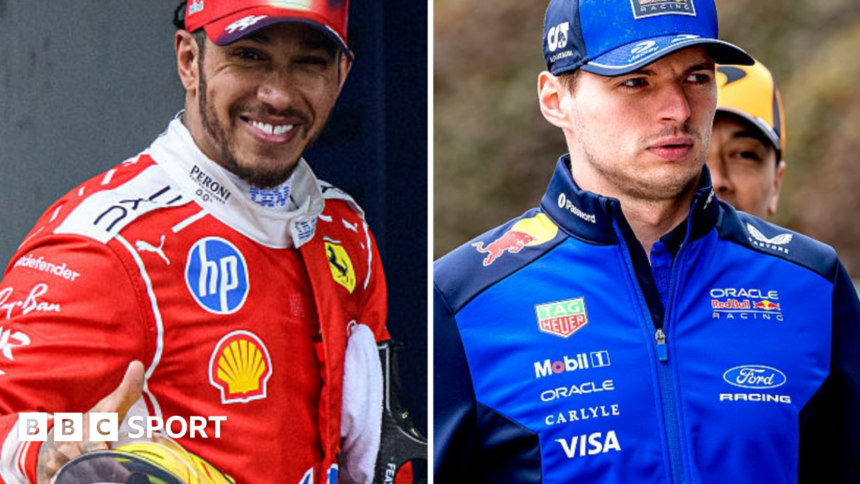
The checkered flag fell on the Shanghai International Circuit, but it was the sound of two starkly different realities clashing that truly echoed through the Formula 1 paddock. In one corner, a beaming Lewis Hamilton, reborn in Ferrari red, spoke of racing nirvana. In another, a frustrated Max Verstappen, his dominant Red Bull crippled, dismissed the spectacle as a farce. This wasn’t just a difference of opinion between rivals; it was the clearest manifestation of a fundamental conflict at the heart of modern F1—a conflict that simultaneously showcases the sport’s most exhilarating potential and its most frustrating flaws.
A Tale of Two Podiums: Euphoria vs. Ennui
The 2024 Chinese Grand Prix will be remembered as a watershed moment, not for the winner, but for the raw, unfiltered reactions it provoked from the sport’s defining champions. For Lewis Hamilton, the race was a cathartic release. After a difficult start to his Ferrari career, he engaged in a fierce, wheel-to-wheel duel with teammate Charles Leclerc, a battle fought with precision and respect.
“That was awesome,” Hamilton gushed, his joy palpable. “That was the best racing I’ve ever experienced in F1.” His words were a powerful endorsement of the current regulatory era, designed to promote closer racing. For him, the new rules had delivered on their promise: the ability to follow, to strategize, to fight.
Contrast this with the world champion’s experience. Max Verstappen, starting from a uncharacteristic fourth, suffered a rare mechanical failure. But his ire was directed not just at his car’s energy recovery system, but at the very fabric of the racing he was forced to endure before retiring. His verdict was scathing: “If someone likes this, then you really don’t know what racing is like. Not fun at all… This is not racing. Boosting past, then you run out of battery, the next straight they boost past you again. For me, it’s just a joke.”
Here lies the core paradox: the same race, the same rules, produced diametrically opposed conclusions from its greatest practitioners.
Deconstructing the Divide: Artisan vs. Architect
This schism goes deeper than a simple good day/bad day binary. It reveals a fundamental philosophical split about what constitutes elite motorsport.
- The Artisan’s Joy (Hamilton): Hamilton’s ecstasy stems from the manual challenge. The new regulations, with their ground-effect aerodynamics and DRS zones, have—in his view—returned a measure of control to the driver. The fight is about managing tires, deploying battery energy tactically, and out-thinking an opponent in a prolonged skirmish. It’s chess at 200 mph. For a driver whose legacy is built on racecraft as much as raw speed, this is Formula 1 at its purest.
- The Architect’s Frustration (Verstappen): Verstappen’s disgust comes from a perceived artificiality. His critique of “Mario Kart” racing points to a sport where overtaking is governed too heavily by pre-set zones and battery boost cycles, rather than pure car performance and daring. For a driver whose genius is built on extracting absolute, unadulterated limit from a machine, any element that standardizes or ritualizes the pass feels like a dilution of skill.
This is F1’s eternal tension: the spectacle versus the sport. The rules have successfully created more overtaking, more “action” for the fans—the “best” side Hamilton celebrates. But for purists and drivers like Verstappen, that action can feel prescribed, undermining the meritocracy of building the fastest car and driving it flawlessly—the “worst” side of compromised competition.
The New F1 Landscape: A Shifting Power Dynamic
The Chinese GP also highlighted how the 2024 season is evolving into a new, more unpredictable phase. Red Bull’s aura of invincibility has cracked. McLaren and Ferrari are genuine threats. This convergence is the direct result of the cost-cap and aerodynamic regulations working as intended.
Key factors driving this shift:
- Technical Convergence: Teams are finally unlocking the secrets of the ground-effect regulations, leading to a tighter performance window.
- The Cost Cap Bite: Development cycles are slower and more strategic, preventing a single team from running away indefinitely.
- The Driver Reawakening: For veterans like Hamilton, a competitive car in a tight field unlocks a level of racing satisfaction that years of processional dominance cannot provide.
This environment naturally favors Hamilton’s perspective. When the field is close, the driver’s role in battle is magnified. Conversely, for a driver and team used to dominating through technical superiority, like Verstappen and Red Bull, this new parity can feel like an unfair levelling, where random factors and “gimmicks” play too large a role.
The Road Ahead: Can F1 Bridge the Gap?
Where does Formula 1 go from here? The sport’s commercial bosses will be thrilled with the narrative: a resurgent legend at Ferrari, a wounded champion, and a three-team title fight. But the Verstappen critique cannot be ignored, as it speaks for a significant portion of the core fanbase.
Predictions for the coming era:
- More “Hamilton Races”: As convergence continues, strategic duels and driver-led battles will become the norm, not the exception. The spectacle will be consistently high.
- Ongoing “Verstappen Criticism”: The debate over artificiality will rage, especially around DRS and energy deployment. The FIA will face pressure to make overtaking more “organic.”
- The Ultimate Test: The true resolution will come when Verstappen is in a winning car again, fighting at the front in this new era. Will he still call it “Mario Kart” if he’s the one orchestrating the battles?
The sport’s challenge is to refine its rules to preserve the hard-earned racing while stripping away any unnecessary artifice. The goal must be a formula where a pass feels earned, not enabled, even if it is facilitated by technology.
Conclusion: The Uncomfortable Truth of Modern F1
The conflict laid bare in Shanghai is, ironically, Formula 1’s greatest strength and its most volatile weakness. Lewis Hamilton and Max Verstappen, the three-time champion and the reigning dominator, are both right. Hamilton is right that the new F1 can produce breathtaking, driver-centric battles that were impossible a decade ago. Verstappen is right that the engineering pinnacle can feel compromised by overtaking aids that simplify a profoundly complex sport.
This paradox is the new look of Formula 1. It is a sport forever torn between its identity as a cutting-edge technological showcase and its duty to deliver a compelling sporting contest. The Chinese Grand Prix didn’t create this divide; it simply handed a microphone to its two most eloquent spokesmen. The best and worst sides of F1 are now two sides of the same coin. The thrilling, unpredictable, and deeply divisive future of the sport is already here, and every race weekend is a flip of that coin. The only certainty is that the debate, just like the racing, is now intensely close.
Source: Based on news from BBC Sport.