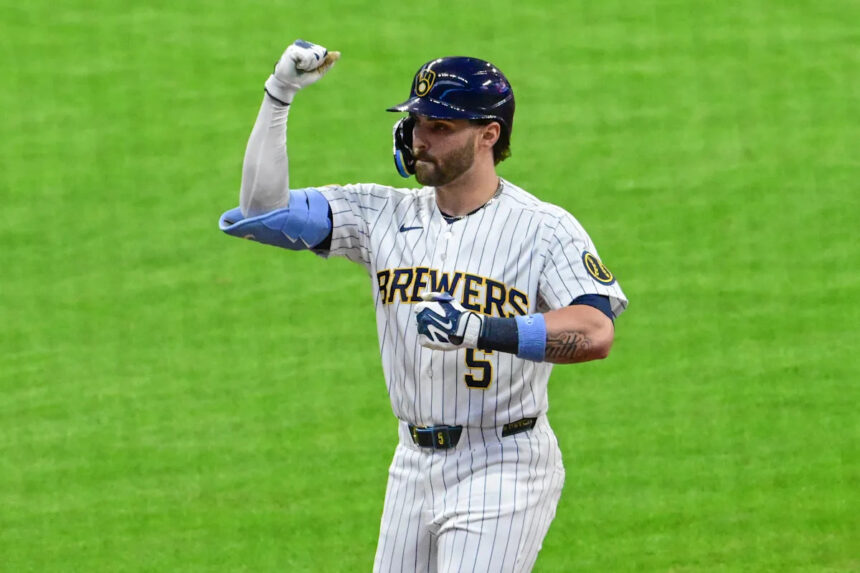
Small Ball Execution Powers Brewers Past White Sox in 6-1 Victory
MILWAUKEE – The fireworks of Opening Day were absent, replaced by the steady hum of a well-oiled machine. On Saturday evening at American Family Field, the Milwaukee Brewers didn’t overpower the Chicago White Sox; they out-executed them. In a masterclass of fundamental baseball, the Brewers leveraged a barrage of singles, opportunistic baserunning, and capitalized on defensive miscues to secure a comfortable 6-1 victory. The game served as a stark illustration of the chasm between a team that masters the minutiae and one still searching for its footing.
The Anatomy of an Opportunistic Inning
The tone was set decisively in the bottom of the first inning, a frame that perfectly encapsulated the evening’s theme. It began with a dose of fortune, as Brice Turang‘s opposite-field fly ball fell for a double after a defensive miscommunication. From there, the Brewers’ offensive engine, built on contact and pressure, roared to life.
William Contreras’ productive groundout advanced Turang to third. With the infield drawn in, Christian Yelich expertly poked a grounder through the vacated right side for an RBI single. The White Sox’s defensive woes compounded immediately. On Jake Bauers’ ensuing single, an ill-advised throw to third allowed Bauers to take second, putting two runners in scoring position.
Garrett Mitchell didn’t waste the gift, lacing a first-pitch, two-run single up the middle. The inning was a grinding, 29-pitch ordeal for Chicago starter Sean Burke, featuring:
- A costly defensive lapse on a playable fly ball.
- A productive out to advance a runner.
- Timely hitting with runners in scoring position.
- Defensive miscommunication gifting an extra base.
Three runs, only one truly hard-hit ball, and a blueprint for winning ugly—and effectively.
Patrick Steadies the Ship, Bullpen Slams the Door
Given an early cushion, rookie starter Chad Patrick delivered a workmanlike performance. His outing wasn’t dominant, but it was precisely what his team needed. He navigated traffic in the first, stranding two runners, and settled in to pitch with confidence.
Patrick’s line—5.1 innings, one run, four hits, three walks, and four strikeouts—reflects a pitcher who managed the game expertly. He attacked the zone when ahead and made key pitches with men on base, a testament to his poise. The lone blemish was a solo home run, but by then, the Brewers’ lead felt insurmountable thanks to their offensive approach.
From there, the much-heralded Brewers bullpen took over with signature efficiency. A relay of relievers stifled any notion of a White Sox rally, combining for 3.2 innings of spotless, hitless relief. They preserved the lead and underscored a complete pitching performance, demonstrating the depth that makes Milwaukee a formidable opponent night after night.
The “Little Things” That Aren’t So Little
Beyond the first-inning fireworks, the Brewers continued to apply pressure through means that won’t always headline the sports ticker but are the lifeblood of a contending team’s identity. This was a victory built on the foundational elements of small ball.
Aggressive baserunning was a constant theme. Garrett Mitchell’s stolen base in the first inning set a precedent, and the Brewers consistently took the extra base on hits and defensive indecision. This pressure forced the White Sox into hurried throws and mental mistakes, extending innings and creating scoring opportunities from otherwise routine plays.
Furthermore, the Brewers’ lineup displayed exceptional plate discipline. They worked deep counts, fouled off tough pitches with two strikes, and accepted walks. This grinding approach not only chased White Sox starter Sean Burke early but also exposed the underbelly of Chicago’s bullpen. Every walk and extended at-bat was a brick in the wall of their victory.
Expert Analysis and Looking Ahead
From a strategic standpoint, this game highlighted the divergent paths of these two franchises. The Brewers, under Manager Pat Murphy, are a team with a clear, cohesive identity: pitch relentlessly, defend adequately, and create chaos on the bases. The White Sox, conversely, looked like a collection of players searching for a rhythm. Their defensive lapses and occasional offensive passivity are the hallmarks of a team still building cohesion.
The key takeaway for Milwaukee is the sustainability of this model. While home runs are exhilarating, the ability to manufacture runs through walks, steals, and situational hitting is a skill that doesn’t slump. It’s a formula built for the long grind of a 162-game season and the tight contests of October.
For Chicago, the path forward is about refinement. The talent, particularly in their lineup, is evident. However, shoring up defensive communication and developing a more relentless offensive approach will be crucial to turning close games into wins.
Prediction for the Series Finale: Expect the Brewers to continue applying similar pressure. They will likely test the White Sox’s defense and battery with aggressive leads and steal attempts early. If Chicago’s starter isn’t sharp in holding runners and commanding the zone, it could be another long afternoon of Brewers extending innings and piling up runs the hard way. The White Sox will need an early offensive outburst and a clean defensive game to counter Milwaukee’s relentless operational efficiency.
Conclusion: A Blueprint for Success
The final score, 6-1, tells only part of the story. This was a victory carved not with a sledgehammer, but with a scalpel. The Milwaukee Brewers’ win over the Chicago White Sox was a testament to the enduring power of fundamental baseball. In an era obsessed with exit velocity and launch angle, the Brewers provided a compelling reminder that the game’s core tenets—pitching, defense, timely hitting, and intelligent baserunning—remain the ultimate blueprint for success.
While the White Sox gifted some opportunities, the Brewers were expertly calibrated to exploit every single one. From Chad Patrick’s gritty start to the bullpen’s dominance, and from the relentless first-inning pressure to the sustained execution, this was a complete team win. It may not have been the flashiest show in town, but for a team with postseason aspirations, it was a performance that proves they understand exactly how to win baseball games, one little thing at a time.
Source: Based on news from Yahoo Sports.