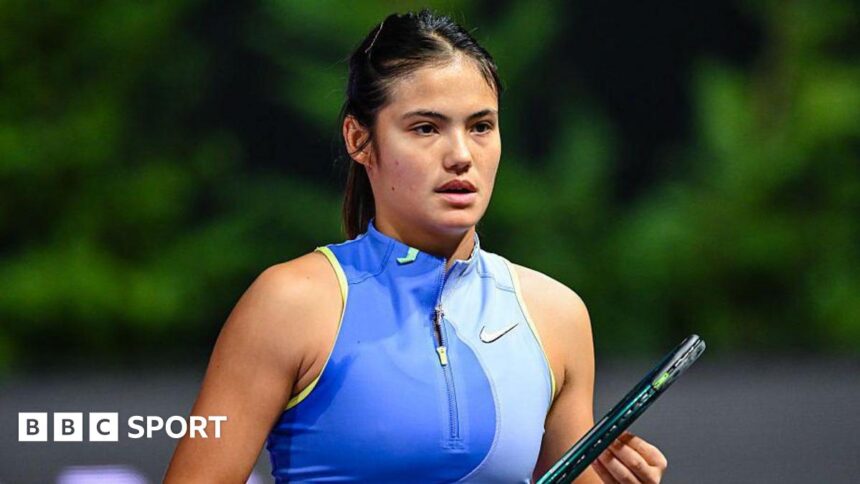
Raducanu’s Roadblock: Illness Forces Miami Withdrawal, Casting Shadow on Comeback Trail
The narrative of Emma Raducanu’s career, thus far, has been a tale of two extremes: the stratospheric, fairytale ascent to US Open glory and the subsequent, grueling battle with consistency and the physical demands of the tour. This week, a new, frustrating chapter is written not in defeat, but in absence. The British number one has withdrawn from the Miami Open, a significant setback in her carefully managed return, as she continues to grapple with the lingering effects of a post-viral illness contracted in the Middle East last month.
A Promising Spark Extinguished by Unseen Adversary
Raducanu’s decision to pull out of the Miami Gardens event, where she held a first-round bye, comes on the heels of a bittersweet campaign at Indian Wells. There, she showed flashes of her formidable best, navigating to the third round before running into an in-form Amanda Anisimova. The 52-minute defeat to the world number six was a stark reminder of the level required at the pinnacle of the sport, but the mere presence in that round was a positive step in her post-surgery comeback. However, it now appears that effort came at a cost. The underlying illness, which forced her to retire in Austin last month, has proven stubborn. Her team cites ongoing “post-viral symptoms,” a broad and often debilitating category that can include fatigue, respiratory issues, and a general depletion of energy reserves—an athlete’s kryptonite.
This development is particularly disheartening for Raducanu and her fans. The Sunshine Double—the prestigious back-to-back hardcourt tournaments at Indian Wells and Miami—represented a prime opportunity to bank ranking points and match rhythm against elite competition. Her withdrawal from the Miami Open is more than a missed tournament; it’s a disruption to the momentum she has been painstakingly building since her return from multiple surgeries in 2023.
Expert Analysis: The Perilous Path of a Post-Viral Comeback
From a sports science and career management perspective, Raducanu’s situation is a delicate tightrope walk. Pushing through illness on the professional tour is a recipe for prolonged recovery or more serious injury. “Post-viral syndromes can be notoriously tricky,” explains a veteran tennis physiotherapist not directly involved with Raducanu’s team. “The body’s resources are diverted to healing, leaving little in the tank for the explosive, repetitive strain of professional tennis. Attempting to compete at that level while compromised not only hampers performance but significantly increases the risk of soft-tissue injuries as the body loses its protective strength and coordination.”
Raducanu’s choice to compete at Indian Wells, while understandable from a competitive standpoint, may have been a calculated gamble that didn’t pay off. The key questions now are:
- Management of Recovery: How will her team, led by coach Nick Cavaday, structure this enforced break? Total rest is likely phase one, followed by a gradual, monitored return to training.
- Schedule Recalibration: The clay court season looms, a physically demanding surface shift. Will she need to delay her European clay debut to ensure full health?
- Long-Term Implications: This episode underscores the paramount importance of durability and physical resilience in translating her undeniable talent into sustained success.
Predictions: Navigating the Clay and the Crucible of Expectation
Predicting Raducanu’s immediate future is inherently tied to her health. Assuming a full and robust recovery, her path forward involves several critical phases:
The Clay Court Conundrum: The transition to clay is one of the sport’s greatest challenges. It demands patience, supreme fitness, and point construction—elements that could actually benefit Raducanu’s all-court game if she is physically prepared. However, entering the grueling rallies of Parisian dirt while less than 100% fit would be counterproductive. A cautious approach, potentially skipping smaller warm-ups to prioritize readiness for Roland-Garros, seems probable.
The Grass Court Sanctuary: The summer grass season, culminating at Wimbledon, represents both a massive opportunity and a pressure cooker. The British public and media will expect a show. A healthy Raducanu, with her clean ball-striking and natural aptitude for faster surfaces, could thrive. Her US Open victory in 2021 proved she possesses the mental fortitude for grand stages, but her body must cooperate to allow that talent to surface.
The Ranking Reality: The withdrawal from Miami Open will see her miss a chance to defend or gain points. The focus for 2024 must shift from a rapid ranking climb to building a unshakable physical foundation. The predictions are not about winning a specific title in the coming months, but about whether she can string together consecutive months of healthy, uninterrupted competition.
Conclusion: Patience, Not Panic, is the Prescription
Emma Raducanu’s latest setback is a test of perspective. In the frenetic world of professional sports, where weekly results are dissected, the long game is often forgotten. Her withdrawal from the Miami Open due to post-viral symptoms is a short-term disappointment but potentially a necessary long-term investment. The ghost of her 2021 Flushing Meadows triumph will always be the benchmark, but the present journey is fundamentally different.
This is no longer about a qualifier capturing lightning in a bottle; it is about a proven champion learning to navigate the relentless marathon of the WTA tour. Her decision to prioritize health over immediate competition, however frustrating, is the mature and correct one. The road back to the top echelons of tennis is paved with such difficult choices. For Raducanu, the true victory in the spring of 2024 may not be a trophy, but a return to the court fully healed, resilient, and ready to write the next chapter of her compelling story on her own terms.
Source: Based on news from BBC Sport.