Morocco Crowned Afcon 2025 Champions After Historic Caf Ruling Overturns Senegal Final
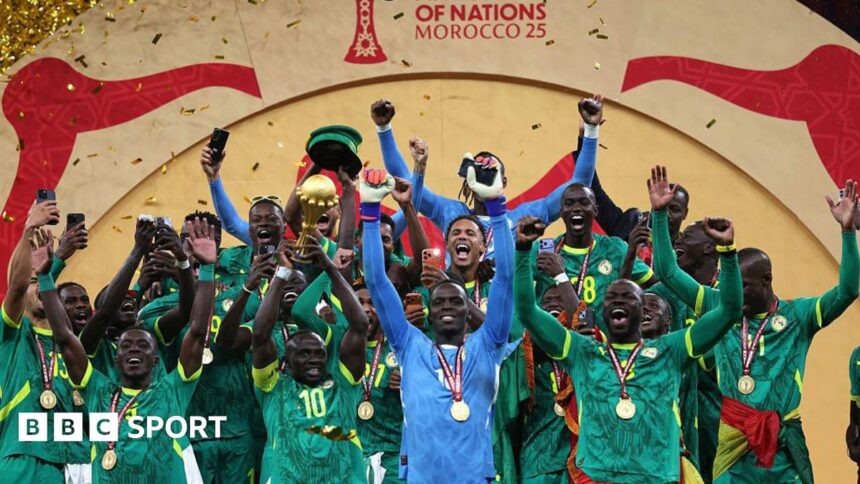
In an unprecedented decision that has sent shockwaves through the football world, the Confederation of African Football (CAF) has overturned the result of the 2025 Africa Cup of Nations final, stripping Senegal of their title and declaring Morocco the champions. The ruling follows a dramatic and controversial final in Rabat on January 18th, where Senegal’s initial 1-0 extra-time victory was marred by a prolonged walk-off protest. This is not merely a change in the record books; it is a seismic event that redefines the boundaries of sportsmanship, regulation, and consequence in African football.
The Final That Shook a Continent: A Minute-by-Minute Breakdown
The match, played in a fever-pitch atmosphere at the Prince Moulay Abdellah Stadium, was a tense, goalless tactical battle heading into the final moments of stoppage time. Then, controversy erupted. The referee awarded Morocco a stoppage-time penalty after a VAR review for an alleged foul in the box. What happened next was unprecedented in an Afcon final.
In an act of collective protest, the entire Senegalese team, led by their captain and officials, walked off the pitch in disagreement with the decision. The ensuing delay lasted approximately 17 minutes, throwing the tournament’s showpiece event into chaos. Under immense pressure from tournament officials, the Senegalese squad eventually returned to the field. Moroccan star Brahim Diaz saw his spot-kick saved, sending the match into extra time, where a weary Moroccan side conceded a winner to Senegal’s Pape Gueye.
While Senegal celebrated what they believed was a second consecutive Afcon crown, the focus immediately shifted from the pitch to the boardroom. The Moroccan Football Federation lodged an immediate and formal protest, citing clear breaches of the Laws of the Game and CAF regulations regarding team conduct and match integrity.
CAF’s Landmark Decision: Rules, Precedent, and Zero Tolerance
CAF’s Appeal Board deliberated on a case with few direct parallels. The core of their decision rested on a strict interpretation of the rules governing player conduct and match abandonment. By walking off the pitch for an extended period, Senegal was deemed to have refused to play, an act that carries severe sporting sanctions.
Key factors in the ruling included:
- Unprecedented Walk-Off: The deliberate and prolonged nature of the protest, lasting nearly 20 minutes, was viewed as a de facto temporary abandonment of the match.
- Undue Influence & Match Integrity: CAF determined the protest created an unfair sporting environment, applying extreme psychological pressure on the Moroccan penalty-taker and disrupting the competitive flow of the final.
- Upholding Disciplinary Codes: CAF signaled a zero-tolerance policy for teams taking match outcomes into their own hands, regardless of the perceived injustice of a refereeing decision. The established protocol is to play and protest later.
“The sanctity of the match as a continuous sporting contest was broken,” a CAF statement read. “While the right to appeal refereeing decisions is respected, the method of protest chosen by the Senegalese delegation was a direct violation of the disciplinary code and the spirit of the game. The result as it stood on the field cannot stand.”
Fallout and Future: Analysis of a Football Earthquake
The ramifications of this decision are profound and multi-layered. For Morocco, it is a bittersweet validation. They are crowned champions for the third time in their history, adding the 2025 title to their 1976 and 2023 wins, but the manner of the victory will forever be asterisked in the public consciousness. The joy of a home-tournament triumph is inextricably linked to a bitter administrative battle.
For Senegal, it is a devastating blow. To have the ultimate glory snatched away in a courtroom after achieving it on the pitch is a unique sporting heartbreak. They are likely to appeal to the Court of Arbitration for Sport (CAS), but overturning such a disciplinary ruling is historically difficult. The legacy of their golden generation is now irrevocably tarnished by this incident.
Expert analysis suggests this ruling sets a powerful and contentious precedent:
- Referee Protection: It strongly reinforces the authority of match officials, stating that decisions—right or wrong—must be respected in the moment.
- Deterrent Effect: It serves as a stark warning to all national associations that similar protests will be met with the harshest possible sanctions, including result overturns.
- Fan and Player Sentiment: It creates a complex divide. Purists argue rules are rules, while others feel the “footballing outcome” (Senegal winning on the pitch) has been unjustly voided by bureaucracy.
Predictions: The New African Football Landscape
Looking ahead, the fallout from the 2025 Afcon final controversy will shape African football for years to come.
First, we can expect an immediate and intense period of legal wrangling, with Senegal almost certainly taking their case to CAS. The outcome will define the limits of sporting protest globally.
Second, CAF will likely move to codify even stricter protocols for in-match protests, potentially introducing automatic forfeit clauses for walk-offs exceeding a specific, short duration.
Third, the psychological impact on both teams will be significant. Morocco must navigate the narrative of being “paper champions,” a motivation that could either fracture or fuel them in upcoming World Cup qualifiers. Senegal faces a monumental task of squad regeneration and healing from a unique sporting trauma.
Finally, this event places African football governance under a global microscope. CAF’s firm stance demonstrates a desire for order and professionalism, but its execution in the tournament’s biggest moment will be debated for generations.
Conclusion: A Title Won in the Courtroom, A Legacy Defined in Controversy
The 2025 Africa Cup of Nations will forever be remembered not for dazzling skills or last-minute goals, but for the 17 minutes when the game stood still and the years of fallout that began after the final whistle. Morocco are the champions, a fact now enshrined in the official annals. Senegal are the fallen titans, their on-field triumph erased by a disciplinary ruling. This saga transcends sport; it is a case study in rules versus emotion, authority versus protest, and the very meaning of a “winner.” The trophy resides in Rabat, but the echoes of this decision will reverberate through every CAF competition to come, establishing a bold, controversial, and irreversible new precedent in the beautiful game.
Source: Based on news from BBC Sport.