Charles Barkley’s MAC Blast: Is “Sucking” a Valid Tournament Seeding Argument?
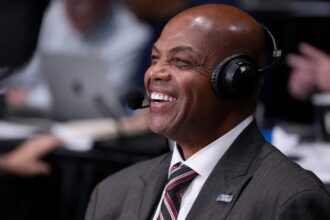
The NCAA Tournament selection process is an annual symphony of joy, heartbreak, and heated debate. This year, one of the loudest, most unfiltered instruments in that orchestra was Charles Barkley. During TNT’s tournament coverage, Sir Charles launched a passionate, expletive-adjacent defense of the Miami (OH) RedHawks, landing a direct insult on the entire Mid-American Conference in the process. His core argument? The undefeated RedHawks were screwed by the committee, and “It’s not their fault everybody in their conference sucks.” The statement was pure, uncut Barkley—equal parts provocative, reductive, and sparking a crucial conversation about the metrics that define college basketball’s elite.
The Barkley Doctrine: Undefeated Means Undeniable
Charles Barkley, the Hall of Fame forward turned iconic analyst, has never been a prisoner of conventional analytics. His philosophy is often rooted in a simpler, results-based worldview. In the video clip that ricocheted across social media, Barkley laid out his case with trademark fervor.
“They went 31-0. I’m not a big proponent of strength of schedule. It’s not their fault everybody in their conference sucks. They only played the schedule they were dealt.”
This “Barkley Doctrine” challenges the very foundation of the NET rankings and the quad-system that the selection committee holds sacred. To Barkley, an undefeated record, regardless of conference, is a monumental achievement that should be rewarded with more than a trip to the NCAA Tournament First Four in Dayton. His stance is a populist one: winning every game on your schedule is the ultimate proof of a team’s quality. The complexity of strength of schedule and efficiency metrics, in his view, unfairly punishes teams from mid-major conferences for circumstances beyond their control.
His comments also contained a notable aside: a shout-out to Auburn’s Bruce Pearl, who he said disagrees with him. This nod highlights the eternal tension in the sport between the power-conference advocates, who face brutal league slates, and those who believe perfection from any league should be canonized.
The Other Side of the Court: Context and the Committee’s Dilemma
While Barkley’s defense makes for compelling television, the selection committee’s job is to contextualize those 31 wins. The Mid-American Conference (MAC) ranked 22nd in conference RPI this season. Miami (OH)’s non-conference schedule featured no games against Quad 1 opponents and their best win was likely against a Quad 2 team. Their perfect record, while historic, was built against a schedule the committee deemed soft.
Contrast this with the team Barkley indirectly insulted: the Akron Zips. At 29-5, Akron didn’t have the glittering record, but they won the MAC tournament title, earning the league’s automatic bid as a No. 12 seed. Their resume, including a stronger non-conference strength of schedule and a win over a Power 5 opponent, was arguably viewed as more “battle-tested” by the committee’s metrics. Barkley’s blanket statement overlooks the nuance within the very conference he criticized.
However, Miami found a powerful ally in an unlikely place: the opposing coach. SMU Mustangs head coach Andy Enfield stated plainly that the RedHawks deserved their at-large bid and critics should “shut up.” When an opponent in a win-or-go-home game offers that level of respect, it underscores that Miami’s achievement carried significant weight within the industry, even if the computers were skeptical.
- The Committee’s Lens: Values quality wins, road performance, and efficiency metrics over raw win-loss record.
- The Barkley Lens: Values the undeniable difficulty of winning every single game, a feat of consistency and mental fortitude.
- The Coaches’ Lens: As Enfield showed, recognizes the extreme difficulty of any undefeated season.
Beyond the Sound Bite: The Eternal Mid-Major Seed Debate
Barkley’s rant is merely the latest, most colorful chapter in a decades-long debate. The question is fundamental: What is the true purpose of the NCAA Tournament bracket? Is it to reward the “best” teams based on a full season’s resume, or to celebrate champions and extraordinary achievements from across the college basketball landscape?
The First Four in Dayton often becomes the epicenter of this tension. For mid-major at-large teams, it can feel like a punitive play-in game, a “prove it again” moment after a stellar season. Barkley’s outrage taps into this perceived injustice. He argues that a 31-0 team should be in the “main draw,” not fighting for a spot on the bracket’s literal first line.
This debate also touches on the economic and structural realities of the sport. Power conferences have lucrative TV deals that fund programs and allow for ambitious non-conference scheduling. Mid-majors like Miami (OH) often cannot afford to buy home games against elite teams and must play “buy games” on the road, which are almost always losses. The system, as Barkley implies, is somewhat rigged against them from the start.
Tournament Predictions: Pressure and Legacy
The immediate fallout from Barkley’s comments creates a fascinating psychological backdrop for Miami’s First Four game against SMU.
For Miami (OH): They have been handed a massive national platform and a charismatic defender. This can be a powerful unifying tool, fostering an “us against the world” mentality. However, it also adds immense pressure. A loss would validate the committee’s seeding and potentially make their historic season a footnote. A win, especially a convincing one, would make Barkley seem prophetic and ignite a firestorm about the seeding process.
For the MAC: The conference now has dual motivations. Akron, the “sucked” conference’s champion, can silence the noise by pulling off an upset against Texas Tech. The entire league’s reputation, fairly or not, is often tied to its NCAA Tournament performance. Strong showings from both Akron and (if they advance) Miami would be the ultimate rebuttal.
Conclusion: The Value of the Provocateur
Charles Barkley’s analysis is rarely about the granular details of a zone defense. It’s about principle, perception, and passion. By declaring the MAC “sucks,” he used hyperbole to force a critical examination of the selection committee’s values. Was Miami (OH)’s 31-0 season a masterpiece of dominance, or a product of a weak canvas?
The truth, as always in March, likely lies somewhere in the middle. The committee’s metrics have a purpose, but Barkley reminds us that they can sometimes strip the soul and story from the sport. An undefeated season is a rare and magical accomplishment, one that perhaps deserves more reverence in the seeding process.
Ultimately, the games will decide the legacy. If Miami (OH) and Akron make deep runs, Barkley’s hot take will be remembered as a prescient critique. If they falter early, the committee’s judgment will be affirmed. But by lighting this fuse, Barkley ensured that two teams from a flyover conference have the entire basketball world watching, debating, and caring about their fate. And in that, he performed the ultimate service of a sports commentator: he made the story bigger than the game.
Source: Based on news from Yahoo Sports.