Morocco Crowned AFCON 2026 Champions After CAF Overturns Senegal’s Win in Unprecedented Forfeit Ruling
In a decision that has sent seismic shockwaves through the world of football, the Confederation of African Football (CAF) has stripped Senegal of the 2026 Africa Cup of Nations title and awarded it to Morocco. The unprecedented ruling, announced on Tuesday, March 17, stems from the chaotic final moments of the January 18 final in Rabat, where Senegal’s players left the pitch in protest. CAF has judged that action as a forfeit, transforming a dramatic on-field victory into a stunning administrative reversal and sparking an immediate firestorm of controversy that now threatens to spill into the Court of Arbitration for Sport (CAS).
The Rabat Ruckus: A Final Unraveled
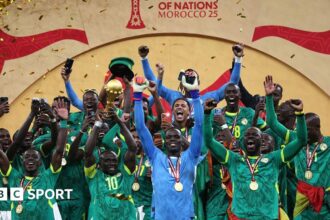
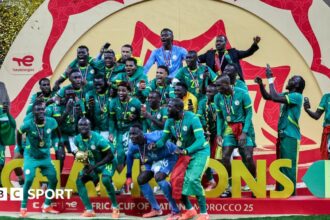
The scene in the Stade de Rabat on January 18 was one of pure, unscripted drama. With the score locked at 0-0 deep into second-half stoppage time, the referee awarded a contentious penalty to Morocco. For the Senegalese Lions of Teranga, it was a decision too far, a moment of perceived injustice that tipped the scales. In an act of collective protest, the entire Senegal squad and technical staff walked off the field, leaving a stunned stadium in silence.
After a delay of 14 minutes, the players returned. The narrative then took another twist: Moroccan star Brahim Diaz missed the spot-kick. Energized, Senegal would go on to win in extra-time, with Papa Gueye scoring the decisive goal to spark wild celebrations for what was believed to be a second AFCON crown. However, that on-field result has now been erased. CAF’s Disciplinary Board has applied Article 82 of its regulations, which deals with team withdrawals, to rule the walk-off a forfeit. The official result is now a 3-0 victory for Morocco, handing them their third continental title.
CAF’s Stance: Protecting the “Image of African Football”
In justifying its monumental decision, CAF pointed to more than just the walk-off. The governing body cited the “total chaos” that engulfed the final, including reported clashes between fans and spectators. A CAF statement emphasized that the “image of African football was tarnished” by the events, and that such scenarios “cannot be tolerated.”
This ruling is a stark, hardline message from CAF’s leadership under President Patrice Motsepe. It signals a near-zero-tolerance policy for actions that disrupt matches or challenge the authority of match officials, regardless of the stage or stakes. Key points from CAF’s perspective include:
- Upholding Match Official Authority: The walk-off was seen as a direct challenge to the referee’s decision, setting a dangerous precedent.
- Spectator and Stakeholder Safety: The ensuing chaos raised significant safety concerns.
- Commercial and Broadcast Integrity: The lengthy abandonment disrupted a global broadcast event, affecting partners and viewers.
“While the emotion of a controversial call is understandable,” a CAF insider commented, “the mechanism for protest is not on the pitch. The competition’s integrity must be protected above the emotional reaction of a single moment, however decisive.”
Senegal’s Fury and the Inevitable Legal Battle
The reaction from Dakar has been one of fury and profound disbelief. The Senegalese Football Federation (SFF) has vehemently condemned the decision, labeling it “disproportionate and catastrophic for sport.” They argue that the players returned and completed the match, winning it competitively, and thus the ultimate result should stand.
The SFF has announced its intention to appeal the decision to the Court of Arbitration for Sport (CAS) in Lausanne. Their legal argument will likely hinge on the interpretation of “abandonment” versus “temporary protest,” and whether CAF’s application of the forfeit rule was appropriate given the match was resumed and concluded. “We will fight this with every resource we have,” an SFF statement read. “This is not just about a trophy; it is about the spirit of the sport and the right of players to contest injustice. The pitch, not a boardroom, is where titles should be decided.”
This sets the stage for a protracted legal battle that could leave the title in limbo for months. CAS’s ruling will be final and binding, creating a historic precedent for how similar incidents are handled in global football.
Expert Analysis: A Victory Tainted, A Legacy Defined by Controversy
From a sporting purist’s perspective, this decision creates a deeply unsatisfying paradox. Morocco, who missed a penalty and lost the match in extra time, are crowned champions. Senegal, who displayed remarkable resilience to win on the pitch, are left with nothing but a moral victory and a profound sense of grievance.
For Morocco, this is a Pyrrhic victory. The celebrations in Rabat will be muted, overshadowed by an asterisk that will forever accompany this title. While their federation will rightfully claim the trophy is theirs by regulation, the players know they did not win it in the eyes of the world. The legacy of their 2026 triumph risks being defined not by skill, but by statute.
For Senegal, and particularly for legendary coach Aliou Cissé and his golden generation, the emotional devastation is immeasurable. To have a hard-fought championship physically lifted from their grasp months later is a unique and cruel sporting heartbreak. It also raises a critical tactical question for the future: in the heat of a momentous occasion, what is the appropriate way for teams to protest a perceived injustice?
The wider expert analysis suggests CAF may have won the battle of regulations but lost the war of perception. “This is a no-win situation,” remarked one veteran African football journalist. “CAF had to act to assert control, but the manner feels draconian. It has potentially created a more divisive and damaging controversy than the original incident.”
Predictions and Lasting Implications
The fallout from this decision will reverberate for years. We can anticipate several key developments:
- A Landmark CAS Case: The appeal will be closely watched globally. Its outcome will rewrite the rulebook on team protests and disciplinary power.
- Changed Team Behavior: National teams and clubs in CAF competitions will now be acutely aware that leaving the pitch, even temporarily, could result in automatic forfeiture, regardless of context.
- Strained Relations: Diplomatic and sporting relations between Senegal/Morocco and between the SFF and CAF will be severely strained.
- VAR and Officiating Scrutiny: This incident will intensify calls for the flawless implementation of VAR in Africa to avoid the kind of controversial, game-altering calls that sparked the protest.
Conclusion: A Dark Day for African Football’s Soul
The 2026 AFCON final will not be remembered for a moment of brilliance, but for a moment of breakdown. In attempting to salvage the “image of African football” from the chaos of Rabat, CAF has plunged it into a deeper, more complex crisis of legitimacy and spirit. The trophy may now reside in Rabat by decree, but the shadow of this controversy will loom over it. Senegal’s journey to CAS is a fight for more than a gold medal; it is a fight for the very principle that football, at its best, is decided by players within the boundaries of the field. Regardless of the courtroom verdict, the true loser in this saga is the beautiful game itself, caught between rigid regulation and raw, human emotion. The beautiful game has rarely looked so ugly.
Source: Based on news from India Today Sport.
Image: CC licensed via commons.wikimedia.org