Sadio Mané’s Fury: How a Boardroom Decision Stripped Senegal’s AFCON Glory and Shook African Football
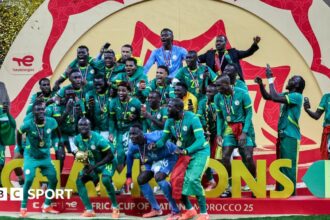
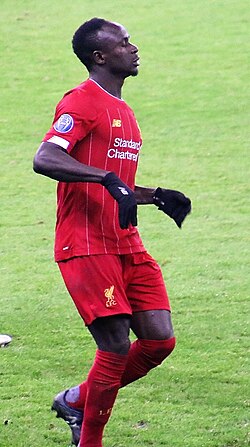
The image was one of unadulterated joy: Sadio Mané, tears streaming, holding the Africa Cup of Nations trophy aloft in Rabat. Senegal’s golden generation had finally conquered the continent. Two months later, that iconic moment has been erased by a decree. In a stunning reversal that has ignited a firestorm of controversy, the Confederation of African Football (CAF) has stripped Senegal of the 2026 AFCON title, awarding it instead to Morocco. The decision has drawn a scorching response from Senegalese icon Sadio Mané, who accuses the governing body of “killing the passion of millions” and laid bare a deep crisis of confidence in African football’s leadership.
From Pitch Battles to Boardroom Wars: The Rabat Final Revisited
The seeds of this unprecedented controversy were sown during a chaotic final on January 18, 2026. With the score 0-0 deep into stoppage time, Moroccan star Brahim Díaz went down in the Senegalese box, prompting the referee to point to the penalty spot. Incensed by what they perceived as a grievous injustice, the Senegalese squad, led by their captain Kalidou Koulibaly, staged a walk-off in protest.
After a tense 14-minute delay—a period during which senior players, notably Sadio Mané, reportedly worked to calm teammates and negotiate a return—the Lions of Teranga re-emerged. Díaz subsequently missed the penalty, and the match went to extra time, where a Papa Gueye header sealed a dramatic 1-0 victory for Senegal. The narrative was set: a story of resilience and ultimate triumph. However, CAF’s disciplinary committee saw the walk-off differently, classifying it as a forfeiture.
Key Moments of the Final & Aftermath:
- Controversial Call: Late penalty awarded to Morocco sparks immediate Senegalese fury.
- Unprecedented Walk-Off: Senegal leaves the pitch for 14 minutes in protest.
- Mane’s Mediation: The veteran forward plays a crucial role in convincing the team to return.
- On-Field Victory: Senegal wins 1-0 in extra time after Díaz’s missed penalty.
- Boardroom Reversal: CAF upholds Moroccan appeal, revises result to a 3-0 forfeit win for Morocco.
Mané’s Molotov: A Star’s Scathing Indictment of CAF
Sadio Mané, often a figure of quiet dignity, did not mince words. His public statement was a direct and damning indictment of CAF’s integrity. “What happened went too far. This is not the football we fight for, nor the Africa we believe in,” Mané declared. He went further, invoking the powerful sentiment of an entire continent’s fanbase: “There is too much corruption in our game, and it is killing the passion of millions of fans across the continent.”
This accusation strikes at the heart of the matter. For players and fans, football’s sanctity lies in its unpredictability and the definitive nature of the result achieved on the grass. By moving the decisive battle from the pitch to a committee room, CAF has, in the eyes of many, invalidated the sweat, strategy, and sacrifice of the athletes. Mané’s claim that “decisions made off it end up deciding matches and trophies” encapsulates a profound fear that sporting merit is being superseded by bureaucratic power plays and potential agendas.
His conclusion—”I am deeply disappointed—not just for Senegal, but for African football as a whole. We deserve better. The fans deserve fairness, transparency, and respect”—transforms the incident from a national grievance into a continental call to arms. It questions whether the institution tasked with nurturing African football is, in fact, stifling its soul.
Senegal’s Legal Gambit and the Shadow of CAS
Unwilling to accept what they label an “unfair, unprecedented, and unacceptable decision,” the Senegalese Football Federation (FSF) has immediately announced its intention to appeal to the Court of Arbitration for Sport (CAS) in Lausanne. This sets the stage for a high-stakes legal battle that will be closely watched by every football federation on the planet.
The FSF’s case will likely hinge on several arguments: the interpretation of the “forfeiture” rule, the precedent for such a severe punishment in a final, and the mitigating circumstances of the players’ return to complete the match. They will argue that the spirit of the competition was upheld by finishing the game, and that the original result should stand. CAF, conversely, will stand firm on the letter of the law, asserting that the walk-off, regardless of duration, constitutes an abandonment warranting a forfeit.
The potential outcomes of the CAS appeal are stark:
- CAS Upholds CAF: Morocco’s title is cemented, setting a severe precedent for future team protests. The legitimacy of CAF’s disciplinary process is reinforced, but its reputation with fans may be irreparably damaged.
- CAS Overturns CAF: Senegal is reinstated as champion. This would be a massive humiliation for CAF, calling its executive judgment into question and potentially triggering significant internal upheaval.
- A Compromise Ruling: CAS could potentially uphold a punishment (e.g., a fine, stadium ban) but deem the title-stripping disproportionate, ordering a replay or restoring the original result. This would be a logistical nightmare but might be seen as a Solomonic solution.
Beyond the Trophy: The Lasting Scars on African Football
Regardless of the CAS verdict, the damage is already profound. This incident exposes several festering wounds within African football.
First, it highlights a crisis of refereeing standards and VAR implementation. The walk-off was a direct result of a perceived officiating error. If players and federations do not trust the officials on the pitch, the game’s foundation crumbles. Second, it reveals a dangerous disconnect between administrators and the emotional core of the sport. CAF’s decision, while perhaps technically defensible, demonstrates a tin ear for the narrative and passion that makes football a cultural force. Replacing 120 minutes of drama with a 3-0 administrative scoreline feels like a betrayal of the sport itself.
Most importantly, Sadio Mané’s “corruption” allegation, whether proven or not, now hangs in the air. It gives voice to a suspicion long held in whispers across African football: that powerful nations and backroom dealings can influence the game’s biggest moments. Restoring trust will require more than a legal ruling; it will demand radical transparency and a demonstrable commitment to putting football first.
Conclusion: A Defining Moment for the Continent’s Game
The stripping of Senegal’s AFCON title is not merely a postscript to a tournament; it is a defining crisis. It pits the cold, rigid application of rules against the hot-blooded, emotional reality of sport. Sadio Mané, a beloved figure and African football legend, has thrown down the gauntlet, framing this not as Senegal’s loss, but as Africa’s loss.
The coming battle at CAS will decide who lifts a physical trophy. But the larger war—for the heart, soul, and credibility of African football—will be won or lost in the court of public opinion. CAF now faces its most significant test: to prove that its governance is worthy of the magnificent talent and passionate fans it serves. If it fails, the passion of millions may indeed begin to wither, replaced by a cynicism that no trophy can ever remedy. The final whistle on this saga is far from blown.
Source: Based on news from India Today Sport.
Image: CC licensed via commons.wikimedia.org