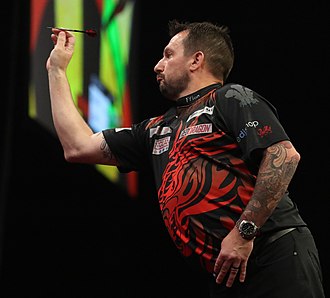
Josh Rock Vows to Unleash His Inner Fury to Spark Premier League Darts Fightback
The world of professional darts is a theatre of contrasting personalities. There are the flamboyant showmen, the ice-cold calculators, and the fiery competitors who wear their heart on their sleeve. For rising star Josh Rock, the narrative surrounding his debut Premier League season has been an unusual one: he’s been told he’s too nice for his own good. Now, the Northern Irish prodigy is issuing a warning to his rivals. To salvage his campaign and unleash his true potential, he might just need to put his “angry head on.”
The “Too Nice” Dilemma: A Compliment or a Curse?
Josh Rock’s ascent in darts has been meteoric. Known for his blistering scoring power and a throw so smooth it defies its speed, he earned his Premier League spot as a contender on sheer merit. Yet, the unique, weekly pressure-cooker environment of the Premier League, facing the same elite players night after night, has presented a new psychological challenge. Pundits and fans alike have observed a respectful, almost placid demeanor on the oche, even in defeat. This has led to the persistent tag of being “too nice.”
But what does this mean in the gladiatorial arena of the Premier League stage? For Rock, it’s an acknowledgment of a missing edge. “You need something to get you angry,” Rock admitted in a recent revelation. This isn’t about manufacturing disrespect for opponents or adopting a snarling persona. It’s about accessing a deeper, more primal competitive fuel—a controlled aggression that transforms potent skill into unbreakable will. It’s the difference between playing well and fighting to win.
- Controlled Aggression: The fine line between destructive anger and the competitive fire needed to dominate.
- Psychological Shift: Moving from a participant mindset to a warrior mindset on stage.
- Respect vs. Ruthlessness: Maintaining sportsmanship while developing a killer instinct to close out legs.
Historical Precedents: When Anger Fuels Greatness
The history of sports is littered with champions who harnessed emotion as their ultimate weapon. In darts, this dynamic is particularly potent. Think of a prime Phil Taylor, whose intense, focused glare could wilt opponents before a dart was thrown. Consider Gary Anderson, whose quiet, simmering frustration often translates into devastating bursts of 180s. Even the usually composed Michael van Gerwen is at his most dangerous when a missed double triggers a visible, self-critical reaction, followed by a terrifying barrage of scoring.
For Rock, the blueprint might be closer to home. The modern era’s most successful player, Michael Smith, once struggled with a similar narrative—immensely talented but needing to find that final gear of belief and grit. Smith’s transformation into a world champion involved embracing the pressure and converting near-misses into a hardened resolve. Rock’s acknowledgment of needing an “angry head” suggests a similar, conscious evolution is underway. He isn’t changing his engine; he’s learning to push the throttle into the red.
The Tactical Fightback: How Anger Translates to Points
This proposed mindset shift isn’t merely philosophical. It has direct, tangible applications on the board. A player operating with that fiercer mentality is often sharper in key moments:
Killing Legs: The difference between 120 and 140 outshots under pressure often comes down to conviction. An aggressive, decisive throw is harder to execute when in a passive state of mind.
Responding to Adversity: When an opponent pins a 134 finish or scores a 180 to leave a double, the “angry” response is a determined 180 back, not a resigned sigh. It’s about wresting momentum through sheer force of will.
Body Language & Intimidation: Darts is a one-on-one mental duel. A player who exhibits fierce focus and resilience after a bad visit sends a powerful message to his opponent across the stage. It makes comebacks harder and leads to doubts creeping into the opposition’s mind. Rock’s natural, genial demeanor, while endearing, may have inadvertently offered his world-class opponents a sense of comfort. Removing that comfort is a tactical masterstroke.
Predictions: Can the “Angry Head” Propel Rock Up the Table?
The Premier League is a marathon, not a sprint, and the format allows for dramatic turnarounds. Rock’s self-awareness at this stage is arguably his greatest asset. Recognizing the need for a psychological adjustment is the first, and most crucial, step in executing one.
We predict that if Rock can successfully integrate this controlled competitive fury into his game, the effects will be immediate and profound. We are likely to see:
- Higher Checkout Percentages: More clinical finishes in the decisive legs of matches.
- Fewer Punishing Streaks from Opponents: An ability to halt opponent momentum by answering back with authority.
- A Formidable Home Night in Belfast: The energy of a home crowd could be the perfect catalyst to unleash this new edge, making him a near-unstoppable force on that particular night.
The danger, of course, is mistaking anger for recklessness. The “angry head” must remain tactically astute. It cannot lead to rushed throws, poor shot selection, or a loss of that sublime, natural rhythm. For a player of Rock’s technical caliber, the challenge is to fuse emotion with execution, not be overrun by it.
Conclusion: The Making of a Darts Gladiator
Josh Rock’s journey in this year’s Premier League has transformed from a simple test of skill into a compelling story of personal evolution. The “too nice” tag was never an indictment of his talent, but an observation of an untapped dimension. His willingness to confront it and his plan to channel a fiercer version of himself is the mark of a competitor who understands what it takes to reach the very summit.
The Premier League stage is the perfect laboratory for this experiment. Night after night, against the best, Rock will have the opportunity to forge this new identity in the heat of battle. Darts fans should be thrilled. The sight of a fully realized Josh Rock—combining his generational scoring talent with a gladiator’s heart—is a prospect that could redefine the sport’s hierarchy for years to come. The message is clear: the nice guy is preparing to get nasty, and the Premier League table may soon be feeling the heat of his fury.
Source: Based on news from Sky Sports.
Image: CC licensed via commons.wikimedia.org