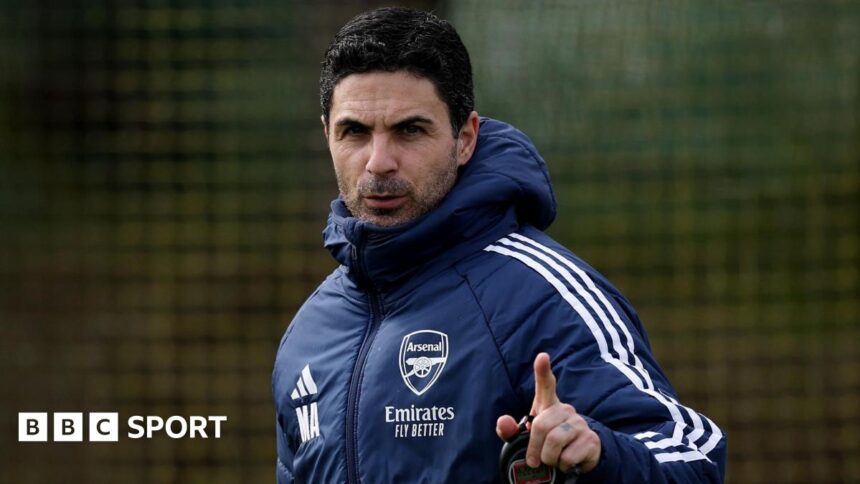
Arsenal’s International Exodus: Injury Crisis or Calculated Gambit?
The international break, often a manager’s nightmare, has descended upon the Premier League with a particularly stark narrative in North London. As nations convene for friendlies and Euro 2024 qualifiers, the withdrawal list makes for startling reading. Of the 23 Premier League players who pulled out of their respective squads, a staggering 11 hail from the same club: Arsenal. With Mikel Arteta’s side locked in a titanic Premier League title race, alive in the Europa League, and with an FA Cup campaign to come, this mass exodus from international duty begs a critical question. Is the Emirates Stadium currently housing a full-blown injury crisis, or is this a masterclass in proactive, crafty caution with a historic treble still on the line?
The Stark Numbers Behind the Gunners’ Retreat
The scale of Arsenal’s withdrawals is unprecedented in the modern game. While clubs often manage one or two players through minor knocks during these breaks, the Gunners’ list is comprehensive and features cornerstone figures. The defensive core was the first to crumble: William Saliba (ankle) and Gabriel Magalhaes (knee) withdrew from France and Brazil respectively, a potentially devastating double-blow. They were swiftly followed by key attackers Bukayo Saka (England, managing a knock), Eddie Nketiah (England, ankle), and the influential Martin Odegaard (Norway, illness). The list extends into the engine room and beyond, including the likes of Kieran Tierney (Scotland), Takehiro Tomiyasu (Japan), and Thomas Partey (Ghana).
This phenomenon represents almost half of all Premier League withdrawals. When viewed through a purely statistical lens, it paints a picture of a squad on the brink of physical collapse. However, in the high-stakes world of elite football, where margins are razor-thin, the context is everything. Arsenal are in a unique position they haven’t occupied for nearly two decades: genuine contenders on multiple fronts with just over a quarter of the season remaining.
Arteta’s Arsenal: Walking a Tightrope Towards Glory
To understand the potential strategy, one must first appreciate the precipice on which Arsenal stand. The Carabao Cup final defeat to Manchester City was a setback, but it clarified the ultimate prize: the Premier League. Currently leading the most intense title race in years, every single match is a cup final. Furthermore, the Europa League presents a clear path to silverware and Champions League qualification. The physical and mental toll is immense.
Mikel Arteta, a disciple of Pep Guardiola’s meticulous man-management, is renowned for his obsessive control over player conditioning. The international break represents the one period where this control is relinquished. Players fly long-haul, train under different methodologies, and play in matches of varying intensity with nothing at stake for Arsenal. The risk of a fresh injury or the aggravation of a minor “knock” is a gamble a title-chasing manager can ill afford.
This leads to the crux of the “crafty caution” theory. In modern football, the line between “injured” and “needs recovery” is deliberately blurred. A player might be technically unfit to play 90 minutes for their country but, with a tailored 10-day recovery plan at London Colney, be perfectly primed for the crucial league match against Leeds United. The withdrawals, therefore, can be seen as a form of proactive squad management.
- Protecting Key Assets: Players like Saka, who absorbs constant physical attention, benefit enormously from a mid-season reset.
- Managing Chronic Issues: A player like Thomas Partey, with a known injury history, avoids unnecessary travel and risk.
- Strategic Recovery: Minor muscular niggles that could become major under fatigue are given time to fully heal.
Injury Crisis or Smoke and Mirrors? The Expert Verdict
So, which is it? The truth, as is often the case, likely resides in the grey area between the two extremes. There is a genuine injury situation at Arsenal. The confirmed issues for Saliba and Gabriel are legitimate concerns for Arteta; losing his first-choice central defensive pairing would be a catastrophic blow. However, the sheer volume of withdrawals suggests a policy of extreme risk aversion has been activated.
Sports medicine experts point to the concept of “load management.” After a brutal schedule of 17 matches since the World Cup restart, Arsenal’s players are at a critical point in the cumulative fatigue curve. Pushing them through another intense period, even in training, could trigger soft-tissue injuries that would derail the season. By declaring them unavailable for international duty, Arsenal’s medical staff can implement individualized “pre-hab” programs—strengthening vulnerable areas to prevent future injuries.
This is not a practice exclusive to Arsenal, but the scale of their action is. It reflects a club that has shifted its mentality. This is the behavior of a club that believes it is on the cusp of something special and is willing to make politically savvy, if slightly controversial, decisions to protect its dream. The whispers of “crisis” are useful cover for what is essentially a cold, calculated prioritization of Arsenal’s objectives over international obligations.
The Endgame: Will This Gamble Pay Off for the Gunners?
The success or failure of this strategy will be judged in the furnace of April and May. The immediate benefits are clear: a rejuvenated, fresher squad returning to a unified training environment for a brutal run-in. The potential pitfalls, however, are significant.
Prediction 1: The Springboard Effect. The most likely outcome is that Arsenal return from the break with renewed vigor. Key players like Saka and Odegaard will have had a physical and mental reset. The squad will have had rare time to train together without the pressure of an imminent match, allowing Arteta to fine-tune tactics for the final push. This could provide the vital 2-3% edge needed in tight games.
Prediction 2: International Backlash. There is a risk of frayed relationships with national federations. While clubs hold the power, consistently withdrawing players can lead to tensions. Furthermore, if a “withdrawn” player is then seen fully fit and starring for Arsenal days later, it may invite scrutiny and criticism, painting the club as manipulative.
Prediction 3: The Unmasking of Real Injuries. The worst-case scenario is that the injuries to Saliba and Gabriel are more serious than feared, and the other withdrawals were merely a smokescreen for a genuine defensive catastrophe. This would expose a fatal flaw in the squad depth and could unravel their title challenge.
Conclusion: The New Arsenal Mentality
Arsenal’s eleven withdrawals are not merely a coincidence or a pure medical emergency. They are a bold statement of intent and a reflection of a modern, ruthless sporting operation. This is the action of a club that has graduated from hoping for success to expecting it, and is willing to orchestrate every variable within its power to achieve it. While a layer of genuine injury concern exists—particularly in defense—the overarching narrative is one of crafty, calculated caution. Arteta and his staff have identified the international break as the single greatest external threat to their season’s ambitions and have moved decisively to neutralize it. The gamble is enormous, but in the high-stakes poker game of a Premier League title race, sometimes the boldest bluff is the one you make with your cards face up on the table. The world is now watching to see if Arsenal’s hand is as strong as they believe.
Source: Based on news from BBC Sport.