Arteta’s Arsenal Caught in ‘A Really Dangerous Circle’ as Injury Crisis Threatens Season
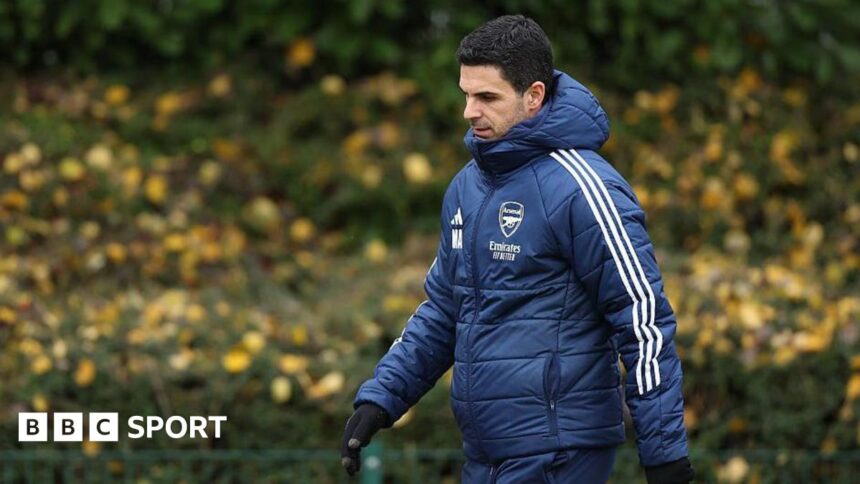
The roar of the Emirates Stadium had barely faded after Aston Villa’s seismic victory when Mikel Arteta faced the press, his expression etched with a familiar frustration. The narrative of Arsenal’s season, a tale of thrilling football and title contention, is being persistently undermined by a subplot of physical breakdowns. After losing Leandro Trossard to a fresh issue mere minutes after his return, Arteta articulated a grim reality gripping his squad: Arsenal, he stated, are trapped in a “really dangerous circle” of injuries. This is not just a run of bad luck; it is a systemic crisis threatening to derail their ambitions on multiple fronts.
The Vicious Cycle: Return, Breakdown, Repeat
Arteta’s choice of words—”a really dangerous circle”—is a precise and alarming diagnosis. It describes a punishing loop where the absence of key players forces others to play excessive minutes, increasing their susceptibility to injury, which in turn deepens the squad shortage. The case of Leandro Trossard is the perfect, painful microcosm. Having just recovered from a previous issue, the Belgian was introduced as a second-half substitute against Villa, scored a crucial goal, and was then withdrawn late on after feeling a new problem. His return lasted less than 45 minutes.
This pattern is repeating across the squad. The upcoming Champions League clash against Club Brugge will see Arsenal without the recently injured Declan Rice and William Saliba, the bedrock of their spine. They join a treatment room that, while seeing some exits, has been persistently occupied. The absence of Kai Havertz robs Arteta of tactical flexibility, while defensive stalwart Gabriel Magalhaes remains sidelined. Even new signing Viktor Gyokeres is in a careful reintegration phase. Each comeback is shadowed by the fear of an immediate setback, a fear that is now being routinely realized.
Pushing Back on the Overtraining Narrative
In the wake of such a concentrated spate of muscular injuries, the inevitable question arises: is Arteta’s famed intensity in training the culprit? The manager was unequivocal in his denial. “It’s not about overtraining,” he asserted, shifting the focus to the brutal, condensed calendar modern elite players face. His defense points to a broader issue in the sport.
- Fixture Congestion: The expanded Champions League format and relentless domestic schedule offer minimal recovery time.
- High-Intensity Style: Arsenal’s game model under Arteta is predicated on pressing, explosive transitions, and maximum physical output—a style that carries inherent injury risk.
- Psychological Load: The pressure of a sustained title race and the demand to perform in every single match adds a mental fatigue that can manifest physically.
Arteta’s rebuttal suggests the circle is not forged on the training pitches of London Colney, but by the unyielding demands of the modern football circus. The squad is not being broken in preparation; it is being worn down by competition itself.
Expert Analysis: A Test of Depth and Management
From a tactical perspective, this crisis is the ultimate stress test for Arsenal’s squad construction and Arteta’s managerial ingenuity. The loss of Rice, Saliba, and Gabriel simultaneously strikes at the heart of the team’s identity: its defensive security and transitional control. Saliba’s absence last season coincided with a title charge collapse, a ghost that now looms again.
Arteta must now solve a complex puzzle. Does he lean on academy products like Cristhian Mosquera (also injured) or Ethan Nwaneri in crucial matches? Can Jorginho and Thomas Partey adequately cover the monumental void left by Rice’s dynamism? The manager’s propensity to stick with a consistent starting XI, while successful for cohesion, may have contributed to the physical strain on his core players. The coming weeks will demand more rotation, but with quality options diminished, that rotation becomes a perilous gamble in itself. The strategy must evolve from managing a first team to managing an entire medical report.
Predictions: Navigating the Storm to the New Year
The immediate forecast for Arsenal is turbulent. The Club Brugge match becomes a dangerous hurdle, not a straightforward home fixture. In the Premier League, navigating the festive period—football’s most gruelling stretch—without key personnel could see them lose ground in the title race. Rivals with deeper squads may capitalize.
However, there is a potential silver lining. If Arsenal can stay within touching distance of the summit through December, the winter break and January transfer window offer a dual lifeline. A period of mandated rest could be the circuit breaker Arteta’s “dangerous circle” desperately needs, allowing bodies to heal fully rather than partially. Furthermore, the injury crisis has glaringly highlighted areas where squad depth is insufficient, potentially prompting strategic reinforcements in January. Surviving the storm until then is the singular, urgent objective.
Conclusion: More Than a Physical Battle
Mikel Arteta’s “really dangerous circle” is more than a medical phenomenon; it is the defining challenge of Arsenal’s season. It is a psychological battle against anxiety and frustration, a tactical test of adaptability, and a stark examination of the squad’s resilience. The manager has dismissed the overtraining theory, placing the blame on a punishing schedule that shows no mercy. As key players fall like dominoes, the strength of the club’s culture and the problem-solving skills of its manager are under the microscope.
Arsenal’s ambitions for domestic and European glory are now contingent on breaking this vicious cycle. It will require smart medical management, tactical pragmatism, and perhaps a slice of fortune they have been sorely lacking. The coming weeks will reveal not just the fitness of their players, but the true mettle and depth of the entire project Arteta has built. The circle is indeed dangerous, and escaping it will be their most important victory of the campaign so far.
Source: Based on news from BBC Sport.