Yankees’ ABS Mastery: A Perfect 5-for-5 Night Highlights New Era of Offense
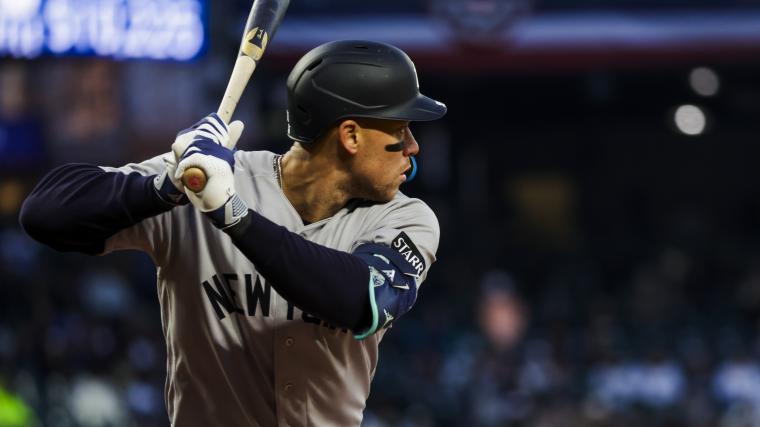
In a taut 2-1 loss to the Seattle Mariners on Monday night, the New York Yankees authored a quiet, historic victory that had nothing to do with the scoreboard and everything to do with the future of the game. While Luis Castillo and the Seattle bullpen stifled the Yankee bats, the Bronx Bombers executed a different kind of offensive strategy, going a perfect 5-for-5 on automated ball-strike system (ABS) challenges. This flawless performance, coming in just the fourth game of the 2026 season, wasn’t a fluke. It was a masterclass in preparation, discipline, and technological adaptation, signaling a new frontier where a keen eye can be as potent as a powerful swing.
The Anatomy of a Perfect Challenge Night
The sequence was a stark demonstration of how the ABS challenge system is altering in-game dynamics. It began in the bottom of the second inning with shortstop Jose Caballero, who found himself in a critical 3-2 count against Castillo. After a called strike, Caballero immediately signaled for a challenge. The ABS review confirmed his eye: the pitch missed the zone, turning a potential inning-ending strikeout into a walk. Caballero had already successfully challenged another called strike earlier in the at-bat, showcasing a remarkable understanding of the zone.
The domino effect was immediate. Following Caballero’s lead, Giancarlo Stanton stepped in. On a 1-2 slider that appeared to nip the corner, Stanton did not flinch. He challenged, the call was overturned to a ball, and he promptly singled on the next pitch. Minutes later, Jazz Chisholm Jr. continued the trend, correctly overturning a first-pitch slider. In a matter of moments, the Yankees had weaponized the challenge system, extending innings and forcing a premier pitcher like Castillo to work even harder.
- Jose Caballero: Two successful challenges in one at-bat, including a game-changing 3-2 call.
- Giancarlo Stanton: Overturned a 1-2 slider, then delivered a key single.
- Jazz Chisholm Jr.: Quickly challenged and won on a first-pitch offering.
This surgical precision has become a hallmark of the early season. The Yankees now boast an MLB-best 10 successful ABS challenges, going an astounding 10-for-11 overall. Their only loss was also charged to Caballero, proving that even in this new realm, perfection is elusive, but their process is undeniably elite.
Boone’s Blueprint: Preparation Meets Opportunity
In the post-game press conference, manager Aaron Boone offered insight that transcended typical managerial praise. His comments, as reported by ESPN, revealed a calculated organizational approach. “Really good job by the guys,” Boone said. “When you have that kind of success rate, it’s not going to be like that every night. But I thought every one was obviously warranted, and a couple in some key spots to give us a chance to build an inning.”
Boone’s analysis cuts to the core of the new strategy. It’s not about challenging for the sake of it; it’s about selective aggression. He acknowledged the razor-thin margins on these pitches and emphasized that the goal isn’t to constantly rely on the challenge. Instead, the Yankees are training their hitters to have an immaculate internal strike zone, allowing them to identify the few, high-leverage pitches worth disputing. This “hammering the strike zone” mentality, as Boone put it, is a dual-threat approach: swing at strikes, and know with conviction when a pitcher hasn’t thrown one.
This preparation speaks to a larger shift in coaching. Hitting coaches are now as focused on pitch recognition software and ABS simulation training as they are on swing mechanics. The Yankees’ early success suggests their hitters are not just studying opposing pitchers’ tendencies, but also calibrating their eyes to the precise, digital zone used in reviews—a zone that can sometimes differ from a human umpire’s interpretation.
The Strategic Ripple Effect Across MLB
The Yankees’ proficiency is sending a clear message to the rest of the league: the ABS challenge system is no gimmick; it’s a tangible competitive advantage. The immediate impacts are evident:
- Pitcher Disruption: Successful challenges, especially on two-strike counts, dismantle a pitcher’s rhythm and increase pitch counts dramatically.
- Extended Innings: Turning a strikeout into a walk or keeping a hitter alive can flip an entire inning, as seen in the second frame Monday.
- Psychological Warfare: The threat of a perfect challenge record forces pitchers to aim even more for the heart of the plate, potentially leading to more hitter-friendly counts and mistakes.
However, this new tool comes with strategic risks. Each team receives only three unsuccessful challenges per game. The Yankees’ restraint—using challenges only on highly questionable pitches with clear value—is as impressive as their success rate. Wasting a challenge early on a frivolous appeal could cost a team a game-changing call in the late innings. New York’s discipline in this area is a lesson for clubs still struggling to adapt.
Looking Ahead: The Future of the Automated Zone
The Yankees’ 5-for-5 night is a compelling data point in the ongoing evolution of the ABS system. While the full, automated strike zone is used in some minor leagues, the challenge system represents MLB’s cautious integration of technology. The Yankees’ mastery may accelerate the conversation. If one team can consistently “game” the system through superior preparation, it pressures other organizations to catch up, potentially leading to wider adoption of full ABS to ensure uniform application.
For the 2026 season, however, the Yankees have carved out an early identity. In an era where analytics govern defensive shifts and pitching rotations, they have added a new layer: digital plate discipline. Their ability to merge old-school hitting principles with cutting-edge review technology is creating a modern offensive hybrid.
Predictions for the season are already adjusting. The Yankees, with their deep lineup of disciplined veterans and tech-savvy newcomers, are poised to lead the league in overturned calls and, by extension, in extended offensive opportunities. This edge could prove monumental in close divisional races and the tight, low-scoring games of October.
Conclusion: A New Form of Capitalizing on Mistakes
Baseball has always been a game of capitalizing on mistakes—a hanging slider, a fielding error, a mental lapse. The 2026 New York Yankees are pioneering the art of capitalizing on digital mistakes. Their perfect ABS challenge night against the Mariners, even in a loss, was a landmark moment. It demonstrated that victory is no longer sought solely through physical prowess but through a combination of preparation, technological fluency, and strategic nerve.
As Aaron Boone noted, they won’t go 5-for-5 every night. But the standard has been set. The Yankees are not just playing the pitcher; they are playing the system with a level of expertise that is currently unmatched. In the long grind of a 162-game season, this newfound ability to win pitches without swinging might just be the quiet innovation that leads to the loudest celebrations come fall.
Source: Based on news from Yahoo Sports.