The Absent XI: Global Superstars Who Will Watch the 2026 World Cup From Home
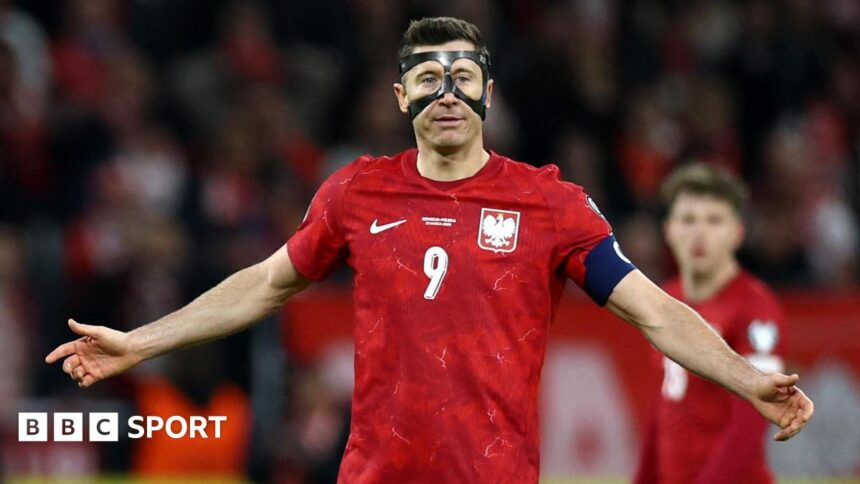
The final whistle in Stockholm didn’t just signal a Swedish celebration; it marked the poignant end of an international era. Robert Lewandowski, Poland’s iconic captain and one of football’s most prolific strikers for over a decade, stood motionless as his dream of a final World Cup appearance evaporated. At 37, with over 700 career goals and a trophy cabinet bursting with domestic honors, the one crown that has always eluded him—World Cup glory—will remain forever out of reach. His story, however, is not a solitary one. The expanded 48-team format of the 2026 World Cup promised more inclusion, yet the brutal mathematics of qualification have still conspired to create a staggering list of global talent who will be spectators this summer. We assemble the most formidable “Absent XI” and examine the gaping holes their absence leaves in the tournament’s tapestry.
The Unforgettable Farewell: Lewandowski’s International Curtain Call
Robert Lewandowski’s international career is a saga of individual brilliance often burdened by collective limitation. With 89 goals in 152 caps for Poland, he carried the hopes of a nation on his shoulders for 15 years. His legacy as a clinical finisher is untouchable—a model of precision, power, and predatory instinct that defined an era in the Bundesliga and beyond. Yet, on the world’s biggest stage, he was never fully furnished with the supporting cast to match his ambition. Poland’s journey often ended in the group stages, with Lewa fighting valiantly against the tide.
Tuesday’s play-off defeat to Sweden was a microcosm of that struggle. Despite his relentless effort, the defensive frailties behind him proved insurmountable. As he walks away from World Cup football, the tournament loses not just a goal machine, but a respected elder statesman of the game. His absence is a sobering reminder that even the greatest cannot guarantee passage to the grandest party.
A Constellation of Fallen Stars: Who Else Missed the Cut?
Lewandowski headlines a startling roster of world-class players whose nations fell short. Their collective absence will reshape narratives, dismantle potential “groups of death,” and deny fans iconic matchups.
- Erling Haaland (Norway): The planet’s most fearsome young striker, a goal-scoring phenomenon at Manchester City, will watch from home. Despite his partnership with Martin Ødegaard, Norway’s inconsistent form in a tough qualifying group left them adrift. The World Cup will be immeasurably poorer without his explosive power.
- Victor Osimhen (Nigeria): The reigning African Footballer of the Year and Napoli’s title-winning hero failed to steer Nigeria past a resilient Ghana in their final qualifier. His aerial dominance and blistering pace are tailor-made for the global stage, making his absence a crushing blow for the tournament’s spectacle.
- Alexander Isak (Sweden): In a cruel twist, the man who helped eliminate Lewandowski will also miss the finals. Sweden’s victory in Stockholm was bittersweet, as they too fell short in their subsequent play-off path. Isak’s elegant, intelligent forward play will be a missed luxury.
- Arsenal’s Scandinavian Core: Beyond Isak, his club teammate Martin Ødegaard (Norway) will also be absent. The creative midfield maestro who orchestrates Arsenal’s attack will have no World Cup stage to conduct upon, a significant loss for purists of midfield artistry.
Tactical Implications and Tournament Predictions
The omission of such key figures from specific nations dramatically alters the competitive landscape. Groups that might have featured a Haaland-led Norway or an Osimhen-powered Nigeria instantly lose a layer of threat and unpredictability. This creates opportunities for other mid-tier nations to advance deeper than anticipated, potentially leading to a more open, if slightly less star-studded, knockout phase.
From a tactical perspective, the absence of these classic number nine strikers—Lewandowski, Haaland, Osimhen—could reinforce the modern trend towards fluid, false-nine systems. Coaches of top nations may no longer have to devise specific defensive plans to nullify these singular physical and goal-poaching threats, potentially encouraging more aggressive, high-pressing tactics from the favorites.
Our prediction: While the tournament will adapt, the lack of these iconic goal-scorers will place an even greater spotlight on the established global elite. Players like Kylian Mbappé, Harry Kane, and Jude Bellingham will be expected to not only perform but to embody the star power the event demands. It may also accelerate the global introduction of the “next generation” of stars from qualified nations, who now have a clearer runway to shine.
Legacy and the Inevitable Passage of Time
This mass absence of elite talent is a powerful testament to football’s relentless and unforgiving competitive balance. No individual, regardless of their club pedigree or goal tally, is entitled to a World Cup place. It underscores the profound importance of national team infrastructure, cohesive squad building, and, sometimes, the sheer luck of the draw.
For Lewandowski, this exit is a definitive full stop. For younger stars like Haaland (23) and Osimhen (25), the pain will fuel a four-year mission to ensure 2026 is a mere hiatus, not a pattern. Their careers will be defined by how they respond to this monumental disappointment.
Conclusion: A Tournament of Opportunity Amidst Absence
The 2026 World Cup will proceed with its usual pomp and fervor, but it will do so with a noticeable void. The sight of Robert Lewandowski, a player who perfected the striker’s craft, will be hauntingly absent. The explosive potential of Erling Haaland and Victor Osimhen will be relegated to highlight reels from other competitions. Their collective non-attendance is a somber subplot, a reminder of the fine margins that separate glory from heartbreak in international football.
Yet, within this disappointment lies football’s eternal promise: the rise of the new. As one generation of stars waves farewell, the stage is cleared for unexpected heroes to emerge. While we will miss the guaranteed drama these absent giants bring, their omission makes the 2026 World Cup a more unpredictable, and perhaps more open, contest. The narrative is no longer about their quest; it is about who will seize the opportunity their absence has created. The show, as it always does, will go on—but the spotlight will search for new faces to illuminate.
Source: Based on news from BBC Sport.