Infantino’s World Cup Gamble: Iran’s Qualification and Political Protests Collide
The road to the 2026 FIFA World Cup is already paved with geopolitical landmines. As the global football community turns its gaze toward North America, a potent clash of sport, politics, and protest is unfolding, with Iran at its epicenter. FIFA President Gianni Infantino has made a decisive, and controversial, intervention, publicly insisting Iran will compete despite the backdrop of regional conflict. This stance comes as the Iranian national team itself transforms the pitch into a platform for poignant political statements, creating a complex prelude to the tournament.
Infantino’s Unwavering Stance: “Iran Will Play”
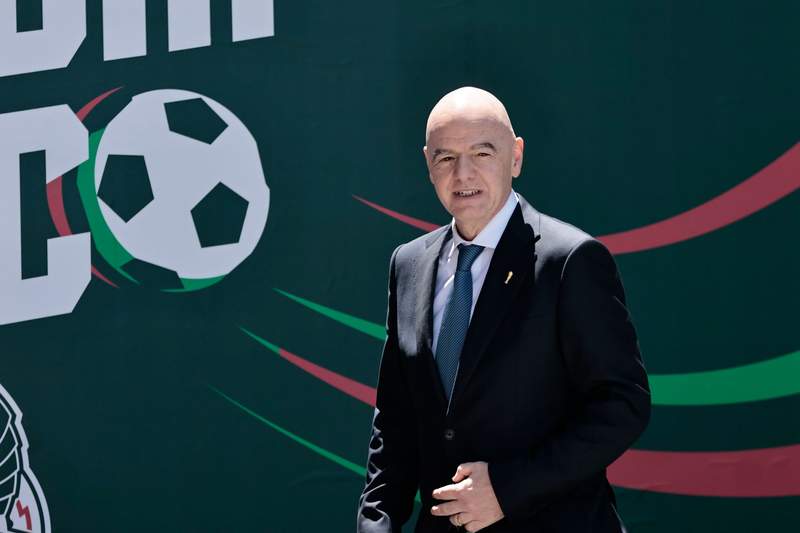
In a recent interview with Mexican broadcaster N+ Univision, FIFA President Gianni Infantino left no room for ambiguity. “We want Iran to play, and Iran will play in the World Cup,” he declared. This firm position is a significant attempt to preempt any potential calls for Iran’s exclusion due to the ongoing Middle East war. Infantino’s argument hinges on a core principle of FIFA’s often-stated, though frequently challenged, mission: the separation of sport and state.
He elaborated, stating, “Iran represent their people – both those living in Iran and those living abroad,” framing participation as a right of the nation’s citizens and diaspora, rather than an endorsement of its government. Infantino’s presence at Iran’s friendly against Costa Rica in Antalya, Turkey, was a powerful visual reinforcement of this message. It signaled FIFA’s top-tier support for Iran’s continued presence on the world stage, even as that very stage becomes a site for political expression.
The Pitch as Protest: Iran’s Powerful Visual Statements
While Infantino watches from the stands, the Iranian players are writing their own narrative on the field. Their recent friendly matches have become somber theaters of protest, directly challenging the narrative of apolitical sport.
- Before kick-off against Costa Rica, the team held aloft photographs of children allegedly killed in a recent air strike. The silent demonstration was a stark, emotional appeal to global conscience.
- Days earlier, ahead of a match with Nigeria, the squad posed with school satchels. This was a direct reference to the reported bombing of a school, said to have claimed the lives of at least 168 girls aged seven to twelve. The players attributed the strike to the United States.
These actions are not spontaneous fan gestures; they are coordinated, pre-match rituals conducted by the players themselves. They represent a profound and risky use of FIFA’s global platform to highlight civilian casualties, particularly children, in conflict zones. This creates an immediate tension: FIFA statutes famously prohibit political, religious, or personal statements on the field. Yet, the governing body has so far remained silent on these specific protests, likely aware of the immense public relations backlash that would follow any disciplinary action against players mourning dead children.
Expert Analysis: Navigating the Impossible Tightrope
Sports geopolitical analysts see this situation as a quintessential example of FIFA’s impossible bind. “Infantino is attempting to build a firewall around Iran’s qualification,” says Dr. Anya Petrova, a professor of sport and global affairs. “He is advocating for a strict interpretation of sporting merit—they earned their place on the pitch. However, the players are instantly burning that firewall down by introducing the very politics FIFA wants to keep out.”
The analysis points to several critical factors at play:
- FIFA’s Commercial and Logistical Imperative: Disqualifying a major qualified team two years before the tournament creates legal and commercial chaos. Infantino’s statement is, in part, a move to ensure stability.
- The Moral High Ground of the Protests: The nature of the protests, focusing on child casualties, makes them incredibly difficult to sanction without appearing callous. This grants the Iranian team a unique, if tragic, leverage.
- The 2026 Host Dynamic: With the U.S. as a primary host, any match involving Iran will carry immense political weight. Infantino’s push for inclusion is also a push to manage that volatile atmosphere proactively.
The key question now is how FIFA’s disciplinary bodies will respond. Will they apply the rules uniformly, or will the context of these protests force a new, unspoken exception?
Predictions for the Road to 2026
The path leading to the opening whistle in 2026 will be fraught with similar moments. Based on current trajectories, we can anticipate:
- Continued Protests: The Iranian team has established a powerful template. We should expect more symbolic gestures in upcoming friendlies and qualifiers, especially against nations perceived as involved in the regional conflict.
- FIFA’s Strategic Silence: FIFA is likely to continue avoiding direct punishment for these specific humanitarian-themed protests, while potentially tightening rules or warnings ahead of the World Cup itself to prevent escalation.
- Intense Security and Media Scrutiny: Iran’s matches in 2026, particularly on U.S. soil, will be among the most heavily secured and politically charged events of the tournament. Press conferences will become diplomatic minefields.
- Player Safety and Pressure: The psychological burden on the Iranian players, representing a nation in conflict while acting as global protestors, will be immense. Their mental resilience will be as tested as their physical skills.
Conclusion: A Tournament Transformed Before It Begins
Gianni Infantino’s declaration that “Iran will play” was meant to be a closing statement. Instead, it has opened a profound new chapter in the story of the 2026 World Cup. The tournament is no longer just a North American celebration of sport; it is now irrevocably tied to global conflict and the right to protest. The Iranian national team, through its heartbreaking visual demonstrations, has already shifted the paradigm. They have forced FIFA, host nations, and the global audience to confront uncomfortable realities before a single competitive ball has been kicked.
The beautiful game promises unity, but the reality is often a mirror of the world’s fractures. The 2026 World Cup will be the most expansive in history, but the saga surrounding Iran proves it may also be the most politically complex. The world will be watching, not just the goals, but the gestures that carry the weight of a world in turmoil onto the pristine green pitch.
Source: Based on news from Yahoo Sports.