Gennaro Gattuso and Italy Part Ways: The End of an Era and a Painful New Low
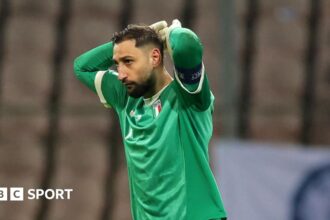
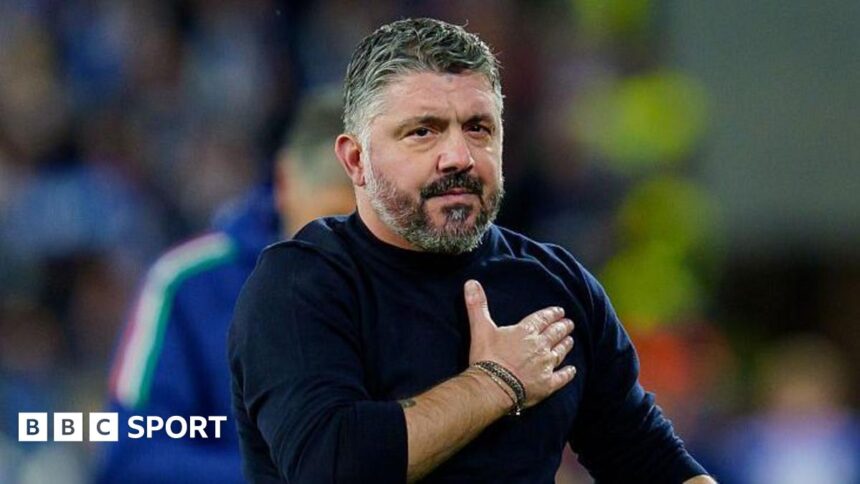
The image was one of raw, unfiltered agony. Gennaro Gattuso, a man whose very name evokes the snarling, indomitable spirit of Italian football, stood before the media with tears in his eyes. Just hours earlier, his Italy team had been eliminated from World Cup qualification by Bosnia-Herzegovina in a penalty shootout. Now, the manager was apologizing. Within 48 hours, the inevitable was confirmed: the Italian Football Federation (FIGC) and Gennaro Gattuso had “mutually terminated” his contract. This isn’t just another managerial departure; it is the closing of a painful chapter for the Azzurri and the symbolic end of a direct line to their last moment of global glory.
A Brutal Déjà Vu and a “Hard to Digest” Failure
For Italian fans, the play-off defeat in Zenica felt like a nightmare on repeat. The failure to qualify for the 2018 and 2022 World Cups was a historic trauma, but the hope was that under Luciano Spalletti’s successor, the ship had been righted. Gattuso, appointed in June, had overseen a promising start: six wins from eight games in a relatively straightforward qualifying group. But football, especially for Italy, is defined by moments of high-pressure catharsis. Against Bosnia, that catharsis never came. A tense, goalless draw led to penalties, where the Azzurri crumbled, losing 4-1 from the spot.
Gattuso’s post-match admission that the result was “hard to digest” was a profound understatement. The defeat exposed familiar, deep-seated issues:
- A lack of clinical finishing despite dominating possession.
- Psychological fragility in the decisive shootout moment.
- The lingering shadow of past failures affecting a new generation of players.
His emotional apology was a stark contrast to his fiery on-pitch persona, revealing a man who felt the weight of the nation’s expectations and the magnitude of the failure personally. The “mutual termination” that followed was a merciful, if bleak, conclusion for all parties.
From 2006 Hero to 2024 Scapegoat: Gattuso’s Unenviable Task
To understand the poignancy of this moment, one must look back. Gennaro Gattuso the player was the heart and soul of the Italy team that won the World Cup in 2006. Alongside Andrea Pirlo, he formed the iconic midfield duality—the artist and the annihilator. He was the embodiment of grinta: fighting spirit, tactical intelligence, and an unyielding will to win. His 73 caps were earned through sheer force of personality as much as skill.
His transition to managing the national team, however, placed him in an impossible position. He was not just any manager; he was a symbol of the last golden generation. Every team sheet he wrote, every tactical decision he made, was implicitly compared to the legacy he helped build. While his brief tenure showed flashes of his aggressive, high-pressing philosophy, the ultimate metric for Italy—qualification for the major tournament—was not met. The FIGC’s decision, while harsh, underscores a brutal reality in modern international football: there is no time for sentiment, even for legends. The project under Gattuso, aimed at reconnecting the team with its fiery identity, ended before it could truly begin.
Expert Analysis: What Went Wrong and What Comes Next?
The analysis of Italy’s latest failure extends far beyond Gattuso’s eight-game tenure. This is a systemic issue. The talent pipeline, once overflowing with world-class defenders and tactically versatile forwards, has narrowed. While individuals like Nicolò Barella and Federico Chiesa shine, the overall squad depth lacks the quality and, crucially, the big-game temperament of past eras.
The penalty shootout debacle was a microcosm of a wider mental block. After the trauma of missing the last two World Cups, the pressure on this group of players in a single-elimination play-off was immense. Gattuso, for all his motivational prowess, could not free them from that psychological burden. Furthermore, the reliance on veteran defenders like Giorgio Chiellini and Leonardo Bonucci in recent cycles has created a transitional gap that is still being bridged.
So, what’s next for the Azzurri? The FIGC now faces a critical decision:
- Seek a foreign manager for the first time to instigate a cultural and tactical shock?
- Turn to another Italian tactician, perhaps a younger, data-driven coach like Thiago Motta or Raffaele Palladino?
- Or pursue a “safe” pair of hands like Antonio Conte, who has the stature and record to command immediate respect?
The choice will signal Italy’s direction: a pragmatic retreat to defensive solidity or a committed, long-term project to modernize their style of play.
Predictions for Italy’s Future: A Long Road Back
The path forward for Italian football is daunting. The failure to qualify for a third successive World Cup is not an anomaly; it is a trend that demands radical introspection. The European Championship victory in 2021 now looks like a magnificent, but isolated, peak rather than a sign of sustained resurgence.
Predicting the immediate future is fraught, but several outcomes seem likely. The next manager will inherit a squad with talent but also with deep psychological scars. The focus will immediately shift to the 2026 World Cup qualification campaign, which will be a marathon, not a sprint. The pressure from the first whistle will be immense. Domestically, Serie A must continue its recent revival to produce more technically proficient Italian players ready for the international stage.
Most importantly, Italian football must have an honest conversation with itself. The glorious past, symbolized by heroes like Gattuso, can be a source of pride but also a crushing burden. The Azzurri need to forge a new identity that respects their foundational principles of defense and tactical nous while embracing the evolution of the modern game.
Conclusion: The Final Whistle on a Painful Transition
The mutual termination of Gennaro Gattuso’s contract is more than a managerial change. It is the final, formal severance from the 2006 generation’s direct influence on the dugout. It marks the end of a hope that the spirit of that Berlin-winning team could be simply transferred by one of its icons. Gattuso’s tears were not just for a lost play-off; they were for a dream unfulfilled, both for him and for a nation starving for a return to the world stage.
Italy now stands at its lowest modern ebb. The task ahead is monumental: to rebuild not just a team, but an entire footballing culture’s confidence. The next appointment is the most critical in the FIGC’s history. They must choose a architect for the future, someone who can honor the grit of Gattuso’s era while constructing something entirely new. The Azzurri’s long, dark night continues, and the dawn is not yet in sight.
Source: Based on news from BBC Sport.