Tiger Woods’ Legal Battle Intensifies: Florida Prosecutors Subpoena Prescription Drug Records in DUI Case
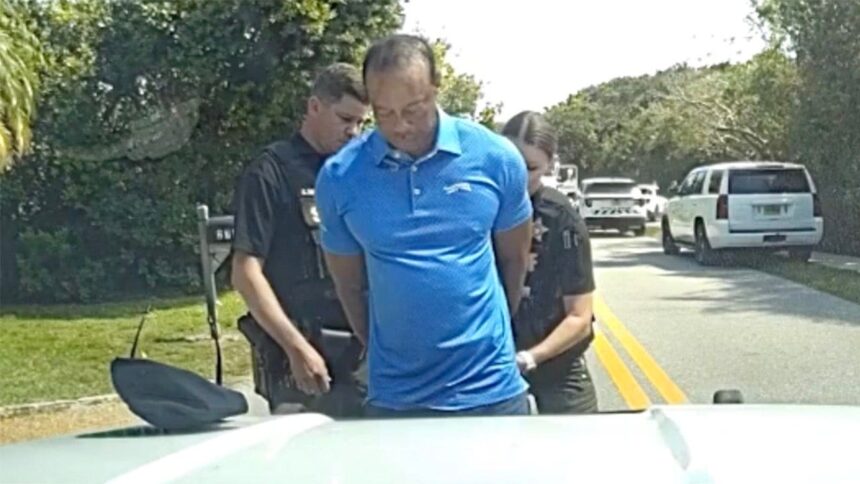
The legal fallout from Tiger Woods’ Memorial Day weekend arrest has entered a new, deeply invasive phase. Fresh court filings reveal that Florida prosecutors are preparing to subpoena the golf legend’s private prescription drug records, a move that signals a rigorous investigation into the circumstances surrounding his DUI charge. This development transforms a high-profile traffic incident into a forensic examination of Woods’ medical history, with potentially significant implications for his legacy, career, and personal freedom.
From Fairway to Courtroom: The Arrest and Escalating Investigation
The incident that sparked this legal firestorm began in the early hours of May 29, 2026. Woods was involved in a two-vehicle collision in Jupiter, Florida, that left his Range Rover on its driver’s side. Law enforcement responded, and bodycam footage from the scene captured the entire, now widely viewed, field sobriety test. While Woods reportedly blew a 0.00 on a breathalyzer, indicating no alcohol in his system, his arrest for driving under the influence was predicated on officer observations of impairment, suggesting the potential influence of prescription or other drugs.
The new court filing leaves little to the imagination regarding the state’s focus. Prosecutors are seeking a subpoena for “any and all prescription medication on file for Eldrick T. Woods” at a specified pharmacy. The requested data is exhaustive, going far beyond a simple list of medications to create a detailed timeline of Woods’ pharmaceutical regimen.
- Specific Dates: Records from January 1, 2026, to March 27, 2026.
- Medication Details: Type of prescription, dosage amount, and number of pills.
- Usage Instructions: All special instructions on how to take the medication.
- Critical Warnings: All warnings, specifically including those about “operating a motor vehicle while taking the prescription.”
This granular approach indicates prosecutors are building a case to demonstrate not only what was in Woods’ system but also that he was knowingly warned about the dangers of mixing those substances with driving.
Expert Analysis: Decoding the Prosecution’s Strategy
Legal experts see the subpoena as a predictable but powerful next step in a DUI arrest case involving suspected pharmaceutical impairment. “This is the blueprint for a ‘DUI drugs’ prosecution,” says David Weinstein, a former Florida prosecutor and now a defense attorney. “The state isn’t just looking for a prescription list; they are constructing a narrative. By obtaining the warning labels and instructions, they aim to prove knowledge and negligence. They want to show Tiger, or any defendant, was explicitly told not to drive while taking these medications and chose to do so anyway.”
The focus on a three-month window is particularly telling. It allows prosecutors to establish a pattern of use, potentially countering any defense that Woods took a medication unexpectedly or was unaware of its effects. Furthermore, the inclusion of “date of next refill” can indicate the pace of consumption, which could be relevant if misuse is alleged.
For Woods’ defense team, this subpoena presents a formidable challenge. Attorney privileges surrounding medical records are strong, but the low bar for a subpoena in an ongoing criminal investigation makes quashing it unlikely. The defense will likely shift its focus to challenging how the evidence is interpreted and used, potentially arguing that even if Woods was taking prescribed medications, the state cannot prove his driving was impaired by them at that specific moment.
The Personal and Professional Stakes for Tiger Woods
Beyond the courtroom, the subpoena thrusts Woods’ private health struggles back into the harsh public spotlight. The golf icon has a well-documented history of severe injuries and surgeries, particularly to his back and legs, which undoubtedly require management with prescription pain medication. This legal process threatens to publicly catalog the specifics of that management.
The potential fallout operates on multiple levels:
- Legacy Impact: Woods has painstakingly rebuilt his public image post-2017, centered on his athletic perseverance as a father. A detailed public airing of his prescription regimen could reframe narratives around his comeback.
- Sponsorship & Business: While his major corporate partners have remained silent, prolonged negative legal proceedings and salacious details could test their loyalty.
- Golf Future: At 50 years old and physically limited, Woods’ competitive appearances are rare and cherished. A protracted legal battle or severe penalty could be a significant distraction from any remaining competitive goals.
This case is no longer just about a traffic infraction; it is a probe into the physical cost of his legendary career and the private measures taken to manage it.
Predictions and Potential Outcomes
As the subpoena is executed and records are obtained, several paths forward emerge. Legal analysts suggest the most likely outcome remains a plea deal, but the terms of that deal hinge on what the prescription records reveal.
Scenario 1: A Swift Plea Deal. If the records show medications with clear “do not operate machinery” warnings, prosecutors will have a strong hand. Woods’ team may seek a favorable plea—possibly to a reckless driving charge—to avoid a public trial and the release of more intimate details. This would likely include fines, probation, and mandatory counseling or a driver education program.
Scenario 2: A Contested Case. If the records are ambiguous or show medications without strong driving prohibitions, Woods may be more inclined to fight the driving under the influence charge. This would lead to a battle of expert toxicologists debating impairment levels and side effects, a risky and public spectacle for both sides.
Scenario 3: Unexpected Complications. The subpoena could reveal irregularities in prescription patterns. While there is no suggestion of this, any evidence of “doctor shopping” or prescriptions from multiple providers could elevate the case, attracting additional scrutiny from medical boards or even federal agencies.
Conclusion: A Defining Chapter Off the Course
The subpoena for Tiger Woods’ prescription records marks a pivotal moment in a case that has captivated the sports world. It moves the discourse from the spectacle of the bodycam footage to the cold, clinical details of a pharmacy log. For the prosecution, it is a necessary step to prove impairment. For Woods, it is an unprecedented invasion into the private toll of his public career.
This legal process will now unfold in the tension between public interest and private health, between accountability for a DUI arrest and sympathy for a fallen champion managing chronic pain. The outcome will not only determine legal penalties but will also write a complex, uncomfortable chapter in the story of one of history’s greatest athletes. As the records are gathered and analyzed, Tiger Woods faces a challenge unlike any back-nine charge—a meticulous legal examination where the stakes are his reputation, his privacy, and his future.
Source: Based on news from Fox Sports.