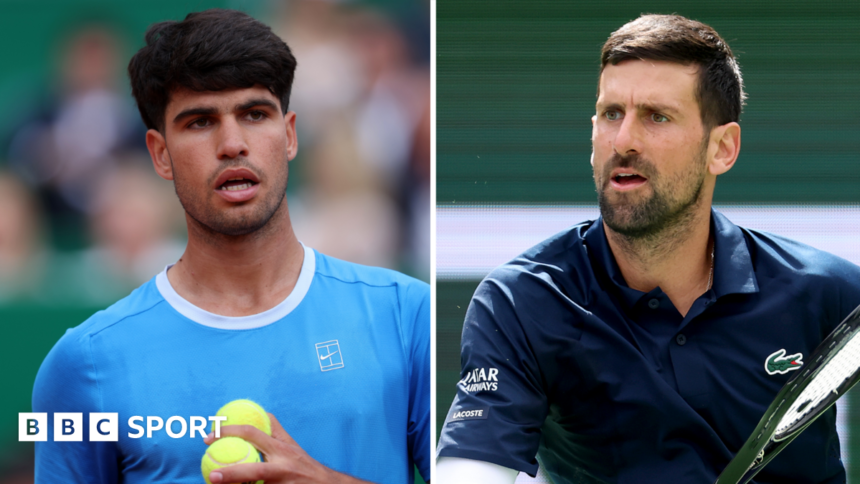
Injured Alcaraz & Djokovic Withdraw from Madrid Open, Casting Shadow Over French Open Build-Up
The road to Roland-Garros, always a grueling test of endurance on the red dirt, has hit a monumental pothole. In a devastating double-blow to the Mutua Madrid Open and tennis fans worldwide, superstars Carlos Alcaraz and Novel Djokovic have simultaneously withdrawn from next week’s prestigious Masters 1000 event. Their absences, stemming from persistent injury concerns, have thrown the clay-court season into disarray and raised urgent questions about their readiness for the year’s second Grand Slam.
A Tale of Two Injuries: Wrist Woes and Fitness Battles
While the outcome—two empty spots in the Madrid draw—is the same, the paths taken by Alcaraz and Djokovic differ. For the young Spaniard, the issue is a specific and troubling forearm injury that has now sidelined him for consecutive tournaments on home soil. The world number two was forced to abandon his title defense in Barcelona and has now made the heartbreaking decision to skip Madrid, a tournament he has electrified with his dynamic play in the past.
Djokovic’s situation appears more generalized. The world number one, who has yet to claim a title in what has been an uncharacteristically slow start to 2024 by his legendary standards, is grappling with overall physical preparedness. His team indicated he is not yet at peak condition, a cautious approach that prioritizes the long Grand Slam campaign over the immediate Masters grind. This withdrawal follows a surprising early exit in Monte Carlo.
The contrasting natures of their setbacks highlight the brutal demands of the tour:
- Alcaraz’s Precise Pain: A forearm injury for a player whose game is built on explosive, whipping topspin is a major red flag. The concern is not just pain management, but the risk of exacerbation that could threaten his entire summer.
- Djokovic’s Calculated Caution: At 36, Djokovic is a master of peaking for the majors. His withdrawal signals that his body is not responding as quickly as needed, prompting a strategic retreat to focus on intensive training and recovery.
Madrid’s Loss and the Wider ATP Implications
The Madrid Open, one of the tour’s most vibrant and well-attended events, is left reeling. Alcaraz, the local hero, described the decision as “incredibly difficult,” calling Madrid “home” and “one of the most special places on the calendar for me.” His absence for a second consecutive year deprives the tournament of its most magnetic draw. Combined with Djokovic’s withdrawal, the event loses an immense amount of star power and narrative heft.
This vacuum creates a golden, pressurized opportunity for the rest of the field. The focus now shifts dramatically to players like:
- Jannik Sinner: The newly-crowned Australian Open champion and world number three becomes the de facto favorite. His powerful, flat-hitting game can be even more lethal at Madrid’s altitude.
- Daniil Medvedev: A former finalist, the Russian will look to capitalize on a potentially depleted draw to build crucial clay-court confidence.
- Rafael Nadal: The king of clay, himself navigating a comeback from injury, now faces a Madrid path with two major obstacles removed. His quest for match play receives a significant boost.
- The Next Tier: Players like Andrey Rublev, Alexander Zverev, and Casper Ruud will see this as a prime chance to snag a crucial Masters 1000 title and gain momentum heading into Paris.
French Open Forecast: Cloudy with a Chance of Disruption
All roads lead to Paris, and these withdrawals make the French Open landscape profoundly uncertain. The clay season is not just about winning titles; it’s a vital acclimatization process where players grind through long rallies, adjust movement, and fine-tune tactics. Missing Madrid, a key high-altitude test with unique conditions, is a significant setback in that preparation.
For Carlos Alcaraz, the clock is ticking loudly. The hope will be that extended rest allows his forearm to heal fully. However, arriving at Roland-Garros with zero competitive matches since early April—and potentially just Rome for preparation—would mean defending his semifinal points from a position of severe rust. His explosive style requires rhythm and confidence, both forged in match play.
For Novak Djokovic, the calculus is different but no less concerning. The hunt for a record-breaking 25th Grand Slam title is his clear objective. Yet, his 2024 form has been patchy, and his dominance has historically been built on a foundation of deep runs in Masters events. Skipping Madrid suggests his team believes he needs block training more than matches—a risky gamble if his first best-of-five-set test on clay comes in the first round at Roland-Garros.
Expert analysis suggests this opens the door wider than ever for Jannik Sinner. The Italian is playing with supreme confidence and has the game to win on any surface. If he can triumph in Madrid or Rome, he will arrive in Paris not just as a contender, but as the man to beat. Similarly, a fit and firing Rafael Nadal, with the draw opening up, remains the ultimate wild card no one wants to face.
Conclusion: A Season at a Crossroads
The synchronized withdrawals of Alcaraz and Djokovic are more than a scheduling footnote; they are a seismic event in the 2024 tennis season. They underscore the relentless physical toll of the modern game and how fragile the path to glory can be. Madrid will crown a champion, but the narrative will be dominated by the stars who aren’t there.
The coming weeks in Rome and Paris will now carry an extra layer of drama. Can Alcaraz heal in time to defend his turf? Can Djokovic rediscover his aura through practice alone? Or has this moment of shared convalescence fundamentally reshuffled the deck, handing the initiative to a hungry new generation led by Jannik Sinner? The clay-court season, already unpredictable, has just become a high-stakes medical thriller, with the sport’s biggest prizes hanging in the balance.
Source: Based on news from BBC Sport.