Alcaraz and Djokovic Withdraw from Madrid Open, Sending Shockwaves Through Tennis
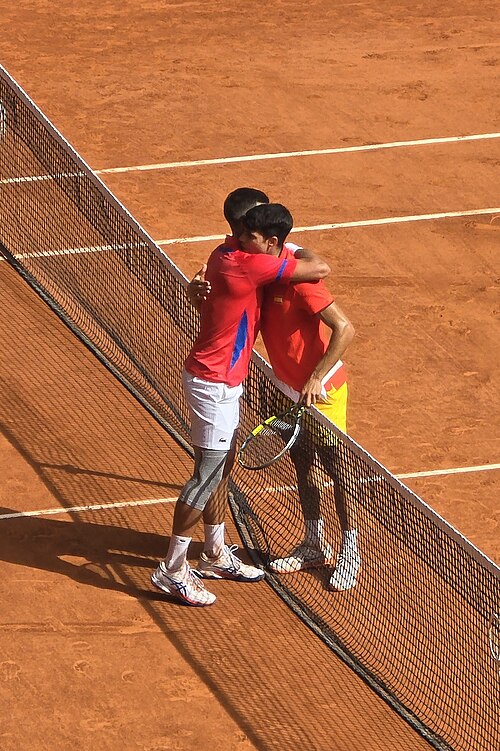
The clay-court season, a brutal and beautiful test of resilience, has delivered its first seismic shock. The Mutua Madrid Open, a pivotal tune-up for Roland Garros, has been gutted of its twin titans. In a devastating double-blow for fans and the tournament, both Carlos Alcaraz and Novak Djokovic have withdrawn due to injury, casting a long shadow over the road to Paris and scrambling the hierarchy of men’s tennis. This unprecedented dual exit from a Masters 1000 event is more than a scheduling note; it’s a narrative-altering moment that raises urgent questions about player workload, the physical toll of the modern game, and who will seize a suddenly wide-open opportunity in the Spanish capital.
The Injuries: A Tale of Two Setbacks
While the outcome—two empty spots in the draw—is the same, the circumstances surrounding each withdrawal tell different stories of physical strain.
For Carlos Alcaraz, the home favorite and two-time defending champion, the issue is a persistent problem in his right forearm. The young Spaniard has been grappling with the injury for weeks, forcing him to miss prestigious events like Monte-Carlo and Barcelona. His attempt to recover in time for Madrid, where he has woven legend in his short career, ultimately proved futile. “I have been working as hard as I could to be ready for Madrid,” Alcaraz shared, his disappointment palpable, “but the injury still needs time to heal.” His absence leaves a cavernous hole in the Caja Mágica, both in the draw sheet and in the hearts of the local crowd who have witnessed his magical rise.
For Novak Djokovic, the world No. 1, the setback appears more acute. The Serbian star is dealing with a “right wrist issue” that has reportedly been bothering him. His decision comes after a sub-par start to 2024 by his immortal standards, still seeking his first title of the year. Djokovic’s withdrawal underscores a recurring theme: the challenge of managing the 36-year-old’s body through a relentless calendar while he pursues the sport’s most elusive records. His absence in Madrid suggests a priority on long-term fitness, specifically peaking for the French Open and the Paris Olympics, over accumulating Masters 1000 appearances.
Expert Analysis: The Domino Effect on Clay-Court Dynamics
This twin withdrawal creates a vortex of consequences that will reshape the entire clay swing. The immediate impact is on the Madrid Open itself. The tournament loses its reigning king (Alcaraz) and its greatest living legend (Djokovic), a brutal hit for ticket sales and global broadcast appeal. The draw is now blown wide open, transforming from a predicted clash of generations into a free-for-all.
From a strategic standpoint, the injuries highlight the intense physical demands of the clay season. The surface’s slow, grinding points place extraordinary stress on the body, particularly the arm and wrist for the heavy topspin hitters. Alcaraz’s all-out, explosive style and Djokovic’s age-defying flexibility are both being tested by the sport’s most punishing stretch.
This vacuum creates a monumental opportunity for the chasing pack. Players who might have faced Alcaraz or Djokovic in the quarterfinals or semis now see a clearer path to the latter stages. It also places a fascinating spotlight on the following contenders:
- Jannik Sinner: The newly-crowned Australian Open champion and world No. 2 becomes the de facto favorite. His powerful, flat-hitting game is dangerous on all surfaces, and with his two biggest rivals out, Madrid represents a chance to solidify his status as the man of the moment.
- Rafael Nadal: The narrative turns intensely to the King of Clay himself. Returning from injury, Nadal’s path to building rhythm just got significantly easier. A deep run or even a title in Madrid would instantly resurrect his Roland Garros prospects.
- Alexander Zverev & Stefanos Tsitsipas: Both former Madrid champions and excellent clay-courters, they will see this as a prime chance to grab a big title and crucial ranking points, reasserting themselves in the Grand Slam conversation.
- The Next Tier: Casper Ruud, Andrey Rublev, and Holger Rune must now view this as a can’t-miss opportunity to breakthrough at a major ATP event.
Predictions: The New Road to Roland Garros
The Madrid withdrawals force us to radically recalibrate predictions for the next six weeks. The immediate forecast for the tournament is one of thrilling unpredictability. Jannik Sinner enters with the most compelling form and should be considered the frontrunner, but the pressure of newfound favoritism is a new test. Rafael Nadal’s journey becomes the must-watch story; every match will be dissected for signs of his vintage clay prowess.
Looking ahead to Rome and Roland Garros, the key questions are about recovery. For Alcaraz, the focus is entirely on healing. A rushed return could jeopardize his entire summer, including the Olympics. The smart play is cautious rehabilitation, targeting Rome as a possible return, with Paris as the absolute non-negotiable.
For Djokovic, this feels like a calculated preservation move. His season is built around peaks at the Slams and the Olympics. Expect him to do everything to be ready for Rome, using it as his true clay-court primer. His withdrawal from Madrid may, in hindsight, be seen as a wise management decision that extends his career at the top.
The biggest prediction? The battle for World No. 1 is now incendiary. With Djokovic defending points and Alcaraz unable to add to his tally, Jannik Sinner has a golden opportunity to seize the top ranking in the coming weeks, a scenario that seemed distant just months ago.
A Crossroads Moment for Men’s Tennis
The simultaneous loss of Alcaraz and Djokovic is a stark reminder of the fragile ecosystem at the pinnacle of sport. It interrupts the compelling rivalry we all anticipated and exposes the precarious balance between peak performance and physical breakdown. In the short term, it gifts the tennis world a fascinating experiment: a high-stakes tournament without its twin poles, where new storylines can be forged and confidence can be seized.
Yet, the overarching sentiment is one of concern and anticipation. The health of Alcaraz’s arm and Djokovic’s wrist is now the dominant variable in the 2024 equation. Their withdrawals in Madrid are not merely absences; they are a pause, a collective intake of breath before the most important stretch of the clay season. The Caja Mágica will crown a new champion, but the true magic we await is the full, healthy return of the sport’s brightest star and its timeless champion. The road to Roland Garros just became infinitely more dramatic, uncertain, and intriguing.
Source: Based on news from Sky Sports.
Image: CC licensed via commons.wikimedia.org