Bills 2026 NFL Draft Target: A Deep Dive Scouting Report on Texas Tech DT Lee Hunter
The Buffalo Bills’ “Win Now” window remains firmly open, but General Manager Brandon Beane is a master of threading the needle between present contention and future planning. As the 2026 NFL Draft approaches, one name emerging from the pre-draft circuit as a potential long-term solution in the trenches is Texas Tech defensive tackle Lee Hunter. With a scheduled pre-draft visit to One Bills Drive, Hunter has officially landed on Buffalo’s radar. Holding the No. 26 overall pick and without a second-round selection, the Bills must be precise. Could Hunter be the disruptive interior force to anchor the defense for the next decade? Let’s break down the film.
Projection and Fit: Why Hunter Makes Sense for Buffalo
As it stands, the Bills hold the No. 26 overall pick in the first round, a slot where value and need must intersect perfectly. The team’s seven total picks, including two in the fifth round but missing that crucial second-rounder, puts a premium on getting the first-round selection right. Buffalo’s defensive line, while currently stout, faces an aging curve and financial constraints. The prototypical 3-technique defensive tackle is the engine of head coach Sean McDermott’s defense, tasked with penetrating gaps, disrupting timing, and creating chaos. Hunter’s collegiate profile suggests he was born to play this role. His visit indicates the Bills are doing their due diligence on a player who could seamlessly step into the system, learn from veterans like Ed Oliver, and eventually take the reins as the primary interior disruptor.
Scouting Report: The Strengths and Weaknesses of Lee Hunter
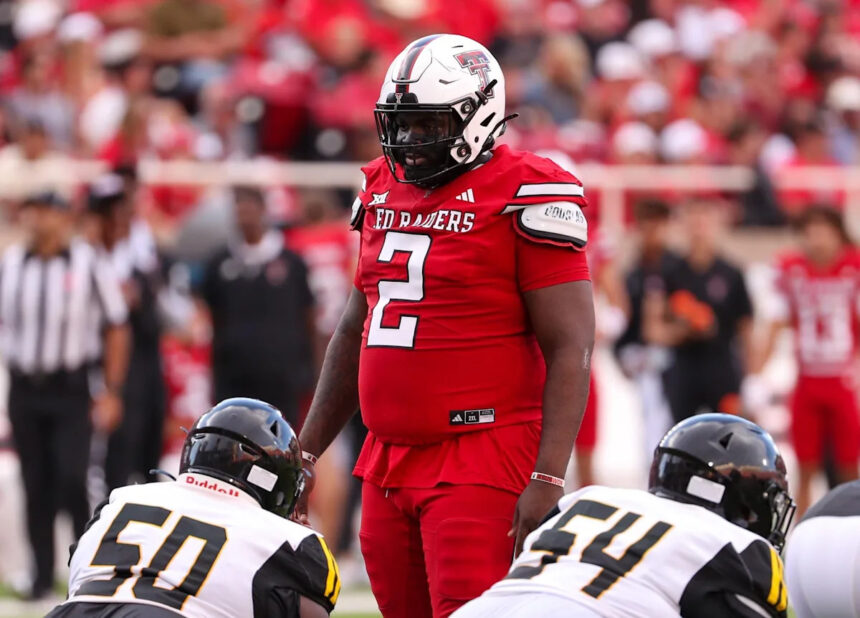
Lee Hunter’s tape at Texas Tech reveals a player with a tantalizing blend of physical tools and raw power, but one who is still refining his game for the professional level. Here’s a detailed look at what he brings to the table.
Key Strengths:
- Explosive First Step: Hunter’s most translatable NFL trait is his sudden burst off the line of scrimmage. He consistently wins the initial leverage battle, getting into the chest of offensive guards before they can fully set their anchor. This disruptive penetration ability is exactly what coordinators covet for generating interior pressure.
- Powerful Hands and Punch: Hunter plays with violent, heavy hands. He uses a potent two-hand swipe to clear blockers and has shown the ability to shock opponents with a jolting initial punch, creating immediate separation to shed blocks and find the ball carrier.
- High-Motor Pursuit: Hunter’s effort rarely wanes. He plays with a relentless chase mentality, often making tackles or affecting plays far downfield. This non-stop engine will endear him to coaches and fans alike.
- Versatile Alignment Potential: While best suited as a 3-tech, Hunter has the functional strength to two-gap at times and even reduced inside as a nose on obvious passing downs, giving a defensive coordinator schematic flexibility.
Areas for Development:
- Pass Rush Plan Consistency: Hunter’s pressure often comes from pure athleticism and power. He needs to develop a more nuanced, counter-based pass-rush arsenal to combat NFL-level interior linemen who can match his initial quickness.
- Pad Level Fluctuation: At times, Hunter can pop upright out of his stance, especially when his initial move is stalled. This negates his leverage advantage and can make him susceptible to being washed out in the run game by double teams.
- Stamina and Conditioning: To be a true three-down force in the NFL, Hunter will need to prove he can maintain his explosive traits deep into games and deep into the season. This is a common pre-draft focus for many collegiate linemen.
Draft Forecast: Where Could Hunter Land?
The pre-draft process is critical for a player like Lee Hunter. His combine performance, particularly in agility drills like the 3-cone and short shuttle, and his interviews will heavily influence his final stock. Currently, he projects as a late first-round to early second-round talent. The Bills’ position at No. 26 overall sits right in the sweet spot of his projection. However, with no second-round pick, Buffalo faces a classic draft dilemma: reach slightly at 26 to ensure they get their guy, or risk hoping he falls to the third round—a highly unlikely scenario given his upside.
Beane’s history suggests he values athleticism and character in the trenches, and Hunter’s visit shows the interest is mutual. Other teams in the back half of the first round with defensive line needs could also be suitors, setting up a potential draft-night decision for the Bills’ war room. Hunter’s fit is simply too clean to ignore.
The Verdict: A Calculated Gamble for Buffalo’s Future
Lee Hunter represents the type of high-ceiling, high-floor player that successful franchises like the Bills target to sustain excellence. He is not a perfect prospect, but his core strengths—explosiveness, power, and effort—are exactly the traits that cannot be taught. The weaknesses in his game, namely technique refinement and consistency, are areas where Buffalo’s defensive coaching staff, led by McDermott and line coach Marcus West, has a proven track record of development.
Selecting Hunter at No. 26 would be a forward-thinking move, addressing a looming future need with a player whose skill set is tailor-made for the defensive scheme. He would not be pressured to start Day One but could rotate in a deep line, learn the professional nuances, and be primed for a major role by Year 2 or 3. In a draft where every pick is magnified by the absence of a second-round selection, using the first on a potential cornerstone defensive tackle is a sound, strategic investment.
The connection is logical, the fit is schematic poetry, and the need is on the horizon. When the Bills are on the clock in the 2026 NFL Draft, if Lee Hunter is available, Brandon Beane should not overthink it. Drafting Hunter would be a powerful statement: the Bills are built to compete today, but they are also building to dominate tomorrow.
Source: Based on news from Yahoo Sports.