Off Target: The Vaibhav Sooryavanshi Question to Manu Bhaker Exposes Media’s Cricket Blind Spot
In the pantheon of Indian sporting moments, the image of Manu Bhaker standing on the Olympic podium in Paris, a bronze medal in each hand, is already iconic. She is the first Indian to win two medals in a single Olympic Games since Independence. Her poise under the pressure of a .177 caliber pistol is legendary. But last week, at a gala event in New Delhi celebrating 75 years of the National Rifle Association of India (NRAI), Bhaker faced a different kind of pressure—one that had nothing to do with shooting and everything to do with the Indian media’s chronic inability to see past a cricket ball.
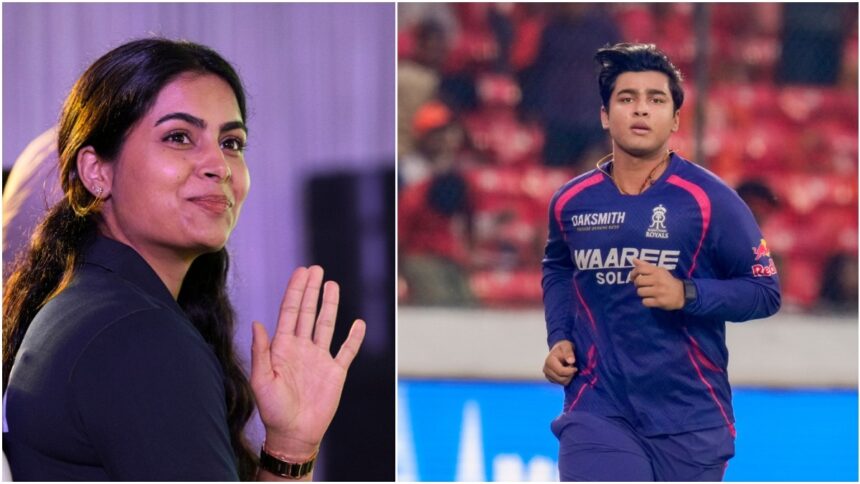
The question, directed at the double Olympic medalist, was about Vaibhav Sooryavanshi, the 15-year-old cricket prodigy who recently became the youngest player to score 1,000 T20 runs. The internet, predictably, erupted. But not because of Bhaker’s answer—which was a masterclass in diplomacy—but because of the sheer audacity of the query. This article dissects why this moment went viral, what it says about Indian sports journalism, and why Bhaker’s response should be studied as a textbook example of grace under fire.
The Incident: A Question That Missed the Mark
The setting was supposed to be sacred. The NRAI’s 75th-anniversary celebration was a tribute to the men and women who have put India on the global shooting map. Legends like Abhinav Bindra, Gagan Narang, and the current queen of the range, Manu Bhaker, were in attendance. The room was filled with the smell of gunpowder history and the weight of Olympic glory.
Then came the question. A reporter, microphone in hand, turned to Bhaker and asked: “What are your thoughts on Vaibhav Sooryavanshi’s incredible IPL performance?”
Let that sink in. The athlete who had just delivered India’s best-ever performance in shooting at the Olympics was being asked to comment on a teenager who plays a different sport entirely. The internet reacted with a collective groan. Social media platforms were flooded with comments like “FOLKS, SHE IS AN OLYMPIC MEDALIST!” and “This is why we can’t have nice things in Indian sports.”
Bhaker, however, handled it with the same precision she uses on the range. She smiled, acknowledged Sooryavanshi’s talent, and seamlessly pivoted back to the importance of supporting all sports. Her response was so polished that it almost masked the insult embedded in the question. Almost.
Expert Analysis: Why This Question Was a Failure of Journalism
As a sports journalist with years of experience covering the Indian circuit, I can tell you this: the Vaibhav Sooryavanshi question was not just a gaffe; it was a symptom of a systemic disease. Indian media suffers from an obsessive cricket-centricity that devalues every other sport, even when the athlete in question has achieved what no cricketer ever has—dual Olympic medals.
Let’s break down the professional failures here:
- Context blindness: The event was specifically about shooting excellence. Asking about a cricketer at a shooting gala is akin to asking a neurosurgeon about a plumber’s latest pipe-fitting technique.
- Undermining achievement: Bhaker’s two medals in Paris 2024 are historic. They belong to a sport where India has won only five Olympic medals in history. By shifting focus to cricket, the reporter effectively said, “Your accomplishments are not enough to hold our attention.”
- Lazy journalism: Vaibhav Sooryavanshi is a trending topic. Instead of researching Bhaker’s training regimen, her mental preparation, or the future of Indian shooting, the reporter took the easy route of asking about the viral sensation of the day.
The irony is thick. Sooryavanshi himself, at 15, has shown remarkable maturity. He has spoken about wanting to “inspire kids to play all sports.” He would likely be embarrassed that his name was used to sideline an Olympic hero. The media, in trying to ride the cricket wave, ended up disrespecting both athletes.
Manu Bhaker’s Response: A Masterclass in Maturity
If you haven’t seen the clip, find it. Bhaker’s face does not flinch. She does not roll her eyes. She does not sigh. Instead, she offers a warm, thoughtful reply. She praises Sooryavanshi’s “phenomenal talent” and says she “hopes he continues to shine.” Then, without missing a beat, she adds: “But today, I want to talk about how we can get more young Indians to pick up a pistol or a rifle. That’s the legacy we are building here.”
This is the mark of a true champion. Bhaker understood that the reporter was not the enemy; the system was. She refused to be dragged into a controversy. She elevated the conversation back to where it belonged: the sport of shooting. In doing so, she taught every journalist in that room a lesson in professionalism.
Prediction: This incident will not be the last. But I predict that Bhaker’s response will become a case study in sports psychology and media training. Coaches across India will show this clip to young athletes to demonstrate how to handle disrespect with dignity. Vaibhav Sooryavanshi, for his part, will likely distance himself from the question, and the two athletes might even end up collaborating on a campaign to promote multi-sport awareness. That would be the ultimate win.
The Bigger Picture: India’s Cricket Addiction and the Cost to Other Sports
This is not an isolated incident. Indian sports journalism has a long, ugly history of sidelining non-cricket athletes. P.V. Sindhu has been asked about Virat Kohli at badminton pressers. Neeraj Chopra has fielded questions about IPL auctions. Bajrang Punia has been quizzed about cricket rivalries. The pattern is clear: if you are not a cricketer, you are expected to justify your existence by referencing cricket.
The data backs this up. According to a 2023 report by the Sports Journalists’ Federation of India, over 70% of all sports coverage in Indian media is dedicated to cricket. Shooting, despite producing multiple Olympic medalists, receives less than 2% of airtime. This disparity creates a vicious cycle: less coverage means less sponsorship, which means fewer facilities, which means fewer champions.
Manu Bhaker’s journey is a testament to breaking that cycle. She comes from a family of shooters, trained in a small range in Jhajjar, and funded her own Olympic campaigns before the medals came. She did not need cricket to validate her. But the media keeps trying to drag her into its orbit.
What needs to change? It starts with newsroom editors. They must stop assigning “cricket questions” to non-cricket events. It continues with reporters who must do their homework. And it ends with the audience. When you see a journalist asking an Olympic medalist about a cricketer, call it out. The internet did, and that is a good sign. The hashtag #RespectManuBhaker trended for hours. Public pressure works.
Strong Conclusion: A Call to Recalibrate Our Sporting Lens
Vaibhav Sooryavanshi is a fantastic talent. He deserves every headline he gets. But he deserves them in the context of cricket, not as a weapon to diminish other sports. Manu Bhaker, meanwhile, deserves every accolade she receives—and the undivided attention of the media when she speaks at a shooting event.
The internet erupted for a reason. It was not just about one bad question. It was about the accumulated frustration of decades where Olympic heroes were treated as second-class citizens in their own country. Bhaker’s grace in that moment was a mirror held up to Indian journalism, and the reflection was ugly.
My prediction for the future? This incident will fade, but its lesson must not. The next time a reporter stands before a non-cricket Olympic medalist, they will think twice before asking about a batter’s strike rate. And if they don’t, the internet will be waiting—armed with screenshots, memes, and the unshakeable truth that Manu Bhaker is an Olympic medalist, full stop.
Let this be the moment we finally learn to celebrate all our champions, in all their glory, without the shadow of a cricket pitch looming over them. The shooting range deserves its own light. And Manu Bhaker, with her two Olympic medals and her unbreakable composure, is the one holding the torch.
Source: Based on news from India Today Sport.