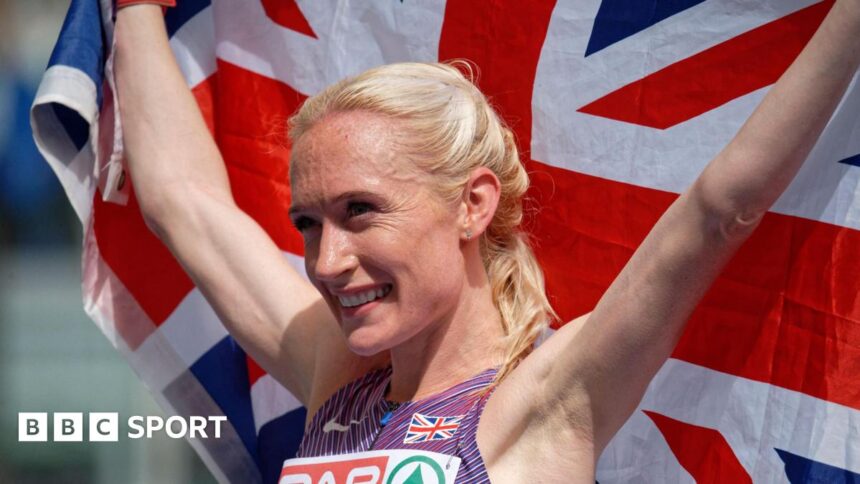
Trapped Nerves and Wee Stops: The Unforgettable Marathon Run at 22 Weeks Pregnant
In the high-stakes world of elite marathon running, where personal bests and podium finishes define careers, Calli Hauger-Thackery redefined achievement on the streets of Boston. The 33-year-old Olympian, 22 weeks pregnant, crossed the finish line of the 2024 Boston Marathon in 2:43:00. On paper, it was twenty minutes slower than her personal best. In reality, it was a monumental feat of athleticism, resilience, and profound personal meaning—a race navigated with a trapped nerve, strategic wee stops, and a powerful new perspective.
More Than a Time: Redefining Victory in the Second Trimester
For an athlete of Hauger-Thackery’s caliber—a 2020 Olympian for Great Britain with a blistering PB of 2:22:38—the metrics of success underwent a radical transformation. Last year, she placed sixth in Boston. This year, the goalposts moved, quite literally, as her body changed. The race was no longer about chasing a time, but about listening, adapting, and celebrating capability during a transformative life chapter.
“Incredible” and “more meaningful” were the words she used to describe the experience, signaling a shift in mindset that many elite athletes rarely publicly embrace. This performance stands as a powerful testament to the potential of the pregnant body in endurance sports, challenging outdated stereotypes and inspiring a broader conversation about athleticism and motherhood.
The Unseen Challenges: From Trapped Nerves to Hydration Logistics
Hauger-Thackery’s marathon was a masterclass in problem-solving under physical duress. Her training and race were punctuated by realities far removed from typical elite preparation.
- Trapped Nerve: A common pregnancy-related issue, a trapped nerve in her pelvis presented a significant hurdle. This isn’t mere discomfort; it’s sharp, shooting pain that can alter gait and challenge every stride.
- Hydration and Wee Stops: Increased blood volume and fetal pressure on the bladder make frequent bathroom breaks a non-negotiable part of long-distance running while pregnant. Strategic planning for wee stops became as crucial as gel timings, adding minutes to her clock but ensuring safety and comfort.
- Physiological Adjustments: A pregnant body works harder. With a higher heart rate at lower intensities and a shifting center of gravity, efficiency is compromised. Her ability to still maintain a sub-2:45 pace speaks volumes about her elite engine and intelligent pacing.
These factors contextualize her time. The 2:43:00 wasn’t a slowed-down version of her old race; it was a completely new event, demanding its own unique strategy and immense mental fortitude.
Expert Analysis: The Science and Significance of the Performance
From a sports science perspective, Hauger-Thackery’s run offers fascinating insights. Dr. Sarah Johnson, a sports physician specializing in female athlete health, notes, “This performance underscores a critical principle: pregnancy is not an illness, but a state of altered physiology. With appropriate medical guidance, maintained fitness, and acute self-awareness, remarkable physical feats are possible. Her experience with the trapped nerve is particularly telling—it highlights the importance of pelvic floor health and adaptive strength work during this time.”
Her achievement follows a growing, yet still rare, trend of elite athletes competing while pregnant. However, the rawness of her account—openly discussing the logistical and painful hurdles—sets a new benchmark for authenticity. It moves the narrative beyond sensationalism and into a realistic portrayal of high-performance pregnancy, offering a valuable blueprint and source of confidence for active women everywhere.
Looking Ahead: Predictions for Postpartum Comeback and Legacy
Hauger-Thackery’s Boston Marathon is not an endpoint, but a pivotal chapter in a continuing story. Her recent victory at the McKirdy Micro Marathon in New York in October 2023 proves her winning mentality is razor-sharp. This Boston experience may well forge an even stronger, more resilient athlete.
Predictions for her trajectory include:
- A Powerful Comeback: The maintained cardiovascular base and mental toughness honed during this period could fuel a strong return to elite racing postpartum, potentially with a renewed perspective that unlocks new performance dimensions.
- A Voice for Change: She is poised to become a leading advocate for research and support for pregnant and postpartum athletes, influencing coaching practices and sponsorship attitudes.
- Inspiring a Generation: Her story transcends elite sport, empowering recreational runners to stay active during pregnancy on their own terms, listening to their bodies without fear or unnecessary limitation.
The journey back to chasing PBs will have its own challenges, but the woman who managed a trapped nerve and timed wee stops to complete the Boston Marathon has already proven her unparalleled capacity to navigate complexity.
Conclusion: A New Kind of Personal Best
Calli Hauger-Thackery’s 2024 Boston Marathon will be remembered not for its place on the results sheet, but for its place in the heart. It was a race run with two heartbeats, a strategic mind, and a courageous spirit. She traded the single-minded pursuit of a time for a deeper, more holistic victory—one of listening, adapting, and honoring her body’s incredible dual purpose.
In the end, this marathon was her most profound personal best. It redefined what is possible, celebrated the strength of the pregnant athlete, and added a rich, deeply human layer to the legacy of an Olympian. It was a powerful reminder that sometimes, the most meaningful finish lines are crossed not at record speed, but with unparalleled purpose.
Source: Based on news from BBC Sport.