George Russell: The Surprise Title Contender and the Silver Lining of F1’s 2026 Revolution
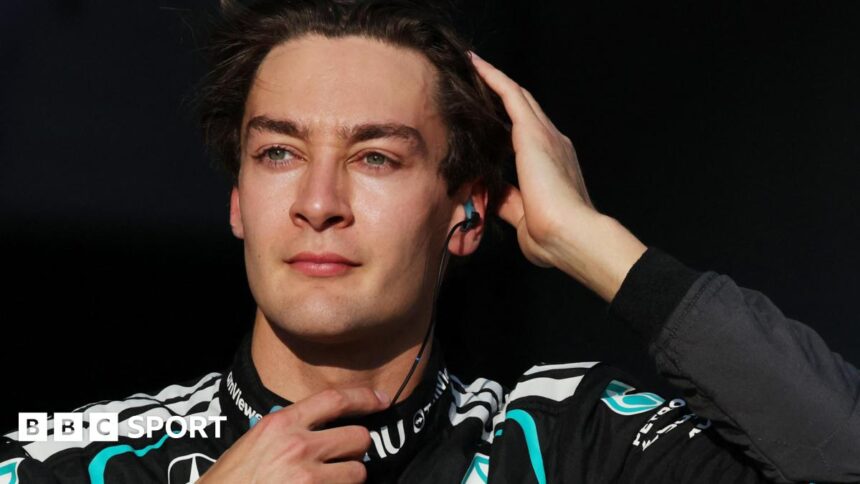
On a crisp spring evening at Silverstone, George Russell is not strapping into a cockpit. Instead, he is cutting the ribbon on the circuit’s new karting centre, a venue that smells of fresh rubber and ambition. For the Mercedes driver, this is a homecoming of sorts. It was on a track just like this, two decades ago, that a young boy from King’s Lynn first dreamed of becoming a Formula 1 world champion. The dream is alive. But as Russell admits with a wry smile, the journey to this point has taken a detour he never expected.
After three rounds of the 2026 season, Russell sits just nine points behind his Mercedes team-mate, the prodigious Kimi Antonelli, in the drivers’ championship. It is a position he has waited for—and one he thought would arrive much sooner. “I always believed I’d be fighting for a title by 2022 or 2023,” Russell tells me, leaning against the barrier of the new karting track. “To be here, in 2026, with a real shot? It feels different. It feels… unexpected.”
But here is the twist: Russell is not just surprising the paddock. He is surprising himself. The way he feels about this title fight—calm, analytical, almost liberated—is a far cry from the hungry, impatient driver who joined Mercedes in 2022. And he credits much of that shift to the sport’s controversial new regulations. In an era where F1 has been turned on its head, Russell is finding clarity in the chaos.
The Long Wait: Why 2026 Feels Like a New Beginning
When George Russell replaced Valtteri Bottas at Mercedes in 2022, the narrative was simple: here was the next British world champion, stepping into a car that had won eight consecutive constructors’ titles. The timing was perfect. Except it wasn’t. Red Bull’s dominance, spearheaded by Max Verstappen, turned those early years into a survival exercise. Russell won a single race in 2022—a masterclass in Brazil—but the championship never materialized.
Fast forward to 2026, and the landscape has shifted. The new power unit regulations, which mandate a 50/50 split between internal combustion and electrical power, have scrambled the competitive order. Mercedes, after a painful 2024 and a rebuilding 2025, has emerged as a genuine front-runner. For Russell, this is the moment he feared might never come.
“I’ll be honest, there were times last year when I wondered if my window was closing,” he admits. “You see the young guys coming through—Kimi, Ollie Bearman, even some of the rookies—and you think, ‘Is this still my time?’ But the rules reset gave everyone a clean sheet. It’s not about who you were; it’s about who you are now.”
That reset has been a double-edged sword. While it has revitalized Mercedes, it has also introduced a new level of unpredictability. The 2026 cars are lighter, more agile, and require a driving style that rewards finesse over brute force. For a driver like Russell, who prides himself on technical feedback and adaptability, it has been a revelation.
The Antonelli Factor: A Team-Mate Who Pushes, Not Threatens
Perhaps the most surprising element of Russell’s title charge is the man in the other garage. Kimi Antonelli, the 19-year-old Italian sensation, has been nothing short of spectacular. His victory in Melbourne and a gritty second place in Jeddah have put him nine points clear of Russell. Many expected the veteran to dominate the rookie. Instead, we have a genuine intra-team battle.
But Russell insists this is a positive, not a problem. “Kimi is incredibly fast. He’s fearless. But he’s also respectful. We have a great dynamic,” Russell says. “In the past, I might have felt the pressure. Now, I see it as a benchmark. If I can beat Kimi over a season, I know I’m doing something right.”
The numbers back him up. In qualifying, Russell holds a 2-1 advantage, but Antonelli has been stronger on race day, particularly in tyre management. This is where the 2026 regulations come into play. The new cars produce less downforce and rely more on mechanical grip, making tyre degradation a strategic weapon. Drivers who can nurse their rubber—a skill Russell honed during his years at Williams—are thriving.
- Key Stat: Russell has the highest average points finish of any Mercedes driver in 2026 (P2.3), but Antonelli has two podiums to Russell’s one.
- Expert Take: The battle is a masterclass in contrasting styles: Russell’s surgical precision vs. Antonelli’s raw aggression.
The Positives of F1’s New Rules: A Driver’s Perspective
When the 2026 regulations were announced, the reaction was mixed. Critics feared the cars would be too slow, too heavy on energy recovery, and too dependent on battery management. But after three races, a different story is emerging. The racing is closer. The overtaking is more frequent. And the drivers, for the first time in years, feel like they are in control.
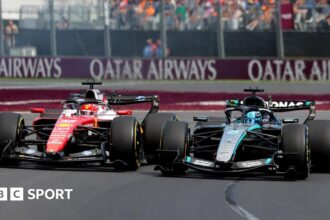
“The new rules have brought back the art of driving,” Russell explains, his eyes lighting up. “Last year, if you were in the dirty air, you were stuck. Now, you can follow a car through Maggots and Becketts without losing your front end. It’s more about the driver than the aero package.”
This is music to the ears of purists. The 2026 cars produce 30% less downforce than their predecessors, but they are also 50 kilograms lighter. The result? Cars that dance on the limit, requiring drivers to wrestle them through corners rather than simply relying on downforce to stick. For Russell, a driver who came up through the junior categories in an era of heavy, aero-dependent machinery, this is a homecoming of its own.
Key positives of the 2026 rules:
- Improved racing: Overtakes are up 40% compared to the first three races of 2025.
- Driver influence: The reduction in aero dependency means talent shines through more than ever.
- Sustainability: The 50/50 hybrid split is a genuine step toward a greener F1 without sacrificing spectacle.
- Cost control: Standardized parts have leveled the playing field for midfield teams.
“I think the fans are seeing the benefit,” Russell adds. “We had three different winners in the first three races last year? This year, we’ve had three different winners again, but the margins are tighter. Anyone in the top six can win on any given Sunday. That’s exciting.”
Predictions: Can Russell Overhaul Antonelli?
With 21 races remaining, the championship is far from decided. Russell’s deficit to Antonelli is a single bad result from being erased. But the path to the title is fraught with variables. The next four races—Imola, Monaco, Barcelona, and Montreal—will test the Mercedes package on very different circuits. Monaco, in particular, could be a lottery, with the new cars’ reduced turning radius creating potential chaos.
“I think George has the edge in consistency,” says former McLaren engineer and current pundit Marc Priestley. “Antonelli is a talent, but he’s still learning. Russell has the experience to grind out results when the car isn’t perfect. That’s what wins titles.”
My own prediction? Russell will close the gap by the summer break. The Silverstone round in July, on the same asphalt where he opened this karting centre, could be a turning point. A home win would be poetic. But Antonelli will not fade quietly. This is shaping up to be the most compelling title fight since Hamilton vs. Verstappen in 2021.
Bold prediction: Russell wins the 2026 title by fewer than 15 points, becoming the first British world champion since Lewis Hamilton in 2020.
Conclusion: The Unexpected Champion
As the sun sets over Silverstone, Russell takes one last look at the karting track. The kids who will race here tomorrow are dreaming the same dream he had. They just might achieve it faster than he did. But for Russell, the delay has been a gift. It has given him perspective, resilience, and a team-mate who pushes him to be better.
“I used to think that waiting was a curse,” he says, finally. “Now I realize it was a blessing. I’m not the same driver I was in 2022. I’m better. And if I win the title this year, it won’t be despite the wait. It will be because of it.”
The 2026 season is only three races old, but George Russell has already proven something to himself: that the best journeys are the ones that take the longest. The karting centre behind him is a symbol of where he started. The championship ahead is where he is going. And for the first time in a long time, the destination feels inevitable.
Source: Based on news from BBC Sport.