Decoding the Future: How Active Aero and Overtake Mode Will Redefine F1 in 2026
The roar of the engines, the blur of color, the smell of hot rubber and fuel—these are the visceral constants of Formula 1. But beneath the surface, a silent, digital revolution is brewing. For 2026, the sport is not merely tweaking its rulebook; it is authoring a new philosophical manifesto. With the unveiling of a radical new technical lexicon—featuring terms like Active Aerodynamics and Overtake Mode—F1 is preparing fans for what may be its most profound transformation yet. This is more than a regulation change; it is a recalibration of the very DNA of a Grand Prix, shifting the paradigm from pure mechanical grip to a high-stakes game of energy chess played at 200 miles per hour.
The 2026 Blueprint: Smaller, Smarter, Sustainable
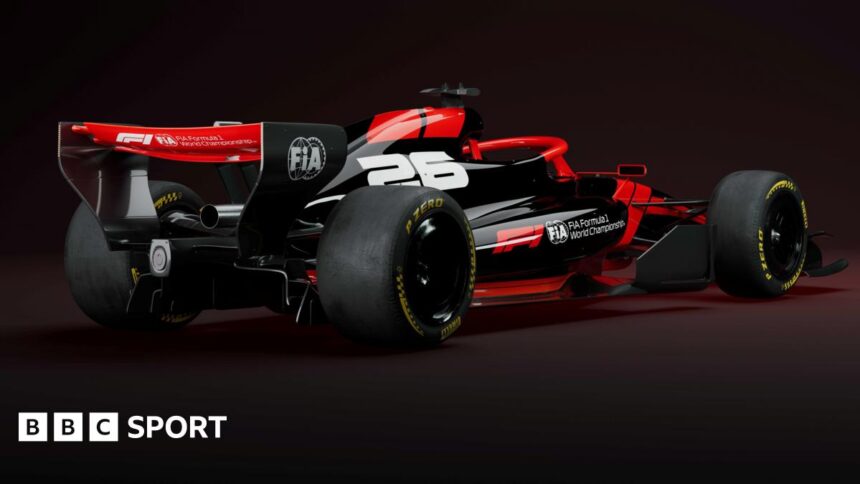
Gone is the era of the gargantuan, heavy-hybrid machines. The 2026 cars will be approximately 30kg lighter, with a significantly reduced wheelbase and width, heralding a return to a nimbler, more agile form of racing. The heart of this change, however, lies in the power unit. While the 1.6-litre V6 turbo-hybrid architecture remains, its soul has been rewritten. The electrical component’s power will nearly triple, accounting for close to 50% of the total output. This monumental shift to electrification, coupled with the sport’s first mandate for 100% sustainable fuels, forms the cornerstone of F1’s environmental and technical strategy. But such a powerful electrical system cannot be sustained flat-out. This fundamental engineering challenge has forced a radical reimagining of how a Formula 1 car slices through the air, giving birth to the era of intelligent aerodynamics.
Active Aerodynamics: The Car That Thinks
For decades, aerodynamics have been a static compromise. Teams design a car to be stuck to the track in corners (high downforce) or slip through the air on straights (low drag), knowing they must sacrifice one for the other. Active Aerodynamics shatters that compromise. The 2026 cars will feature movable front and rear wings that can change their configuration in real-time, at the driver’s command or via pre-set modes.
This system creates two distinct aerodynamic profiles:
- Z-Mode (Zone Mode): This is the high-downforce configuration for cornering, braking, and wet conditions. The wings deploy to maximize grip and stability, acting as the car’s “anchor” in the twisty sections.
- X-Mode (eXit Mode): This is the low-drag configuration for maximum straight-line speed. The wings retract, minimizing air resistance to allow the car to either harvest energy efficiently or deploy its powerful electrical boost.
The strategic implication is colossal. Drivers will no longer simply drive; they will manage their car’s aerodynamic personality lap-by-lap, even corner-by-corner. The transition between these modes will become a critical, visible spectacle—a literal physical transformation of the car as it enters a straight.
The Energy Chess Match: Overtake Mode and Manual Deployment
If Active Aero is the body, the new energy management rules are the brain and central nervous system. The vastly increased electrical power cannot be used indiscriminately. It must be harvested under braking and in the low-drag X-Mode, and deployed strategically. This is where the new terminology becomes a guide to the in-race duel.
The most thrilling term for fans will be Overtake Mode. This is a dedicated, high-power button that delivers a significant burst of electrical energy—estimated to be worth over 100 horsepower—for a limited duration. Think of it as a supercharged, tactical version of DRS. However, its use will be constrained by a strict per-lap energy allowance. A driver can’t just spam the button; they must choose their moment with sniper-like precision.
Furthermore, the default state of the car will be a less powerful Manual Deployment setting, where the driver meticulously manages smaller amounts of electrical energy. This turns every lap into an efficiency puzzle. Even on a qualifying lap, a driver may need to lift and coast briefly to harvest enough energy for a full-power blast through the final sector. The race-long energy management will be a defining factor, creating potential for dramatic swings in performance as drivers’ energy reserves ebb and flow.
Predictions: A New Breed of Driver and Unpredictable Racing
The introduction of this complex technical symphony will have seismic effects on the sport’s competitive landscape.
- The Rise of the Driver-Engineer: Raw speed will no longer be enough. The champions of this new era will be those with the cognitive bandwidth to manage aerodynamic modes, energy harvesting, and tactical deployment while wrestling a car at the limit. Race craft becomes brain craft.
- Strategic Volatility: Races will feature more pronounced ebbs and flows. A car that looks defenseless on one lap could be storing energy for a devastating Overtake Mode counter-attack the next. Pit wall strategy will expand into real-time energy forecasting.
- Qualifying Conundrums: The single-lap shootout becomes a high-wire act. Teams and drivers will have to pre-program their energy deployment and aero changes for the entire lap, risking running out of juice before the finish line or being too conservative.
- Potential for Chaos: With cars frequently changing aerodynamic profiles, their behavior in dirty air could be more unpredictable. Coupled with the sheer speed differential when one car engages Overtake Mode, we may see more daring, last-of-the-late-brakers moves.
Conclusion: A Necessary Revolution
The terminology of Active Aero, Z-Mode, X-Mode, and Overtake Mode is not just jargon. It is the key to understanding Formula 1’s ambitious leap into the future. The sport is boldly addressing its environmental responsibilities with sustainable fuels and greater efficiency, while ingeniously engineering a solution that promises more, not less, excitement. By making energy a visible, manageable, and decisive factor, F1 is adding a layer of strategic depth unprecedented in its history. The 2026 season won’t just present new cars; it will crown a new type of champion—one who is master of the machine, tactician of energy, and poet of the air. The grid is set for a revolution, and its lexicon is the first clue that everything is about to change.
Source: Based on news from BBC Sport.