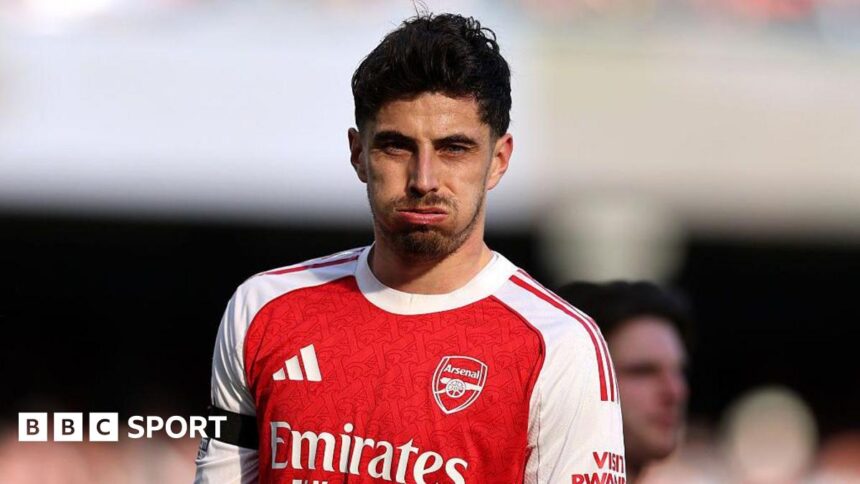
Arsenal Have Been Trying to Nick 1-0 Wins: Do They Need a Mindset Change for the Title?
The Premier League title race has just taken its most dramatic twist yet. After spending a staggering 209 days at the summit, Arsenal have been knocked off top spot by Manchester City. The catalyst? A frustrating 1-0 defeat at the Etihad on Sunday, followed by City’s clinical 1-0 win over Burnley on Wednesday night. Both sides now sit on 70 points with an identical +37 goal difference. The only difference? Pep Guardiola’s side have scored more goals. It is a brutal, mathematical reality that has exposed a growing concern: Arsenal’s reliance on grinding out narrow victories.
Mikel Arteta himself admitted after the City loss that his team have “struggled to score goals from open play” this season. It is a statement that cuts to the heart of the matter. For months, the Gunners have been praised for their defensive solidity and resilience. But in a title race where every goal matters—literally, as we now see—can a team that survives on 1-0 wins truly go the distance? Or do the Gunners need a fundamental mindset shift in these final five games?
The Numbers Don’t Lie: Arsenal’s Open-Play Drought
Let’s examine the raw data. Arsenal’s defence has been world-class. They have conceded just 28 goals all season—the best record in the league alongside City. But the attack tells a different story. Of their 73 goals scored, a disproportionate number have come from set-pieces, penalties, or moments of individual brilliance. When the game is tight, and the opposition sits deep, the Gunners often run out of ideas.
Consider these key statistics from the last month:
- 0 goals from open play in their last three league matches against Chelsea, Tottenham, and Manchester City.
- Their only goal in the 3-2 win over Tottenham came from a corner.
- Against City, they managed just 0.64 expected goals (xG)—their lowest total in a league game all season.
This isn’t just a blip. It is a pattern. When Arsenal face a low block, they lack the incisive passing and dynamic movement that City, Liverpool, or even Newcastle can produce. The midfield trio of Declan Rice, Martin Ødegaard, and Jorginho is excellent at controlling tempo, but it often becomes too horizontal. There is no runner from deep, no direct dribbler who can break the lines consistently. Bukayo Saka and Gabriel Martinelli are isolated on the wings, forced to take on two or three defenders alone.
Arteta’s system prioritises control. He wants to “nick” a goal and then suffocate the opponent. That works against mid-table sides. But in a title race, where goal difference is now the deciding factor, nicking 1-0 wins is a risky strategy. It leaves no margin for error. And as we have seen, one slip-up—like the defeat to City—hands the advantage to the champions.
The Mental Block: Playing Not to Lose vs. Playing to Win
There is a psychological dimension to this issue. Arsenal have developed a reputation for being a team that “manages” games. They are patient, disciplined, and rarely take risks. This is a hallmark of Arteta’s coaching. But in the biggest moments, that caution becomes a cage.
Look at the second half against Manchester City. Arsenal were 1-0 down, but they did not throw bodies forward. They kept their shape. They passed sideways. They waited for a mistake that never came. It was as if they were playing for a draw, even when a draw was not enough to stay top. That is the mindset of a team that fears losing more than it desires winning.
Contrast that with City. When they went 1-0 up against Burnley, they did not sit back. They pushed for a second, a third. They know that every goal matters. Pep Guardiola’s teams are programmed to destroy, not just survive. Arsenal, by contrast, have become masters of the “game management” approach—but that approach has now cost them the summit.
Arteta must ask his players: Are you playing to win the title, or are you playing to avoid losing it? The answer will define the final five games. Against Bournemouth, Manchester United, Everton, and a double-header with Wolves and Chelsea, the Gunners need to rediscover their attacking swagger. They need to score early, score often, and put games to bed. No more hanging on for dear life.
What Needs to Change? Tactical Adjustments for the Run-In
If Arsenal are to reclaim top spot, Arteta must make bold tactical tweaks. Here are three specific changes that could unlock a more aggressive mindset:
1. Play a more fluid front three.
Currently, Saka and Martinelli are locked to the touchlines. This makes it easy for defenders to double-team them. Arteta should allow them to drift inside, swapping positions with Ødegaard or even Kai Havertz. A more unpredictable attack would create space for overlapping full-backs like Ben White or Oleksandr Zinchenko.
2. Use Leandro Trossard as a false nine.
Gabriel Jesus works hard but often drops too deep, leaving no one in the box. Trossard, who scored a hat-trick against Burnley earlier this season, is a natural finisher with a knack for arriving late in the box. Starting him through the middle could provide the clinical edge that has been missing from open play.
3. Increase the tempo in the first 20 minutes.
Arsenal often start games slowly, feeling out the opponent. That gives the opposition time to settle. Against tired defences in the run-in, the Gunners should press higher and move the ball faster from the first whistle. Catch teams cold, score early, and then control the game from a position of strength—not from a 0-0 stalemate.
It is also worth noting that set-pieces remain a weapon. Arsenal have scored 16 goals from set-pieces this season—the most in the league. That is a strength, not a weakness. But relying on corners and free-kicks to win a title is unsustainable. You need open-play fluency to break down the best defences. And right now, that fluency is broken.
Expert Prediction: Can Arsenal Change Their Spots?
As a sports journalist who has covered this league for over a decade, I have seen teams collapse under the weight of expectation. Arsenal are not collapsing—they are still in the fight. But the psychological blow of losing top spot after 209 days cannot be underestimated.
My analysis: Arsenal will win their next two games—Bournemouth and Wolves—but they will do so by narrow margins, perhaps 2-1 or 1-0. The real test comes against Manchester United at Old Trafford. That is where the mindset will be exposed. If Arsenal go there and play with fear, they will drop points. If they go there with the belief that they can score three or four, they will win.
City, meanwhile, have the easier run-in on paper. They face Fulham, Tottenham, and West Ham at home, with tricky away trips to Brighton and Nottingham Forest. It is likely that City will win all five games. That means Arsenal cannot afford a single draw. They need to win every match, and they need to win them with style. Goal difference is now the tiebreaker. A 1-0 win is no longer enough.
So, does Arsenal need a mindset change? Absolutely. They need to stop trying to “nick” victories and start trying to dominate. They need to embrace the risk of attacking, because the risk of playing safe has already cost them the top spot. The title is still within reach—but only if Arteta’s men remember how to score from open play.
Conclusion: The Final Five Games Will Define This Team
Arsenal have been the best defensive team in the league. They have shown incredible resilience to stay in the title race until May. But football is about scoring goals. And right now, the Gunners are struggling to do that in the most important moments.
The narrative of “nicking 1-0 wins” is a compliment to their defence, but a criticism of their attack. If Arsenal want to lift the Premier League trophy, they must shed this cautious identity. They must play with the freedom and fearlessness that defined their early-season form. They must believe that they can outscore anyone, not just outlast them.
Mikel Arteta has built a brilliant foundation. Now he must build the attacking superstructure on top of it. The next five games will not just decide the title—they will define whether this Arsenal team is remembered as a nearly-great side, or as champions who finally learned how to let go of the handbrake.
One thing is certain: the days of the 1-0 grind are over. For Arsenal to win the league, they need to start scoring, and they need to start now.
Source: Based on news from BBC Sport.