How a Lack of Goalline Technology Denied Sam Kerr a Historic Hat-Trick in the WSL
The Women’s Super League (WSL) is a league that prides itself on world-class talent, dramatic narratives, and a growing global fanbase. Yet, on a fateful matchday, the league was reminded of a glaring technological blind spot that cost one of its brightest stars a piece of history. We are, of course, talking about the controversial moment when Chelsea legend Sam Kerr was denied a legitimate goal—a strike that would have secured her a hat-trick—simply because the WSL currently lacks goalline technology. The incident, dissected by Women’s Football Show pundits Gilly Flaherty and Nia Jones, has reignited a fierce debate about the standard of officiating infrastructure in women’s football.
- The Ghost Goal That Wasn’t: Breaking Down Kerr’s Disallowed Strike
- Expert Analysis: Why This Was More Than a Simple Mistake
- The Financial and Competitive Case for Goalline Technology in the WSL
- What the Future Holds: Predictions for Change After the Kerr Incident
- Conclusion: A Goal That Demands a Revolution
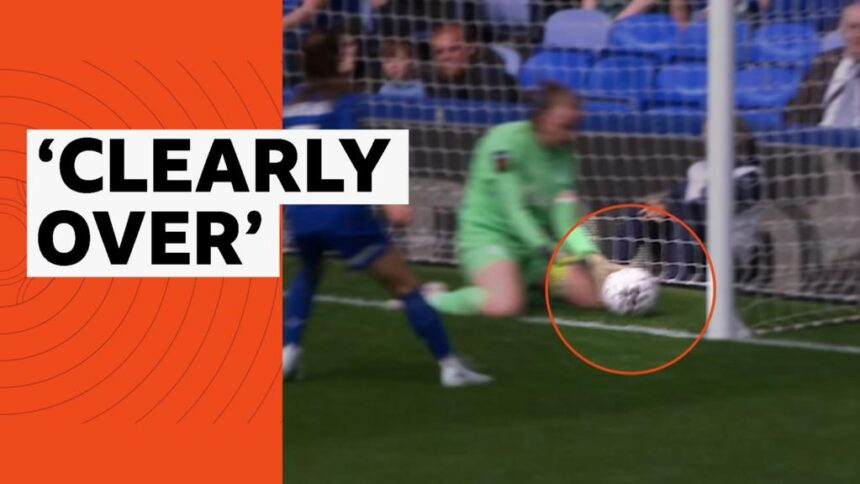
For those who missed the live action, the moment was pure agony. Kerr, known for her predatory instincts and acrobatic finishes, connected with a looping header that clearly crossed the line before being clawed out by the goalkeeper. Without the silent, instantaneous buzz of a referee’s watch—the hallmark of goalline technology—the officials had to rely on naked eyes and guesswork. They guessed wrong. This article dives deep into the mechanics of the error, the expert analysis that followed, and why this moment serves as a watershed call for change in the WSL.
The Ghost Goal That Wasn’t: Breaking Down Kerr’s Disallowed Strike
To understand the gravity of this error, we must first paint the picture of the play. Chelsea were pressing high, and a floated cross found Sam Kerr in her element—rising above the defender near the far post. The Australian international’s header was powerful but placed with precision, bouncing down off the underside of the crossbar and clearly spilling over the goalline by a full six inches before the goalkeeper scrambled to scoop it away. In any top-tier men’s league, the referee’s watch would have vibrated instantly. In the WSL, silence reigned.
The lack of a definitive decision led to chaos. Chelsea players surrounded the referee, but without the technology, the call stood. The Women’s Football Show pundits, including former Liverpool and West Ham defender Gilly Flaherty and analyst Nia Jones, were unequivocal in their post-match breakdown. Flaherty stated bluntly that “it was a clear goal,” while Jones highlighted the “frustrating” reality that players are leaving points on the table due to a lack of investment in basic matchday tools.
This wasn’t just a miss by the officials; it was a systemic failure. The goalline technology system, which uses multiple high-speed cameras to triangulate the ball’s position, is a proven, reliable product. Its absence in the WSL means that every close-range scramble, every looping header, and every goalmouth melee is subject to human error. For a player of Sam Kerr’s calibre—a forward who thrives on the margins—this is an unacceptable risk to the integrity of the competition.
Expert Analysis: Why This Was More Than a Simple Mistake
The punditry on the Women’s Football Show went beyond simple lamentation. Gilly Flaherty and Nia Jones provided a forensic breakdown that exposed the deeper issues at play. Flaherty pointed out that the assistant referee’s positioning was poor, but even if it had been perfect, the human eye cannot reliably track a ball traveling at speed over a white line from a tight angle. “It’s not about blaming the referee,” Flaherty argued. “It’s about giving them the tools to do their job correctly.”
Nia Jones expanded on this, noting that the psychological impact on the players is often overlooked. “When a striker like Sam Kerr thinks she has a hat-trick, the momentum shifts. The team feeds off that energy. When it’s taken away, you not only lose the goal, you lose the psychological edge.” The experts predicted that this single decision could have ripple effects on the title race, as dropped points from a disallowed goal can be the difference between a championship and a runner-up finish.
Furthermore, the analysis highlighted a curious double standard. The WSL is broadcast globally on platforms like BBC Sport and Sky Sports, featuring high-definition cameras and slow-motion replays. Viewers at home saw the ball cross the line within seconds. Yet, the on-pitch officials were left blind. This technological disconnect between the broadcast experience and the officiating reality is a growing embarrassment for the league. As Jones succinctly put it, “We can see it in the studio. Why can’t they see it on the pitch?”
The Financial and Competitive Case for Goalline Technology in the WSL
The most common counter-argument to implementing goalline technology in the WSL is cost. A single installation can run into hundreds of thousands of pounds, and with many clubs operating on tighter budgets than their male counterparts, it is often viewed as a luxury. However, the Kerr incident proves that it is a necessity. The cost of a single missed call—in terms of prize money, player morale, and league credibility—far outweighs the installation fee.
Consider the following bullet points that outline the competitive imbalance created by its absence:
- Title Deciders: A single point lost due to a ghost goal can decide the WSL title. The margin for error is razor-thin at the top.
- Player Valuation: Star players like Sam Kerr are marketed as global icons. Denying them statistical milestones (like a hat-trick) diminishes their legacy and the league’s selling power.
- Referee Retention: Officials are already under immense scrutiny. Without technology, they are set up to fail, which discourages new referees from entering the game.
- Broadcast Integrity: The WSL sells broadcast rights based on the premise of fair competition. A clear error undermines the product being sold to networks.
The argument for implementation is no longer just about fairness; it is about professionalism. The WSL has taken massive strides in attendances, sponsorship, and media coverage. But infrastructure—specifically officiating technology—has lagged behind. If the league wants to be taken as seriously as the Premier League or the NWSL (which uses VAR and goalline tech in select venues), it must invest in the invisible backbone of the game.
What the Future Holds: Predictions for Change After the Kerr Incident
History tells us that major rule changes often follow high-profile errors. The “ghost goal” in the 2013 Premier League between Chelsea and Tottenham, where a similar ball crossed the line unseen, directly led to the rapid adoption of goalline technology in the top flight. The Sam Kerr incident in the WSL feels like a similar watershed moment.
My prediction is that this controversy will accelerate the timeline for implementation. The FA and WSL board members will face increasing pressure from the players’ union and high-profile managers. Emma Hayes, Kerr’s manager at the time, was famously vocal about the need for better officiating tools. With the Women’s Football Show pundits amplifying the call, the noise will become impossible to ignore. We can expect a pilot program for goalline technology at a handful of top WSL stadiums—likely those hosting Champions League matches—within the next 18 months.
However, the immediate future is murky. For the remainder of the current season, players and fans will have to live with the anxiety of every close call. The psychological scar left on Sam Kerr is real. She will now enter every game knowing that her hard work can be erased by a technicality. This is not how a world-class athlete should be treated, and it is not how a world-class league should operate.
Conclusion: A Goal That Demands a Revolution
The story of Sam Kerr’s denied hat-trick is not just a tale of one bad call. It is a microcosm of the growing pains of the Women’s Super League. The league has the players, the passion, and the audience. What it lacks is the final layer of technological polish that separates a good league from a great one. The Women’s Football Show pundits—Flaherty and Jones—were right to be furious. Their analysis was not just about a header that crossed the line; it was about a league that is crossing a threshold of credibility.
If the WSL truly wants to honor its stars and protect the integrity of its competition, it must act. The ball crossed the line. The world saw it. And now, the world is watching to see if the league will finally catch up to the game it is trying to showcase. For Sam Kerr, for the officials, and for the future of women’s football, the time for talk is over. It is time to install the technology and never let a ghost goal haunt this beautiful game again.
Source: Based on news from BBC Sport.