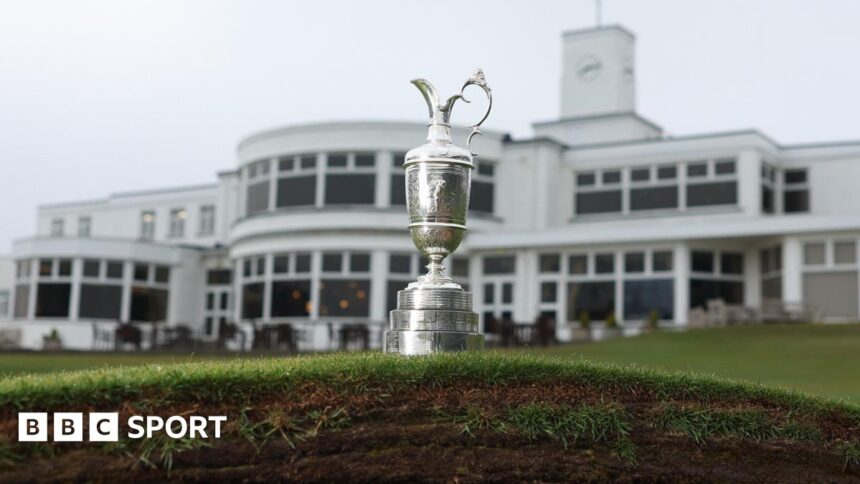
The Open 2025: Final Round Could Start Earlier to Avoid World Cup Final Clash
The Royal & Ancient Golf Club of St Andrews (R&A) is facing a unique scheduling dilemma this summer. For the first time in modern history, The Open Championship’s traditional Sunday climax will directly overlap with the FIFA World Cup final. With both events taking place on Sunday, 19 July 2025, golf’s oldest major may be forced to alter its historic rhythm. R&A chief executive Mark Darbon has confirmed the organisation is “conscious of other events happening on that date,” signaling that a revised start time for the final round is a very real possibility.
Royal Birkdale, hosting The Open for an 11th time and the first since 2017, will be the stage for this unprecedented collision of sporting titans. The World Cup final at MetLife Stadium in New Jersey kicks off at 20:00 BST, while The Open’s final round traditionally concludes around 18:30 BST. That narrow 90-minute window is the problem. If the final group is delayed by weather or a playoff, the climax of golf’s season would be competing directly with football’s most-watched event.
Why Move the Tee Times? The Battle for the Global Audience
The decision to potentially bring forward the final round is not just about avoiding a clash on television schedules. It is a calculated strategic move to protect the integrity of The Open’s viewership and its commercial value. In 2022, the World Cup final attracted over 1.5 billion viewers globally. The Open, while a massive event in its own right, simply cannot compete with that scale of audience, especially among casual sports fans.
“We’re conscious of other events happening on that date,” Darbon said in a recent briefing, hinting at the delicate balancing act. “We want to ensure that the conclusion of The Open gets the undivided attention it deserves.”
By starting the final round earlier—potentially as early as 7:00 AM or 8:00 AM BST—the R&A could finish the tournament by 1:00 PM or 2:00 PM BST. This would place the trophy presentation squarely in the prime-time window for Asian and Australian markets, while still allowing European and American fans to watch the finish before switching over to the World Cup build-up. It’s a win-win for the R&A’s global broadcast partners.
- Asian market boost: An earlier finish means late-evening viewing in Japan, China, and South Korea.
- US audience retention: The final hour of The Open would air before 9:00 AM ET, leaving the entire day free for World Cup excitement.
- Weather advantage: Morning tee times at Royal Birkdale often mean calmer winds, potentially leading to lower scoring.
Royal Birkdale: A Test of Patience and Precision
Royal Birkdale is no stranger to dramatic moments. The Lancashire links has produced some of the most memorable finishes in Open history, from Arnold Palmer’s victory in 1961 to Jordan Spieth’s miraculous recovery in 2017. The course is a classic inland links, with towering sand dunes framing every fairway. It demands controlled driving and creative iron play, often punishing aggressive players who stray from the narrow landing zones.
If the final round does start early, the conditions will be drastically different. Morning air is heavier, the dew is thicker, and the greens are at their most receptive. This could favor ball-strikers who rely on precision over power. Players like Rory McIlroy, who won The Open at Royal Liverpool in 2014, or Viktor Hovland, known for his short-game wizardry, could thrive in the softer early conditions. Conversely, bombers like Bryson DeChambeau might find the fairways tighter and the wind less forgiving early in the day.
“The early start changes the entire rhythm of the day,” says former Open champion Padraig Harrington. “You are waking up in the dark, eating breakfast by torchlight, and then trying to win a major championship before most people have had their second coffee. It’s a mental challenge as much as a physical one.”
Expert Analysis: The Pros and Cons of an Early Start
While the R&A’s motivation is clear, moving the final round tee times is not without controversy. Traditionalists argue that The Open’s mystique lies in its slow-burn Sunday drama, with the leaders teeing off in the mid-afternoon and finishing as the sun dips over the Irish Sea. An early start could rob the event of that iconic twilight atmosphere.
However, the modern sports landscape demands flexibility. The R&A has already proven it can adapt, having introduced floodlights for practice rounds and expanded digital coverage. A schedule change is the next logical step. Let’s break down the key factors:
Arguments FOR an earlier start:
- No direct competition: The Open’s climax avoids being overshadowed by the World Cup.
- Better for global audiences: Asian and Australian fans get a prime-time finish.
- Weather play: Morning rounds often have the most stable conditions at Birkdale.
- Increased social media buzz: A morning finish creates a full day of post-round analysis before the World Cup begins.
Arguments AGAINST an earlier start:
- Loss of tradition: The Open has always finished in the late afternoon/early evening.
- Player fatigue: Players must adjust sleep schedules, especially those in later groups.
- Reduced on-site atmosphere: Fewer spectators may arrive early, dampening the electric Sunday energy.
- TV ratings risk: Morning golf in the US (7:00-9:00 AM ET) may struggle against weekend sports highlights.
Predictions: Who Benefits from a Morning Finale?
If the final round does tee off at dawn, the leaderboard dynamics will shift. Players who are early risers by nature—or those accustomed to early tee times on the PGA Tour—will have a distinct advantage. Here are three players who could capitalize:
1. Scottie Scheffler – The world No. 1 is a machine of consistency. He rarely has emotional swings and is known for his disciplined morning practice routines. A dawn start at Birkdale would suit his methodical approach perfectly. He would likely play steady, mistake-free golf while others struggle to adjust.
2. Jon Rahm – The Spaniard’s power game is less reliant on perfect timing. He can muscle the ball out of thick rough and has the short-game touch to save par on Birkdale’s tricky greens. An early start means he has more time to recover if he makes a bogey, as the round will be shorter in duration.
3. Tommy Fleetwood – The Englishman grew up playing links golf in Southport, just miles from Royal Birkdale. He knows the local weather patterns intimately. Fleetwood thrives in early morning coastal conditions, and a home crowd would be roaring for him if he is in contention as the sun rises.
Dark horse: Ludvig Åberg – The young Swede is a rising star with a calm demeanor that suits major championship pressure. He hits the ball a mile and has the Swedish stoicism to handle a disrupted schedule.
Conclusion: A Necessary Evolution for Golf’s Oldest Major
The R&A’s willingness to consider an earlier start for The Open’s final round is a sign of the times. In an era of fragmented media consumption and global sports saturation, even the most historic events must adapt to survive. The World Cup final is a behemoth that cannot be ignored, and trying to go head-to-head with it would be a fool’s errand.
By moving the tee times forward, the R&A is not weakening The Open—it is future-proofing it. The early start will create a unique, compressed drama that tests players in a way they have never been tested before. The winner at Royal Birkdale in 2025 will not only have beaten the field and the links; they will have beaten the clock.
Whether the champion lifts the Claret Jug at 2:00 PM or 6:30 PM, the prestige remains the same. The Open is golf’s most authentic test, and a morning finish will only add a new chapter to its storied history. As the R&A finalizes its schedule in the coming weeks, one thing is certain: Sunday, 19 July 2025, will be a day for the ages—for golf, for football, and for sports fans everywhere.
Source: Based on news from BBC Sport.