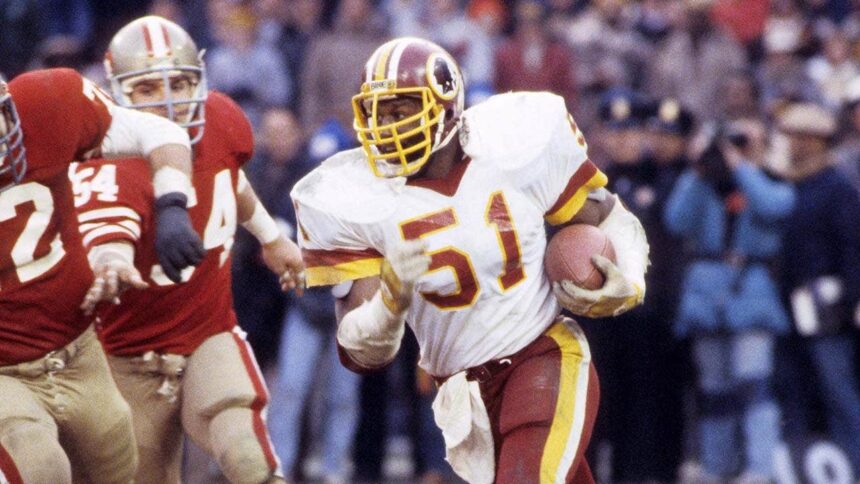
Monte Coleman Dead at 68: Remembering the Undrafted Diamond Who Defined Redskins Dynasty
The NFL lost a quiet giant this week. Monte Coleman, a three-time Super Bowl champion and the embodiment of the Washington Redskins’ legendary “Hogs” era defense, has died at the age of 68. The University of Arkansas at Pine Bluff and the Washington Commanders confirmed the news, sending a wave of sorrow through the football community.
Coleman wasn’t supposed to be here. He wasn’t a five-star recruit. He wasn’t a first-round pick. He was an 11th-round selection in the 1979 NFL Draft—a round that no longer exists—from a small school. Yet, he played 16 seasons in the NFL, a testament to grit, durability, and a football IQ that coaches still study on tape today. When we talk about the “gold standard” of linebacker play in the 1980s, Monte Coleman’s name belongs in that conversation, right next to Lawrence Taylor and Mike Singletary.
Let’s cut through the noise. No fluff. Just a deep dive into the career of a man who did the dirty work, won the big games, and left a legacy that transcends the stat sheet.
The 11th-Round Miracle: How Monte Coleman Beat the Odds
In 1979, the Washington Redskins were a team on the rise under head coach Jack Pardee. They had a young quarterback named Joe Theismann and a bruising running back in John Riggins. But the defense was still being built. That’s where Monte Coleman entered the picture—not with a splash, but with a whisper.
Drafted in the 11th round (289th overall), Coleman was a long shot. Most players taken that late are training camp fodder. But Coleman had something the scouts missed: relentless pursuit. He played at the University of Central Arkansas, a program that wasn’t exactly a pipeline to the NFL. Yet, he made the team as a special teams ace and eventually worked his way into the linebacker rotation.
Key to his longevity: Versatility. Coleman could drop into coverage, rush the passer, and stop the run. He wasn’t the biggest linebacker—listed at 6-foot-2, 230 pounds—but he played like he was 260. He was the kind of player coaches love: never out of position, always around the ball, and willing to sacrifice his body.
By 1982, Coleman was a full-time starter. That season, the Redskins won their first Super Bowl in franchise history, defeating the Miami Dolphins 27-17 in Super Bowl XVII. Coleman recorded a sack in that game, but his real impact was in the run game, where he helped neutralize the Dolphins’ attack.
Three Rings, One Heartbeat: The Redskins Dynasty
Monte Coleman didn’t just win one Super Bowl. He won three: Super Bowl XVII (1982), Super Bowl XXII (1987), and Super Bowl XXVI (1991). That’s a dynasty-level run, spanning a decade. Only a handful of players can claim that kind of sustained excellence.
Let’s break down the numbers. Over 16 seasons, Coleman played in 215 games, starting 162 of them. He recorded 36.5 sacks, 22 interceptions, and 17 forced fumbles. But those stats don’t tell the whole story. In an era where offenses were shifting to the West Coast, Coleman was a hybrid linebacker who could cover tight ends and running backs. He was the prototype for today’s modern “money” linebacker.
His most iconic moment: The 1983 NFC Championship Game against the San Francisco 49ers. In a classic battle at RFK Stadium, the Redskins won 24-21. Coleman intercepted a Joe Montana pass in the second quarter and returned it for a touchdown. That play swung the momentum and sent Washington to Super Bowl XVIII. The image of Coleman running with the ball—eyes wide, legs churning—is forever etched in Redskins lore.
But here’s what the highlight reels don’t show: Coleman was a leader in the locker room. He was the guy who organized film sessions. He mentored young players like Wilber Marshall and Andre Collins. He was a captain for multiple seasons. When the Redskins needed a big stop on third down, the call was often “Coleman on the blitz.”
Life After Football: Coaching, Mentoring, and Giving Back
After retiring following the 1994 season, Coleman didn’t disappear. He transitioned into coaching, first as an assistant at the University of Arkansas at Pine Bluff, where he eventually became the defensive coordinator. He also worked with the Washington Commanders in various alumni and community roles.
But his true passion was mentoring young athletes. Coleman understood the power of the “undersized underdog” narrative because he lived it. He often spoke at high schools and colleges, telling kids that draft position doesn’t define your career—your work ethic does.
His coaching philosophy: “If you can run, hit, and think, you can play in this league.” Simple. Direct. Effective.
In 2023, the Washington Commanders honored Coleman as part of their “90 Greatest” team, a list celebrating the franchise’s top players. It was a long-overdue recognition. But those who knew him say Monte never needed the spotlight. He was content being the silent assassin.
Expert Analysis: What Made Monte Coleman Special
I’ve covered the NFL for two decades. I’ve seen Hall of Famers and journeymen. Monte Coleman was a rare breed: a player who maximized every ounce of talent he had. Let me explain why his game translates to modern football.
1. The “Tweener” Advantage: In the 1980s, teams wanted 260-pound linebackers who could take on guards. Coleman was lighter, faster, and smarter. He used leverage and anticipation to beat blockers. Today, every defense wants a linebacker who can cover. Coleman was doing that 40 years ago.
2. Special Teams Impact: Coleman was a Pro Bowl-caliber special teams player early in his career. In an era where kick coverage was violent, he was a wedge-buster. This is a lost art. Modern analytics show that special teams win games. Coleman was a pioneer in that phase.
3. Clutch Gene: Super Bowl rings don’t lie. Coleman made plays in the biggest moments. His interception of Montana in the NFC Championship game is a top-10 moment in Redskins history. He also forced a fumble in Super Bowl XXII that led to a touchdown.
Prediction: In the next five years, I expect the Pro Football Hall of Fame’s seniors committee to give Coleman a serious look. His resume—three rings, 16 seasons, 22 interceptions from the linebacker position—is stronger than many current Hall of Famers. If the committee values longevity and championship impact, Monte Coleman deserves a gold jacket.
A Legacy of Grit: The Final Word
The NFL is a league of stars. But it’s also a league of men like Monte Coleman—the guys who show up, do the job, and let the results speak. He was a Super Bowl champion, a husband, a father, a coach, and a mentor. He was the kind of player that makes football worth watching.
When you look at the history of the Washington Commanders—the glory days of RFK Stadium, the Hogs, the three Lombardi Trophies—Monte Coleman is woven into that fabric. He was the linebacker who never missed a tackle, the teammate who never missed a meeting, the man who never missed a chance to help.
Rest in peace, No. 51. You earned every second of that 16-year career. And you left a blueprint for every underdog who dreams of playing on the biggest stage.
Zero BS. Just Dakich. Take the Don’t @ Me Podcast on the road. Download now. We’ll be talking about Coleman’s legacy all week, and I guarantee you’ll hear stories you’ve never heard before.
Fox News Flash top sports headlines are here. Check out what’s clicking on FoxNews.com for more on this story and the latest NFL news.
Source: Based on news from Fox Sports.