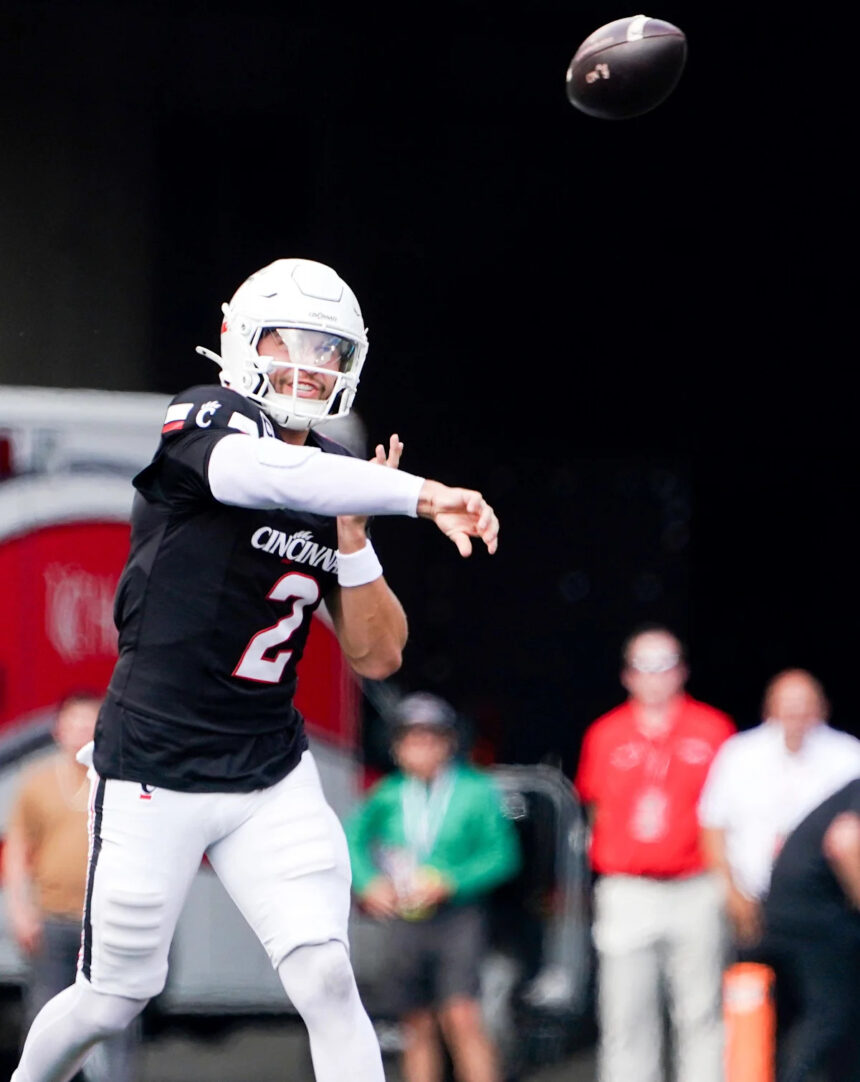
From $4 Million Payday to Treatment: Ex-UC Bearcats QB Brendan Sorsby’s Gambling Addiction Crisis
The world of college football is no stranger to dramatic reversals of fortune. We see them on the scoreboard every Saturday. But rarely do we see a story as jarring, and as human, as the one unfolding around former Cincinnati Bearcats and current Texas Tech Red Raiders quarterback Brendan Sorsby.
As first reported by ESPN’s Pete Thamel, Sorsby has voluntarily entered a treatment facility to address a gambling addiction. The news lands like a thunderclap, not just because of the stigma attached to such a diagnosis, but because of the staggering financial context. This is a young man who, just months ago, was the belle of the ball in the transfer portal—a player who reportedly secured a compensation package north of $4 million to leave Cincinnati for Lubbock.
Now, instead of preparing for spring drills, he is fighting for his mental health. This is not a story about a bad bet. It is a story about the pressure cooker of modern college athletics, the seduction of NIL money, and the quiet desperation that can exist behind a multi-million dollar smile.
The Bet That Broke the Silence: Sorsby’s Wager at Indiana
According to the ESPN report, Sorsby’s gambling issues trace back to his time at Indiana University in 2022. While with the Hoosiers, Sorsby placed a bet on his own team to win. He played in only one game that season, a minor role in a 35-21 victory over Idaho.
On the surface, betting on your own team to win might seem like an act of loyalty—a misguided show of confidence. In the eyes of the NCAA and the NFL, however, it is a cardinal sin. It is a violation of the integrity of the game, a slippery slope that has ensnared dozens of athletes in recent years. But for Sorsby, this wasn’t about breaking a rule. It was a symptom.
“We love Brendan and support his decision to seek professional help,” Texas Tech head coach Joey McGuire said in a prepared statement. “Taking this step requires courage, and our primary focus is on him as a person. Our program is behind Brendan as he prioritizes his health.”
McGuire’s words are carefully chosen. They signal a program that understands the gravity of the situation. This is not a suspension for a failed drug test. This is a young man admitting he has lost control. For a head coach who has built his reputation on culture and toughness, this is a test of his program’s character.
The $4 Million Question: How NIL Money Fueled the Fire
To understand the depth of this story, you have to look at the numbers. When Brendan Sorsby entered the transfer portal after the 2023 season at Cincinnati, he was the most coveted quarterback on the market. He had shown flashes of brilliance with the Bearcats, throwing for over 1,900 yards and 15 touchdowns. He was a prototypical pro-style passer with mobility.
Texas Tech, backed by the deep pockets of the Matador Club and the oil-rich donor base of West Texas, won the bidding war. Estimates peg Sorsby’s NIL deal at over $4 million over his remaining eligibility. That is not a scholarship. That is a professional contract.
Here is the uncomfortable truth that the sports world is only beginning to grapple with: Massive, unregulated cash flows to 20-year-olds can be a dangerous cocktail. For an individual predisposed to addictive behavior, having millions of dollars in your bank account while living in a college town with 24/7 access to online sportsbooks is a recipe for disaster.
- The Access: Online gambling apps are legal in dozens of states. A player can lose a life-changing sum of money from his dorm room in 30 seconds.
- The Boredom: College athletes have immense amounts of structured time, but also immense amounts of unstructured downtime. Gambling fills the void.
- The Pressure: When you are paid like a star, you feel the need to live like one. The dopamine hit of a big win can temporarily mask the anxiety of living up to a $4 million price tag.
Sorsby’s case is a stark warning. He is not the first athlete to struggle with gambling, and he will not be the last. But he might be the highest-profile case in the NIL era. The money that was supposed to liberate him may have contributed to his chains.
Expert Analysis: The Quiet Epidemic in College Football
As someone who covers this sport daily, I can tell you that the gambling issue is the most underreported crisis in college athletics. We talk about transfer portal tampering, NIL collectives, and conference realignment. But we rarely talk about the fact that we have created a system where a 21-year-old quarterback can be paid like a veteran NFL backup and then walk into a casino or open a betting app with zero guardrails.
Brendan Sorsby’s story is not unique in its pathology, only in its visibility. I have spoken to former players who admit that gambling was rampant in their locker rooms—poker games on the bus, prop bets on practice drills, and yes, the occasional illegal wager on games. The difference now is the scale.
When Sorsby was at Cincinnati, he was the face of a program trying to rebuild after the departure of Luke Fickell. He handled the pressure admirably on the field. But off the field, the cracks were forming. The transfer to Texas Tech was supposed to be the ultimate validation. Instead, it appears to have amplified a pre-existing condition.
The prediction here is sobering: We will see more cases like this. The NCAA has loosened its rules on athlete compensation but has not adequately addressed the psychological toll of sudden wealth combined with the ubiquity of legalized gambling. Sorsby is a canary in the coal mine. If the NCAA and university athletic departments do not implement mandatory financial literacy and addiction counseling for high-NIL earners, they are failing their most valuable assets.
The Road Ahead: Can Sorsby Return to the Field?
The immediate future for Brendan Sorsby is not about football. It is about recovery. He has entered a treatment facility, which means he will miss significant spring practice time. The question is whether he can return for the 2025 season.
From a football perspective, Texas Tech has a stable of quarterbacks. Behren Morton and Will Hammond are both capable. The Red Raiders are not desperate. This buys them time. But McGuire’s statement was clear: the priority is the person, not the player.
If Sorsby completes his treatment and gets the help he needs, there is a path back. The talent is undeniable. He has an NFL arm. But the NFL will have questions. Teams will want to know the extent of his gambling. Did he bet on games involving his own team? Did he bet on college games while in college? The league has suspended players like Calvin Ridley and Jameson Williams for similar violations.
My prediction: Sorsby will not play a snap for Texas Tech in 2025. He will take a redshirt season, focus on his mental health, and potentially enter the 2026 NFL Draft. If he is clean, a team will take a late-round flier on him. The talent is worth the risk. But the window is narrowing.
Conclusion: A Story Bigger Than the Game
Brendan Sorsby’s journey from a $4 million NIL king to a gambling addiction treatment center is a parable for our times. It is a story about the seduction of money, the loneliness of fame, and the courage it takes to admit you are broken.
We often talk about athletes as heroes or villains. Sorsby is neither. He is a young man who made a series of bad decisions, driven by a compulsion he could not control. The fact that he is seeking help, publicly, in the glare of the college football spotlight, is an act of profound bravery.
Texas Tech coach Joey McGuire called it courage. He was right. In a sport that glorifies toughness and masks vulnerability, Brendan Sorsby has done the hardest thing an athlete can do: he has stopped pretending. He has put down the phone, walked away from the app, and asked for help.
The final score of this game is still unknown. But for the first time in a long time, Brendan Sorsby is betting on himself—not with money, but with his life. And that is a wager we should all hope he wins.
Source: Based on news from Yahoo Sports.