Rangers’ Brandon Nimmo Exits Early vs. Yankees: Hamstring Tightness Sparks Concern in Texas
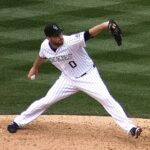
The Texas Rangers’ outfield depth faced an immediate test on Wednesday night at Globe Life Field, as veteran Brandon Nimmo was forced to exit the game against the New York Yankees due to right hamstring tightness. The injury occurred in the bottom of the fifth inning, casting a pall over what had been a promising offensive breakout for the reigning World Series champions.
- How the Injury Unfolded: A Costly Dash to Third
- Brandon Nimmo’s 2025 Season: A Quietly Productive Start in Texas
- Injury History: A Cautionary Tale for the Rangers
- Expert Analysis: What This Means for Texas’ Outfield and Lineup
- Predictions and Outlook: A Week-to-Week Situation
- Strong Conclusion: A Blip or a Breaking Point?
Nimmo, who had just delivered a key single, pulled up awkwardly while advancing from second to third base on a groundout. The Rangers quickly summoned Sam Haggerty as a pinch runner, shifting Alejandro Osuna to right field. While the team described the issue as “tightness,” the history of soft-tissue injuries for the 31-year-old outfielder makes this a situation worth monitoring closely.
How the Injury Unfolded: A Costly Dash to Third
The sequence began with the Rangers already holding a 2-0 lead, courtesy of Josh Jung’s two-run single earlier in the frame. Nimmo, who had reached base on a sharp single that deflected off Yankees first baseman Ben Rice’s glove, was standing on second base with one out. When Joc Pederson rolled a ground ball to the left side of the infield, Nimmo read the play aggressively, breaking for third base.
It was during that sprint that the hamstring tightness struck. Nimmo decelerated noticeably as he approached the bag, and while he remained on his feet, the Rangers’ training staff immediately recognized the red flags. After a brief consultation at third base, Nimmo was replaced by Haggerty, who took over in left field while Osuna slid over to right.
“You never want to see a guy go down, especially when he’s been swinging the bat well,” a Rangers clubhouse source said after the game. “The initial report is that it’s tightness, but we’ll know more after imaging.”
The timing of the injury is particularly cruel. Nimmo had just helped spark the Rangers’ first multi-run inning of the night, and the team was riding momentum against a Yankees bullpen that had been shaky in recent outings.
Brandon Nimmo’s 2025 Season: A Quietly Productive Start in Texas
Acquired from the New York Mets in a November trade that sent Marcus Semien to Queens, Nimmo has been a stabilizing force in the Rangers’ lineup and outfield. Through 30 games, he was hitting .287 with four home runs and 12 RBIs, providing a steady on-base presence at the top of the order. His .376 on-base percentage was among the best on the team, and his ability to work counts had made him a favorite of manager Bruce Bochy.
Here’s a snapshot of Nimmo’s production before the injury:
- Batting Average: .287
- Home Runs: 4
- RBIs: 12
- Games Played: 30
- Stolen Bases: 3
For a Rangers team that has struggled with consistency in the early season, Nimmo’s professional at-bats and defensive reliability in the outfield corners have been invaluable. His veteran presence was a key reason the front office felt comfortable moving on from Semien, who had been a clubhouse cornerstone.
Injury History: A Cautionary Tale for the Rangers
While Nimmo has largely shed the “injury-prone” label that dogged him early in his Mets career, his medical chart still demands attention. From 2016 to 2020, Nimmo missed significant time with a variety of ailments, including a torn hamstring in 2017, a bulging disc in his neck in 2018, and a fractured finger in 2019. However, over the last four seasons, he has been remarkably durable, missing a combined 40 games across all competitions.
His 2024 campaign with the Mets was a career year in terms of durability and production. Nimmo played in a career-high 155 games, slugging 25 home runs and driving in 92 runs while posting a .801 OPS. That performance made him an attractive trade chip for the Mets and a coveted addition for the Rangers.
“He’s learned how to manage his body,” a former Mets athletic trainer told me during spring training. “Brandon is meticulous about his warm-ups, his recovery, and his nutrition. That’s why he’s been able to stay on the field.”
Still, hamstring injuries are notoriously tricky for outfielders. The explosive movements required in the grass—sprinting to track down fly balls, changing direction, and accelerating out of the batter’s box—place enormous strain on the posterior chain. Even a Grade 1 strain can linger for weeks if not managed properly.
Expert Analysis: What This Means for Texas’ Outfield and Lineup
The Rangers’ outfield depth is about to be tested. With Leody Taveras already on the injured list with a shoulder issue, and Evan Carter still working his way back from a back strain, the Rangers are suddenly thin on proven options.
Sam Haggerty, who replaced Nimmo on Wednesday, is a versatile utility player with speed but limited power. In 112 career games, Haggerty has hit .237 with five home runs. Alejandro Osuna, the 21-year-old prospect who shifted to right field, has shown flashes of promise but is still raw. The Rangers may also consider calling up Dustin Harris from Triple-A Round Rock, where he has been hitting .302 with a .405 on-base percentage.
From a lineup perspective, losing Nimmo would create a void at the top. His ability to get on base sets the table for Corey Seager, Josh Jung, and Adolis García. Without him, the Rangers lose a left-handed bat that forces opposing pitchers to work hard from the first inning.
“If this is a short-term thing, the Rangers can patch it together,” said a veteran scout who watched Wednesday’s game. “But if Nimmo goes on the IL, they have to be aggressive. You can’t afford to lose that kind of on-base production in a division where every game matters.”
Predictions and Outlook: A Week-to-Week Situation
Based on the early reports of hamstring tightness, the Rangers are likely to take a conservative approach. Expect Nimmo to undergo an MRI on Thursday morning. If the scan reveals no structural damage, the team will likely list him as day-to-day, with a potential return in 3-5 days. If there is any evidence of a strain—even a low-grade one—a 10-day injured list stint becomes probable.
Here is my prediction: The Rangers will place Nimmo on the 10-day IL as a precautionary measure. Given his history and the fact that hamstring injuries can easily worsen, the front office will prioritize his long-term health over short-term wins. The team has a deep enough roster to survive a 10-day absence, especially with the return of Josh Jung providing a boost to the offense.
However, if the injury proves more serious, the Rangers will need to explore external options. The trade market is still months away, but internal candidates like Dustin Harris or even a position switch for Ezequiel Duran could be in play.
Strong Conclusion: A Blip or a Breaking Point?
For the Texas Rangers, the 2025 season has been a battle against attrition. Wednesday night’s injury to Brandon Nimmo is the latest reminder that health is the most volatile variable in baseball. While the initial diagnosis of hamstring tightness offers a glimmer of hope, it also demands vigilance.
Nimmo has earned the benefit of the doubt after four seasons of relative durability. His meticulous preparation and professional approach suggest he will do everything possible to return quickly. But the Rangers must resist the urge to rush him back. A compromised Nimmo is not the player who has been hitting .287 and sparking rallies.
In the end, this could be a minor speed bump in a long season—or it could be the moment that forces the Rangers to reveal the true depth of their roster. For now, all eyes are on the MRI results. One thing is certain: Texas cannot afford to lose another key bat for an extended period.
Stay tuned. The next 48 hours will define the Rangers’ immediate path forward—and Brandon Nimmo’s role in it.
Source: Based on news from Deadspin.
Image: CC licensed via obamawhitehouse.archives.gov