Dua Lipa Says No: Why Rejecting the Fury vs Joshua Gig is a Smart Move
The heavyweight boxing world is buzzing with anticipation for the long-awaited all-British showdown between Anthony Joshua and Tyson Fury. Slated for the end of 2026, this clash of titans promises to be the biggest event in British boxing history. Yet, the build-up has taken an unexpected detour into the world of pop music.
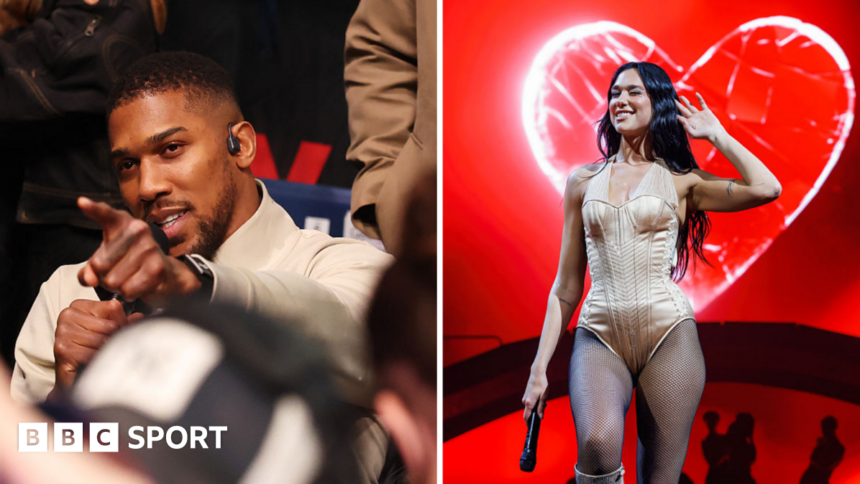
Reports confirm that global pop superstar Dua Lipa has declined an offer to perform at the event. The news, first hinted at by Saudi Arabia’s General Entertainment Authority chairman Turki Al-Sheikh, has sent ripples through the sports and entertainment industries. But as a seasoned observer of the fight game, I can tell you: this is not a crisis. It is a strategic decision by an artist who knows her value.
The Unlikely Link Between Boxing and Pop Music
In recent years, major boxing events have evolved from pure sporting contests into full-scale entertainment spectacles. We have seen it time and again. From Jennifer Lopez performing at the Floyd Mayweather vs. Conor McGregor circus to Eminem electrifying the crowd for the Fury vs. Deontay Wilder trilogy, the marriage of high-octane music and high-stakes boxing is now a fixture. Saudi Arabia, in particular, has turned this into an art form, booking acts like 50 Cent, Imagine Dragons, and Wizkid to headline fight week.
These performances serve a dual purpose. They generate massive global media attention beyond the hardcore boxing fanbase, and they create a festival-like atmosphere that justifies the exorbitant ticket prices. For a fight of the magnitude of Fury vs. Joshua, the expectation was that only a truly global icon would suffice. Enter Dua Lipa.
However, the suggestion by Turki Al-Sheikh that the fight could be “jeopardised” if Dua Lipa did not agree to perform was either a masterful piece of negotiation pressure or a playful exaggeration. The reality, as confirmed by BBC Sport, is that the 30-year-old singer was approached and simply declined. She is not expected to be involved in any capacity.
Why Dua Lipa Declined: The Expert Analysis
From a sports journalism perspective, this is a fascinating case study in brand management. Dua Lipa is not just a singer; she is a meticulously managed global brand. Here is why I believe her camp made the right call:
- Brand Alignment: Dua Lipa’s image is built on empowerment, modernity, and artistic independence. Associating her brand with a single, albeit massive, boxing event—especially one heavily tied to the Saudi Arabian sporting push—carries reputational risks that her management likely weighed carefully.
- Artistic Exclusivity: Dua Lipa is currently deep in a world tour cycle. A one-off performance for a boxing event, unless it is a Super Bowl-level production, can dilute the exclusivity of her own headline concerts. She does not need the exposure; the event needs her.
- The “Jest” Factor: The initial comment from Turki Al-Sheikh was ambiguous. If the offer was made in jest, it devalues the seriousness of the negotiation. If it was made in earnest and then turned down, Dua Lipa’s team demonstrated they will not be leveraged by the pressure of a “fight-saving” narrative.
- Timing and Logistics: The fight is targeted for late 2026. That is a long way off. Dua Lipa may have existing commitments, album releases, or personal projects that simply do not allow for the extensive rehearsal and travel required for a stadium show of this magnitude.
Expert Prediction: Do not expect Dua Lipa to change her mind. This is a firm “no.” The organizers will now pivot to another high-profile act. Rumors are already swirling about Ed Sheeran or Harry Styles being approached. The show will go on, but Dua Lipa’s absence will be noted.
The Real Impact on Fury vs. Joshua
Let us be clear: Dua Lipa’s decision does not kill this fight. The notion that a single musical act could “jeopardise” a $200 million heavyweight unification bout is hyperbole. The fight between Anthony Joshua (36) and Tyson Fury (37) is the most significant contest in British boxing since Lennox Lewis vs. Frank Bruno. The fighters, the fans, and the financial backers are all in.
Turki Al-Sheikh’s comments were likely a negotiating tactic—a way to increase the pressure on the artist’s camp by framing the performance as essential to the event’s success. It is a classic power play. But in the world of elite pop stars, you cannot bluff. Dua Lipa’s team called the bluff, and they won.
What this does impact is the promotional narrative. Without a global pop star of Dua Lipa’s caliber, the event loses a layer of mainstream cultural crossover. The media cycle will now shift from “Dua Lipa at Fury-Joshua” to “Who will replace Dua Lipa?” This is a minor distraction, but it is a distraction nonetheless.
Prediction for the fight itself: This distraction does not change the outcome. Fury’s unorthodox style and ring IQ will pose massive problems for Joshua’s more methodical approach. I see Fury winning a late-round stoppage or a wide decision, provided he is fully motivated. Joshua’s best chance is an early knockout, but Fury’s chin has proven resilient.
What This Means for the Future of Boxing Entertainment
This saga highlights a growing tension in modern boxing: the balance between sport and spectacle. Fighters are no longer just athletes; they are part of a traveling circus. Promoters are now competing with Netflix and Spotify for audience attention. Booking a Dua Lipa is no longer a luxury; it is seen as a necessity to break through the noise.
However, Dua Lipa’s rejection sends a clear signal: artists are now fully aware of their leverage. They are not props to be used for a promoter’s vision. They are partners who must be courted with respect, financial guarantees, and creative control. The days of simply throwing money at a star and expecting them to show up are fading.
For the Joshua vs. Fury event, the lesson is clear: focus on the fight. The boxing itself is the product. The music is the garnish, not the main course. If the organizers secure a strong undercard and deliver the long-awaited British showdown, the crowd will be roaring regardless of who is singing between rounds.
Conclusion: The Fight is Bigger Than the Song
Dua Lipa declining to perform at Fury vs. Joshua is a minor subplot in a major story. It does not diminish the enormity of the bout. If anything, it strips away the unnecessary glamour and refocuses attention on the two men in the ring. Anthony Joshua needs to prove he can overcome the psychological hurdle of recent defeats. Tyson Fury needs to prove he can still dominate a top-tier opponent after a lengthy layoff.
As a journalist, I have seen fights fall apart for many reasons: money disputes, injury, ego. But a pop star’s touring schedule? That is a new one. It will not be the reason this fight doesn’t happen. The fight will happen. The music will be good. But it will not feature “Levitating.” And honestly, that is fine. The real music on December 2026 will be the sound of two heavyweights trading leather in the center of the ring.
Final prediction: Fury by unanimous decision. The undercard will feature a solid, but less famous, musical act. And Dua Lipa will be on her own tour, selling out arenas on her own terms. That, in the end, is the ultimate power move.
Source: Based on news from BBC Sport.